Reducing Feeding Conflicts Before Spring Activity Peaks
As days lengthen and temperatures begin to rise, backyard bird activity quietly accelerates. Birds that moved cautiously through winter start returning in greater numbers. Migratory species reappear. Feeding stations that felt calm in January suddenly feel crowded by March.
This seasonal shift is natural, but it often brings friction with it. Feeding conflicts don’t start when spring fully arrives—they begin earlier, during the transitional weeks when winter routines collide with spring urgency. Paying attention during this window can prevent tension later, both among birds and within the garden itself.
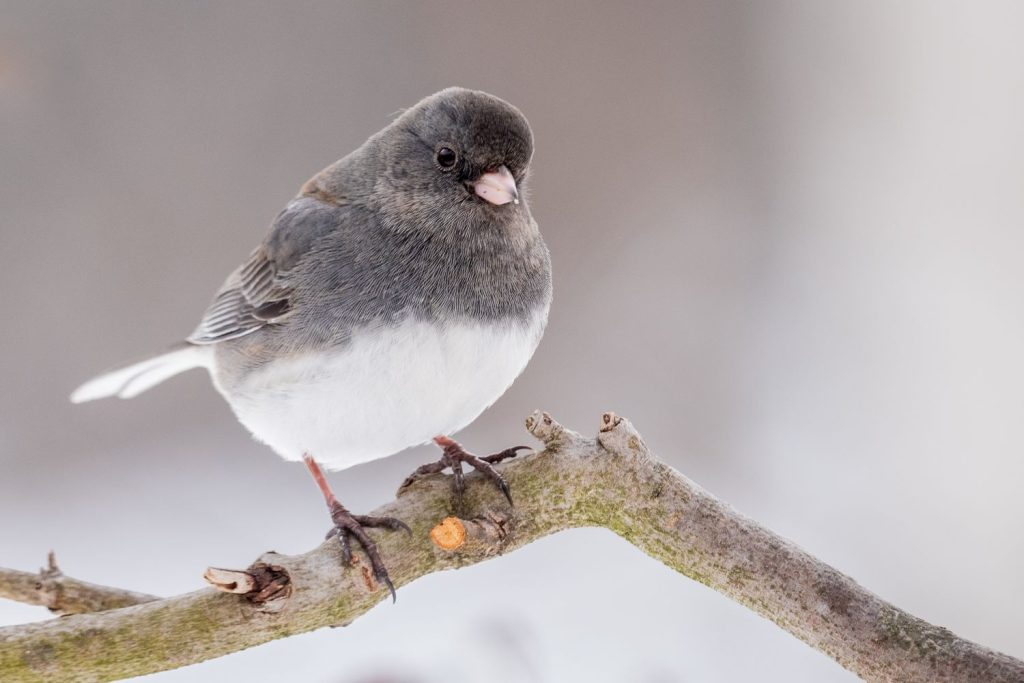
Why Conflict Increases as Winter Ends
Winter simplifies behavior. Fewer birds, fewer options, and clear priorities make feeding patterns predictable. Spring disrupts that balance.
As energy demands rise with longer daylight and the onset of breeding behavior, birds become more assertive. Territorial instincts sharpen. New arrivals test existing routines. What once felt like an orderly rotation can quickly turn into crowding, displacement, or aggressive interactions.
This is not a failure of the garden—it’s a signal that the environment is entering a new phase. Birds are adjusting faster than the space around them.
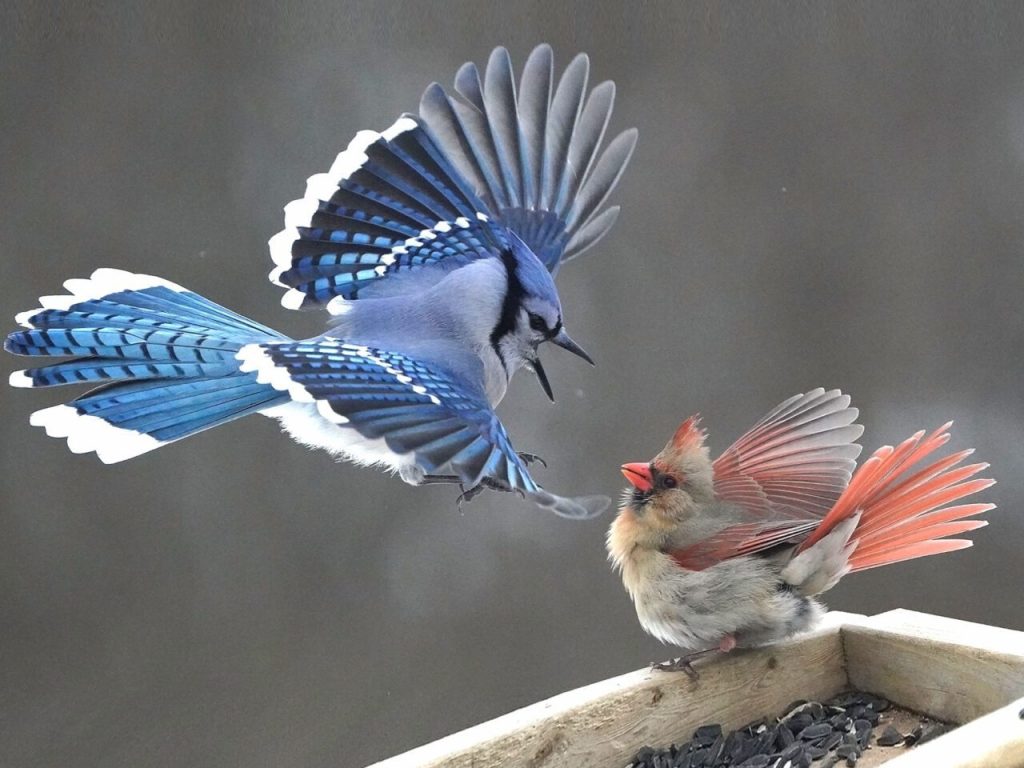
Subtle Signs Tension Is Building
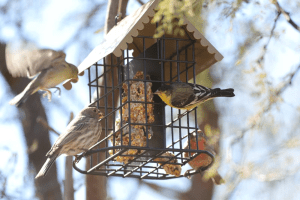
Feeding conflicts rarely appear all at once. They begin with small, easily overlooked changes. Birds may approach feeders more frequently but stay for shorter periods. Dominant individuals linger longer, while others hesitate nearby. You might notice more vocal exchanges, quick chases, or repeated repositioning around feeding areas.
These behaviors suggest competition rather than abundance. Birds aren’t reacting to a lack of food so much as uncertainty about access. As numbers increase, birds test boundaries to establish order.
Recognizing these early signals matters. Once spring activity peaks, patterns become harder to redirect without causing disruption.
How Space and Predictability Reduce Pressure
The most effective way to reduce feeding conflict isn’t to intervene directly, but to adjust the environment so birds resolve competition naturally.
Spacing matters more now than quantity. Feeding areas that worked in winter may need subtle expansion—not more food in one place, but clearer distribution across the garden. Separating feeding zones by even a short distance allows different species and temperaments to coexist without constant confrontation.
Predictability also plays a critical role. Birds rely on memory. When feeding locations shift frequently or routines change abruptly, competition increases as birds reassess access. Maintaining consistent placement helps preserve the calm patterns birds learned during winter.
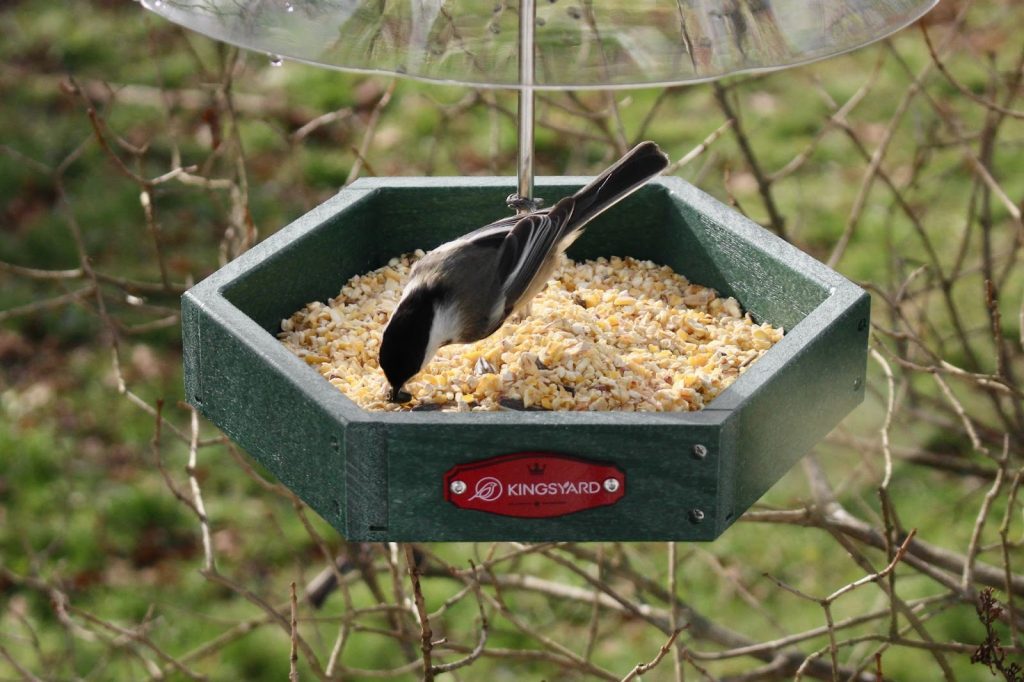
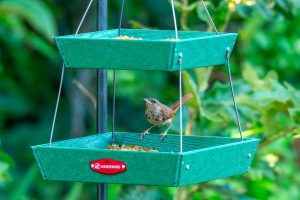
This is why gardeners who rely on stable, low-disruption setups—such as dependable feeding stations like kingsyard bird feeders—often notice smoother seasonal transitions. Familiar structures reduce uncertainty, allowing birds to focus on feeding rather than defending space.
Preparing Now Prevents Problems Later
The weeks before spring fully unfolds are not about controlling bird behavior. They’re about aligning the garden with what birds are already preparing to do.
Reducing feeding conflicts at this stage doesn’t require dramatic changes. It requires attention: noticing who arrives first, who waits, who leaves quickly, and who stays. These observations guide small adjustments that ease pressure before activity peaks.
Spring rewards gardens that remained steady through winter and adapted quietly during the transition. By the time breeding season intensifies, the groundwork has already been laid.
Feeding conflicts don’t signal failure. They signal growth. And gardens that recognize that moment early are the ones that remain balanced when spring finally takes over.
You may also want to read:
- Should You Keep Hummingbird Feeders Up in August? Migration Feeding Tips
- August Bird Feeding Guide: What to Feed Birds in Late Summer
- When Do Hummingbirds Migrate South? Fall Migration Timelines & Preparation Guide
- What Birds Are Active in July? A Complete Mid-Summer Backyard Birding Guide
- How to Attract Orioles to Your Backyard: Fruit, Nectar & Feeder Setup Guide

Post Comment