Glass vs Plastic Hummingbird Feeders: Which Should You Choose in 2026?
You’ve decided to attract hummingbirds to your yard, excellent choice. But now you’re facing the first major decision: glass or plastic hummingbird feeder?
It’s not a trivial question. The material affects everything from how often you’ll clean the feeder to how long it lasts, how it looks in your garden, and even how quickly hummingbirds find it.
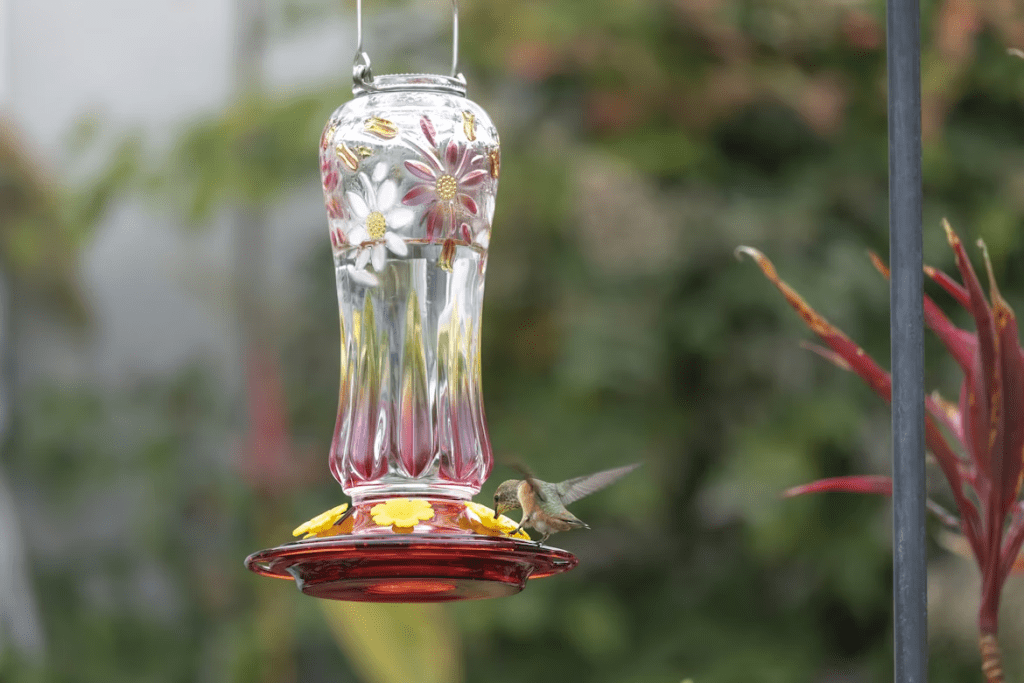
After testing dozens of feeders, we’ve compiled everything you need to make the right choice. This guide breaks down the real differences between glass and plastic hummingbird feeders.
Quick Verdict: Which Is Right for You?
| Your Priority | Best Choice | Why |
|---|---|---|
| Durability | Plastic | Won’t shatter if dropped |
| Aesthetics | Glass | Beautiful, artisan designs available |
| Easy cleaning | Glass | Smooth surface, dishwasher-safe options |
| Budget-friendly | Plastic | Lower cost, good value |
| UV resistance | Glass | Won’t degrade in sunlight |
| Lightweight | Plastic | Easier to hang, less stress on hooks |
| Nectar visibility | Glass | Crystal clear, easy to monitor levels |
Bottom line: Both materials work well for attracting hummingbirds. Your choice depends on your specific needs, climate, and preferences.
Table of Contents
Glass Hummingbird Feeders: Complete Overview
What Makes Glass Feeders Special
Glass hummingbird feeders have a premium feel that plastic simply can’t match. The material offers clarity, weight, and an aesthetic appeal that many bird enthusiasts prefer.
Advantages of Glass Feeders
1. Superior Clarity and Visibility
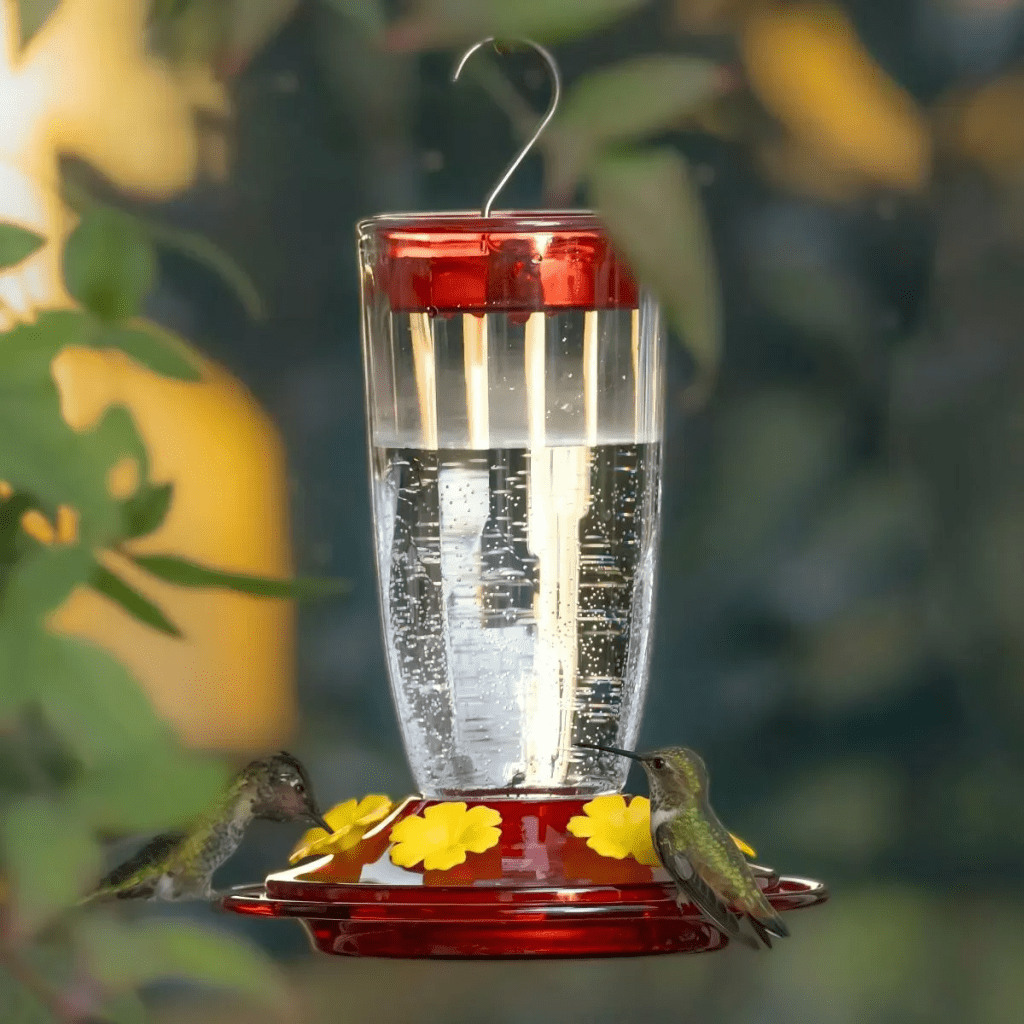
Glass is naturally transparent and stays that way. Unlike plastic, which can become cloudy or yellowed over time, glass remains crystal clear for years.
Why this matters:
- Easy to monitor nectar levels at a glance
- No discoloration to hide mold or debris
- Hummingbirds can see the nectar more easily
2. Easier to Clean
The smooth, non-porous surface of glass makes cleaning significantly easier. Nectar residue, mold, and bacteria have nowhere to hide.
Cleaning advantages:
- Most glass feeders are dishwasher-safe (check manufacturer instructions)
- No microscopic scratches that harbor bacteria
- No staining from colored nectar (though we recommend clear nectar only)
- Visible when clean
3. UV Resistant
Glass doesn’t degrade in sunlight. Plastic feeders can become brittle, cracked, or discolored after prolonged UV exposure.
Long-term value:
- Glass feeders maintain appearance for years
- No plastic taste that might deter hummingbirds
- Won’t develop micro-cracks that leak
4. Premium Aesthetics
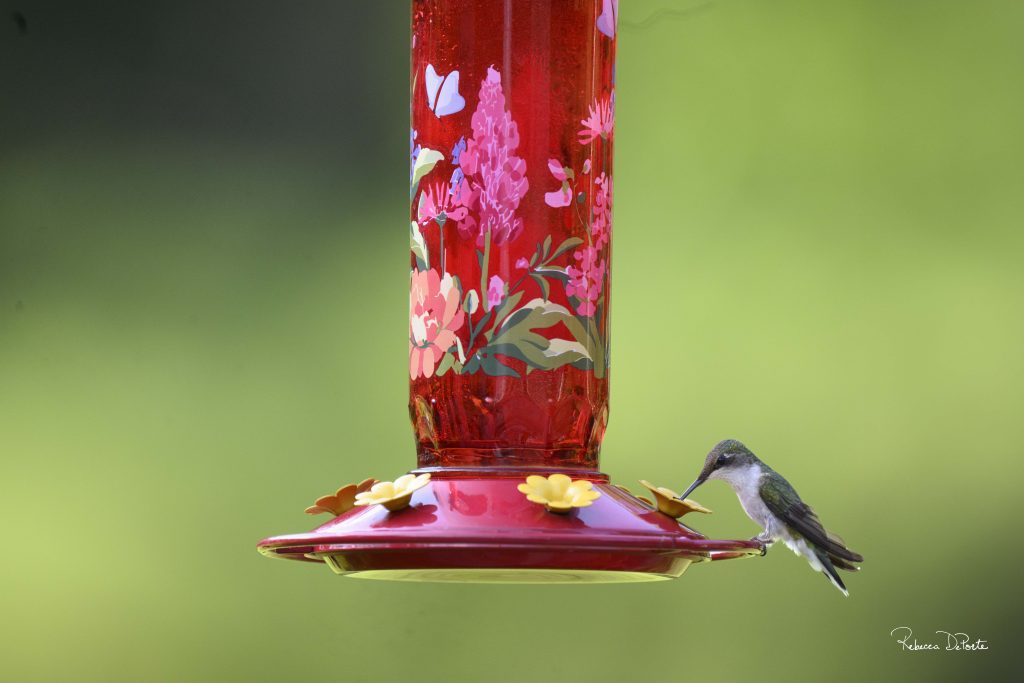
Let’s be honest, glass feeders are beautiful. Many feature decorative elements, colored glass, and artisan designs that enhance your garden’s appearance.
Design options:
- Hand-blown artistic designs
- Vintage-inspired antique looks
- Colored glass (red is particularly attractive to hummingbirds)
- Elegant shapes that complement garden décor
5. Temperature Stability
Glass holds temperature better than plastic. In hot weather, glass keeps nectar cooler longer; in cool weather, it prevents rapid temperature fluctuations.
Disadvantages of Glass Feeders
1. Fragility
The obvious downside: glass breaks. A dropped feeder means shards of glass and a trip to buy a replacement.
Risk factors:
- Accidental drops during cleaning or refilling
- Falls during severe weather
- Curious wildlife (raccoons, squirrels) may knock them down
Mitigation: Choose thick-walled glass feeders and handle with care. Some models have protective metal cages.
2. Heavier Weight
Glass feeders weigh more than plastic, which affects where and how you can hang them.
Considerations:
- Requires sturdy hooks and hangers
- May not work well on delicate shepherd’s hooks
- Window-mounted options need extra-strong suction cups
3. Higher Cost
Quality glass feeders typically cost $25-50, compared to $15-30 for plastic. However, they often last longer, offsetting the initial investment.
4. Limited Capacity Options
Glass feeders are typically available in smaller capacities (8-16 oz). Large-capacity glass feeders would be prohibitively heavy.
Best Glass Hummingbird Feeder Recommendations
| Feeder | Capacity | Price | Best Feature |
|---|---|---|---|
| Kingsyard 16oz Glass Hummingbird Feeder | 16 oz | $24.99 | Beautiful design, built-in ant moat |
| Kingsyard 25oz Leak Proof Glass Hummingbird Feeder | 25 oz | $27.99 | Award-winning design, large capacity, ant moat |
| Kingsyard 24oz Bee & Ant Proof Glass Hummingbird Feeders | 24 oz | $24.99 | Large capacity, decorative design, ant moat |
Plastic Hummingbird Feeders: Complete Overview
What Makes Plastic Feeders Popular
Plastic hummingbird feeders dominate the market for good reasons: they’re affordable, durable, and available in countless designs. Modern plastics have improved significantly, offering better clarity and UV resistance than older models.
Advantages of Plastic Feeders
1. Durability and Safety
Plastic doesn’t shatter. Drop a plastic feeder, and you’ll likely just need to pick it up and refill it.
Durability benefits:
- Survives accidental drops
- Withstands severe weather
- Safe around children and pets
- No sharp shards if broken
2. Lightweight
Plastic feeders are easy to hang almost anywhere. They put minimal stress on hooks, branches, and window suction cups.
Where this matters:
- Window-mounted feeders (won’t pull suction cups off)
- Hanging from delicate branches
- Portable for camping or travel
- Easy to take down for cleaning
3. Larger Capacity Options
Plastic feeders are available in larger sizes without becoming impractically heavy. Some hold 32 oz or more.
Benefits of larger capacity:
- Less frequent refilling
- Better for high-traffic areas
- Practical during peak migration
4. Lower Cost
Plastic feeders are budget-friendly. You can buy multiple feeders for the price of one premium glass feeder.
Budget considerations:
- Basic models start around $10-15
- Easy to replace if damaged
- Cost-effective for multiple feeding stations
5. Bright Colors
Plastic feeders often feature bright red parts that attract hummingbirds. The color is molded into the plastic, so it won’t fade or peel.
Attraction factor:
- Red is the #1 color for attracting hummingbirds
- No need to add red dye to nectar (never do this!)
- Color is permanent, not painted on
Disadvantages of Plastic Feeders
1. Can Degrade Over Time
UV exposure eventually degrades plastic. After 1-3 seasons in direct sunlight, plastic feeders may become:
- Brittle and prone to cracking
- Cloudy or yellowed
- Rough-textured (harder to clean)
Mitigation: Choose UV-stabilized plastics and position feeders in partial shade.
2. Harder to Clean Thoroughly
Plastic can develop microscopic scratches that harbor bacteria and mold. Over time, these scratches make thorough cleaning more difficult.
Cleaning challenges:
- May retain odors
- Can stain from colored liquids
- Not dishwasher-safe (most models)
3. Potential Chemical Leaching
Low-quality plastics may leach chemicals into nectar, especially in hot weather. This is more concerning with cheap, thin-walled feeders.
What to look for:
- BPA-free materials
- Food-grade plastic
- Reputable brands with quality standards
4. Less Aesthetic Appeal
Plastic feeders are functional but rarely beautiful. They serve a purpose but don’t add decorative value to your garden.
Head-to-Head Comparison
Durability
| Factor | Glass | Plastic |
|---|---|---|
| Drop resistance | ❌ Shatters | ✅ Survives most drops |
| Weather resistance | ✅ Excellent | ⚠️ UV degradation over time |
| Longevity | ✅ 5+ years | ⚠️ 2-4 years typical |
| Temperature extremes | ✅ Stable | ⚠️ Can crack in freezing temps |
Winner: Plastic (for durability), Glass (for longevity with proper care)
Cleaning and Maintenance
| Factor | Glass | Plastic |
|---|---|---|
| Surface smoothness | ✅ Perfectly smooth | ⚠️ Can develop scratches |
| Dishwasher safe | ✅ Often yes | ❌ Usually no |
| Mold visibility | ✅ Easy to see | ⚠️ May hide in scratches |
| Staining | ✅ Resistant | ⚠️ Can stain over time |
Winner: Glass
Aesthetics
| Factor | Glass | Plastic |
|---|---|---|
| Visual appeal | ✅ Beautiful, decorative | ⚠️ Functional, basic |
| Color options | ✅ Colored glass available | ✅ Bright molded colors |
| Garden integration | ✅ Enhances décor | ⚠️ Purely functional |
Winner: Glass
Practical Considerations
| Factor | Glass | Plastic |
|---|---|---|
| Weight | ⚠️ Heavier | ✅ Lightweight |
| Capacity options | ⚠️ Limited to ~24 oz | ✅ Up to 48 oz available |
| Hanging flexibility | ⚠️ Needs sturdy support | ✅ Hangs anywhere |
| Portability | ⚠️ Heavy to move | ✅ Easy to relocate |
Winner: Plastic
Value for Money
| Factor | Glass | Plastic |
|---|---|---|
| Initial cost | ⚠️ $25-50 | ✅ $10-30 |
| Lifespan | ✅ 5+ years | ⚠️ 2-4 years |
| Cost per year | ✅ Good long-term value | ✅ Good short-term value |
Winner: Tie (depends on your time horizon)
Which Should You Choose?
Choose Glass If:
- You want a beautiful, decorative feeder
- You’re willing to handle with care
- You prefer easier, more thorough cleaning
- Your feeder will be in direct sunlight (UV resistance)
- You’re establishing a long-term feeding station
- You have sturdy hooks and hangers
Choose Plastic If:
- You’re on a budget
- You need lightweight, portable options
- You want multiple feeders for different locations
- You have children or pets (safety concern)
- You need large capacity (less frequent refilling)
- You’re new to hummingbird feeding (low-risk start)
Our Recommendation: Get Both
Here’s a strategy that combines the best of both worlds:
Glass feeder: Your primary, decorative feeder in a prominent location where you can enjoy its beauty and easy cleaning.
Plastic feeder(s): Additional feeders in other locations to reduce territorial conflicts and attract more hummingbirds.
Why this works:
- Multiple feeders reduce male hummingbird territorial aggression
- You can experiment with locations
- Backup if one feeder needs cleaning
- Different capacities for different situations
Hummingbird Feeder Success Tips (Any Material)
Regardless of which material you choose, these tips will help you succeed:
Nectar Recipe
The only recipe you need:
- 1 part white sugar
- 4 parts water
- Boil, cool, fill
Never use:
- Honey (promotes dangerous fungal growth)
- Red dye (unnecessary and potentially harmful)
- Artificial sweeteners (no energy value)
- Brown sugar, raw sugar (impurities harmful to birds)
Cleaning Schedule
| Temperature | Clean Every |
|---|---|
| Below 60°F | 5-7 days |
| 60-80°F | 3-4 days |
| 80-90°F | 2 days |
| Above 90°F | Daily |
Signs nectar needs changing:
- Cloudy appearance
- Floating particles
- Fermented smell
- Black mold spots
Feeder Placement
- Height: 4-6 feet high (eye level for easy viewing)
- Sun: Morning sun, afternoon shade
- Cover: Near trees or shrubs (10-15 feet) for perching
- Visibility: Where you can enjoy watching
- Multiple feeders: Space at least 10 feet apart to reduce territorial conflicts
Ant and Bee Management
For ants:
- Use feeders with built-in ant moats
- Fill moat with water (ants can’t cross)
- Apply petroleum jelly to hanger (refresh after rain)
For bees:
- Choose feeders with bee guards
- Avoid yellow accents (attracts bees)
- Wipe spills immediately
- Move feeder if bees become problematic
FAQ: Glass vs Plastic Hummingbird Feeders
Do hummingbirds prefer glass or plastic feeders?
Hummingbirds don’t show a strong preference for material. They’re attracted to the color red, the nectar quality, and the feeder’s accessibility. Both glass and plastic work equally well for attracting birds.
How long do glass hummingbird feeders last?
With proper care, glass feeders can last 5-10 years or more. The glass itself is permanent; the only parts that may need replacement are plastic bases, rubber gaskets, or metal hardware.
Are plastic hummingbird feeders safe?
Yes, when you choose quality products. Look for BPA-free, food-grade plastic from reputable manufacturers. Avoid cheap, thin-walled feeders that may leach chemicals in hot weather.
Can I put a glass hummingbird feeder in the dishwasher?
Many glass feeder reservoirs are dishwasher-safe (check manufacturer instructions). However, plastic bases and feeding ports should typically be hand-washed to prevent warping.
Why do plastic feeders turn yellow?
UV exposure causes plastic to degrade and yellow over time. This is primarily cosmetic but can indicate the plastic is becoming brittle. Choose UV-stabilized plastics and position feeders in partial shade to extend lifespan.
How many hummingbird feeders should I have?
Start with one, but consider adding more as your hummingbird population grows. Male hummingbirds are territorial and will defend a single feeder. Multiple feeders (spaced 10+ feet apart) allow more birds to feed simultaneously.
When should I put out my hummingbird feeder?
Put feeders out 1-2 weeks before hummingbirds are expected in your area. In the southern US, this means early March. In northern areas, mid-to-late April. Leave feeders up until 2 weeks after your last sighting in fall.
Can glass feeders freeze in winter?
Yes, glass can crack if nectar freezes inside. If you live in an area with hard freezes, either bring glass feeders inside during winter or use plastic feeders for late-season stragglers.
Make Your Choice and Start Watching
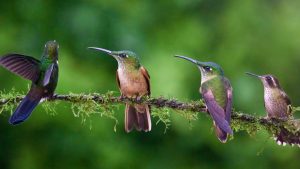
Both glass and plastic hummingbird feeders will bring these tiny, iridescent wonders to your yard. The best choice depends on your priorities:
Choose glass for beauty, longevity, and easy cleaning. You’ll pay more upfront, but enjoy a premium feeder for years.
Choose plastic for durability, affordability, and flexibility. Perfect for beginners, multiple locations, or households with active kids and pets.
Or choose both and enjoy the benefits of each.
Ready to attract hummingbirds?
- For beautiful glass options, explore the Kingsyard Hummingbird Feeder collection
- Learn more about spring bird feeding in our Ultimate Spring Bird Feeding Guide – 2026
The hummingbirds are coming. Make sure you’re ready.



Post Comment