Summer Hummingbird Care Guide: Nectar Recipe, Feeding Tips, and When to Clean
Summer is the high season for hummingbirds. Ruby-throats have reached their northern nesting grounds, black-chinned and rufous are widespread in the West, and activity at your feeder can peak at dozens of visits per hour. But summer heat also introduces unique risks — risks that catch many feeder owners off guard. Choosing the right hummingbird feeders for your setup is the first step to safer summer feeding.
If you’re just starting out, our complete guide on how to attract hummingbirds to your backyard covers feeder placement, flower selection, and the full setup process. This article focuses specifically on what changes when the temperature climbs.
Here’s the problem: the same nectar recipe that works perfectly at 70°F can ferment within 24 hours at 90°F. Mold that takes a week to grow in spring can appear in 48 hours during a heat wave. And a poorly maintained feeder in July is more dangerous to hummingbirds than no feeder at all.
By the end of this guide, you’ll know exactly how to adjust your care routine for summer — the right nectar ratio, how often to change the sugar water, how to clean your feeder properly in hot weather, and what to do about common summer problems like ants, bees, and mold.
Table of Contents
The Right Hummingbird Nectar Ratio for Summer
The hummingbird nectar recipe for summer is the same as any other season: 1 part white granulated sugar to 4 parts water. This 1:4 ratio produces a solution that’s approximately 20% sucrose — very close to the natural sugar content of the flower nectar that hummingbirds have evolved to prefer.
Some online sources recommend a stronger 1:3 ratio in cold weather to provide extra energy. But in summer, the 1:4 ratio is ideal for two reasons. First, it delivers enough energy without overloading the birds with sugar. Second, a more concentrated solution can actually speed up fermentation in high temperatures, making the nectar spoil faster.
How to Make Hummingbird Nectar
Ingredients:
- 1 cup white granulated sugar (do not use honey, brown sugar, or artificial sweeteners)
- 4 cups tap or filtered water
Instructions:
- Mix sugar and water in a saucepan
- Heat until dissolved — boiling is optional but recommended if your tap water has impurities
- Let the mixture cool to room temperature
- Fill your clean feeder
- Store any extra in the refrigerator for up to two weeks
Common Nectar Myths
“Red food coloring attracts hummingbirds.” False. Most modern hummingbird feeders already have enough red on the base or flower ports to attract birds. Red dye is unnecessary and potentially harmful. Skip it.
“Honey is healthier for hummingbirds.” False. Honey promotes dangerous bacterial growth in the feeder and can cause a fatal fungal infection on hummingbird tongues.
“You must boil the water.” Not required. If your tap water is clean, simply stirring the sugar into room-temperature water until fully dissolved is sufficient. Boiling slows fermentation slightly but makes a negligible difference given how frequently you’ll change the nectar in summer.
“Artificial sweeteners work just as well.” False. Hummingbirds need the caloric energy from real sugar. Artificial sweeteners provide zero nutrition and can cause starvation.
For more on this topic, check out our analysis of glass vs plastic hummingbird feeders — the material you choose affects how easy the feeder is to clean, which matters more in summer.
How Often to Change Hummingbird Nectar in Summer
This is the single most important rule of summer hummingbird care:
Change the nectar every 2 days when temperatures exceed 80°F (27°C). During heat waves above 90°F (32°C), change it daily.
Warm nectar is a perfect breeding ground for bacteria and yeast. Once the sugar water begins to ferment, it can harbor Avian Trichomonosis — a protozoan infection that causes lesions in a hummingbird’s mouth and throat. Infected birds may drool, have trouble swallowing, and eventually starve because they cannot feed.
Signs Your Hummingbird Nectar Has Gone Bad
| Symptom | What It Looks Like | Action Required |
|---|---|---|
| Cloudiness | Clear nectar turns milky or hazy | Empty and clean immediately |
| Mold spots | Black, green, or white specks floating | Deep clean with vinegar soak |
| Sour smell | Sharp, fermented odor instead of neutral | Empty, clean, and sanitize |
| Dead insects | Ants or gnats floating in the nectar | Full disassembly and scrub |
| Sediment | Grainy particles at the bottom | Rinse thoroughly, check feeding ports |
If you see any of these signs, empty the feeder, give it a thorough cleaning, and refill with fresh nectar. Do not just top off the existing nectar — this dilutes the problem rather than solving it.
Pro Tips for Hot Climates
If you live in the southern US (Texas, Florida, Arizona, or the Gulf Coast), your summer conditions are more extreme:
- Fill only halfway. With nectar needing to be changed every 1-2 days, a half-full feeder reduces waste and ensures the nectar rotates through quickly.
- Choose a shaded location. Place the feeder where it gets morning sun but is shaded during the hottest afternoon hours (12 PM to 4 PM). Direct sun can heat the nectar inside a dark feeder to over 100°F.
- Use a light-colored feeder. Dark-colored feeders absorb more heat. A red-base feeder with a clear reservoir is ideal — the red attracts hummingbirds, while the clear plastic doesn’t trap as much heat.
- Check twice daily. In extreme heat, nectar can spoil before the 48-hour mark. If you notice fewer hummingbird visits than usual, check the nectar quality immediately.
How to Clean a Hummingbird Feeder in Summer
In spring, once-a-week cleaning is acceptable. In summer, you need to clean your hummingbird feeder at least twice a week — ideally every time you change the nectar.
The Complete Summer Cleaning Routine
- Empty all remaining nectar into the sink or garden
- Disassemble the feeder completely — remove the base, bottle, feeding ports, bee guards, and any O-rings
- Rinse each piece under hot tap water
- Scrub with a narrow bottle brush — focus on the feeding ports where mold hides inside the crevices. A dedicated hummingbird feeder brush reaches these narrow channels
- Soak in a 1:4 white vinegar-to-water solution for 15-20 minutes. White vinegar is an effective disinfectant that leaves no toxic residue. Having the right bird feeder accessories like bottle brushes and narrow port cleaners makes this step significantly easier.
- Rinse thoroughly with hot water until no vinegar smell remains
- Air dry completely before reassembling to prevent moisture from being trapped inside the feeder
What NOT to Use
- Bleach — residues can harm hummingbirds even after rinsing
- Soap — soap residue changes the surface tension of nectar and can leave a chemical film. If you must use soap, rinse at least 10 times with hot water
- Rice or sand — sometimes recommended as an abrasive, but these scratch plastic surfaces, creating microscopic grooves where bacteria thrive
Why Feeder Material Matters for Cleaning
The material of your hummingbird feeder directly affects how easy it is to clean — and therefore how clean it stays between washings. A glass hummingbird feeder is non-porous and doesn’t scratch, making it easier to sanitize than plastic alternatives. Plastic feeders are lighter and more affordable, but they develop micro-scratches over time that can harbor bacteria.
For a complete step-by-step cleaning guide that covers all feeder types, including tube feeders and hoppers, see our bird feeder cleaning guide.
Common Summer Hummingbird Feeder Problems (And How to Fix Them)
Problem 1: Ants Invading the Feeder
Ants are attracted to sugar water and can overrun a hummingbird feeder within hours. The most effective solution is an ant moat — a small cup that hangs above the feeder and fills with water, creating a barrier ants cannot cross.
Kingsyard hummingbird feeders are compatible with an ant moat — a small water barrier that hangs above the feeder and prevents ants from reaching the nectar. If you don’t have an ant moat, you can try applying a thin layer of petroleum jelly to the hanging wire (avoid the feeder itself). However, ant moats are safer and more reliable.
Problem 2: Bees and Wasps at the Feeding Ports
Bees become more aggressive in summer and can compete with hummingbirds for access to the feeder. To reduce bee activity:
- Wipe spills — nectar on the feeder exterior attracts bees. Wipe the base and ports after refilling
- Move to shade — bees prefer feeders in direct sunlight. Moving the feeder to a shaded area can reduce bee visits by 50% or more
- Use bee guards — these mesh covers fit over the feeding ports and allow hummingbird beaks (long and thin) to reach the nectar while blocking shorter-tongued bees
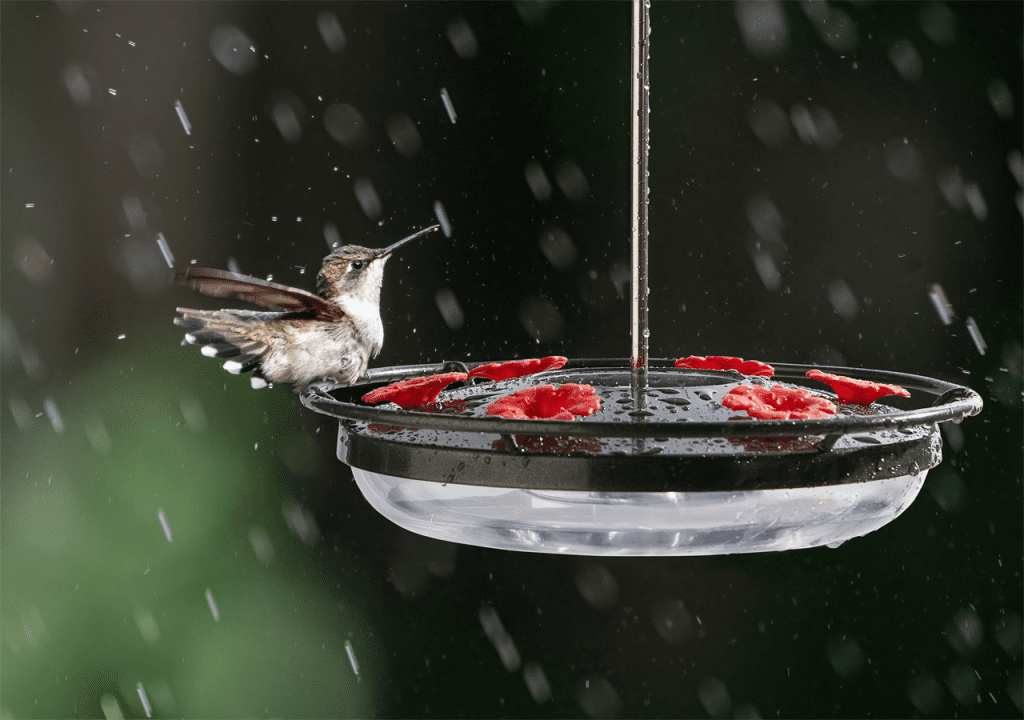
- Switch to a saucer-style feeder — these have feeding ports on top rather than the bottom, which discourages bees
If bee pressure is extreme, consider relocating your feeder or adding a bee guard accessory.
Problem 3: Mold Inside the Feeding Ports
Mold is the most common summer problem and the most dangerous. Black mold can develop inside the narrow channels of feeding ports, especially in humid climates.
Prevention is easier than removal:
- Clean feeding ports with a narrow brush every time you change nectar
- Inspect ports against a bright light to check for dark residue
- Replace feeding ports annually — rubber and silicone components degrade over time and develop cracks that harbor mold
Problem 4: Nectar Leaking and Dripping
Summer heat causes nectar to expand inside the feeder, which can push liquid out through the feeding ports. If your feeder drips:
- Fill only 2/3 full to leave room for expansion
- Ensure all seals and O-rings are properly seated
- Hang the feeder in a spot with afternoon shade to keep temperatures lower
- Switch to a feeder with a built-in drip tray
Problem 5: Drastically Fewer Visits
If hummingbirds suddenly stop coming to your feeder in summer, the culprit is almost always spoiled nectar. Fermented sugar water develops an off-putting odor that humans might not notice, but hummingbirds detect immediately. Clean the feeder thoroughly, refill with fresh nectar, and birds will typically return within 24-48 hours.
Should You Add a Mister or Dripper for Hummingbirds in Summer?
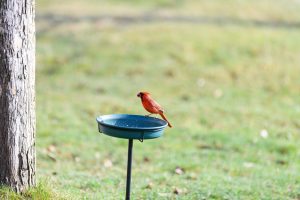
Hummingbirds don’t only need sugar water — they also need fresh water for drinking and bathing. But unlike robins and cardinals, hummingbirds rarely use traditional bird baths. Instead, they prefer misters and fine sprayers that simulate dew on leaves or the fine spray of a waterfall.
Adding a mister near your hummingbird feeder in summer offers three benefits:
- A drinking source — hummingbirds drink droplets from leaves and mist
- Temperature relief — the fine spray creates a cool microclimate that helps birds regulate their body temperature
- An additional attractant — the sight and sound of moving water draws hummingbirds from a wider area
Position the mister 3-5 feet from the feeder, directed at nearby foliage rather than directly at the feeder itself. The water droplets collect on leaves, creating a natural drinking station.
When to Stop Feeding Hummingbirds in Summer
A persistent myth claims that feeding hummingbirds in late summer prevents them from migrating south. This is false. Hummingbirds migrate based on photoperiod — the length of daylight — not on food availability. In fact, keeping your feeder well-stocked through August and September provides critical energy for their southward journey.
According to AllAboutBirds.org from the Cornell Lab of Ornithology, ruby-throated hummingbirds need to double their body weight before crossing the Gulf of Mexico during migration. A reliable feeder is a lifeline during this critical period.
When to safely take down your feeder: After you haven’t seen a hummingbird for two consecutive weeks. In most regions of the United States, this means keeping feeders up through September, sometimes into October in the southern states.
Frequently Asked Questions
How often should I change hummingbird nectar in summer?
Every 2 days when temperatures stay above 80°F (27°C). During heat waves above 90°F (32°C), change the nectar daily. Never simply “top off” old nectar — always empty, clean, and refill.
Can I use a 1:3 sugar-to-water ratio in summer?
Stick with 1:4. A stronger ratio (1:3) can speed up fermentation in warm weather, causing the nectar to spoil faster. The standard 1:4 ratio provides adequate energy.
Why does my hummingbird nectar turn cloudy?
Cloudiness is the first sign of fermentation. Bacteria and yeast are growing in the sugar water. Empty the feeder immediately, clean it thoroughly, and refill with fresh nectar.
Do I need to boil hummingbird nectar in summer?
Boiling helps dissolve the sugar and can slow initial fermentation slightly, but it’s not a substitute for frequent nectar changes. In summer, changing nectar every 2 days matters far more than whether you boiled the water.
What is the best way to clean a hummingbird feeder in summer?
Disassemble completely, scrub with a bottle brush, soak in a 1:4 white vinegar-to-water solution for 15-20 minutes, rinse thoroughly, and air dry. Clean this way at least twice a week in summer.
Will feeding hummingbirds in late summer stop them from migrating?
No. Migration timing is triggered by daylight length, not food availability. Keeping your feeder full through summer and early fall provides essential energy for migration.
How do I keep ants out of my hummingbird feeder?
Use an ant moat — a small water barrier that hangs above the feeder. It’s the most reliable solution. Avoid using petroleum jelly or grease, which can transfer to the nectar.
Can hummingbird nectar spoil in the shade?
Yes. Shade slows fermentation but doesn’t prevent it. Even in a shaded location, nectar should be changed every 2 days in summer.
Key Takeaways
- Nectar ratio: 1:4 sugar to water — no adjustments needed for summer
- Change frequency: Every 2 days (daily during heat waves above 90°F)
- Cleaning: Full vinegar soak twice a week, feeding ports scrubbed with a narrow brush
- Pest control: Ant moats for ants, bee guards for bees, shaded placement for both
- Don’t stop feeding: Keep your feeder up through September to support migration
- Watch for signs: Cloudy nectar, mold, or a sour smell means it’s time to clean immediately
Summer is the most rewarding time of year for hummingbird watching. A few simple adjustments to your care routine will keep your backyard visitors healthy and coming back all season long. Browse our full selection of bird feeders to find the perfect setup for your yard.



2 comments