How to Attract Hummingbirds: The Complete Guide to Creating a Hummingbird Haven
Table of Contents
Quick Answer: How to Attract Hummingbirds Fast
Want to attract hummingbirds quickly? Here are the 5 most important steps:
- Hang a quality hummingbird feeder – Use glass feeders with red accents (not yellow)
- Fill with fresh nectar – Mix 1 part white sugar to 4 parts water, no red dye
- Place in partial shade – Near flowers but with some open perching spots
- Clean weekly – Prevent mold and fermentation that harms hummingbirds
- Be patient – It takes 3-7 days for hummingbirds to discover new feeders
Pro Tip: Hang multiple feeders 10-15 feet apart to reduce territorial aggression and attract more birds.
Understanding Hummingbirds: Why These Tips Work
Before diving into the tips, it helps to understand what makes hummingbirds tick. These tiny birds are unlike any other:
Hummingbird Facts That Matter for Attraction
- Metabolism: Hummingbirds have the fastest metabolism of any bird. They must eat every 10-15 minutes to survive.
- Vision: They see red and orange brilliantly but are less attracted to yellow and blue.
- Memory: Hummingbirds remember reliable food sources and will return to the same feeders year after year.
- Territory: Males are highly territorial and will defend feeders from other hummingbirds.
- Migration: Many species migrate thousands of miles and need stopover feeding stations.
- Energy Needs: They consume up to twice their body weight in nectar daily.
Understanding these behaviors explains why certain strategies work better than others. For example, red feeder accents attract attention, multiple feeders reduce territorial fighting, and consistent nectar quality keeps them coming back.
15 Proven Tips to Attract Hummingbirds
Tip 1: Choose the Right Hummingbird Feeder
Not all hummingbird feeders are created equal. The best feeders share these characteristics:
- Glass construction – Easier to clean, does not retain odors, lasts longer
- Red accents – Attracts hummingbird attention (but avoid red dye in nectar)
- Easy to clean – Wide openings for brush access
- No yellow parts – Yellow attracts bees and wasps
- Appropriate capacity – 16-20 oz for most gardens
Top Pick: The Kingsyard 16oz Glass Hummingbird Feeder is our bestseller for good reason. With over 1,214 five-star reviews, it features:
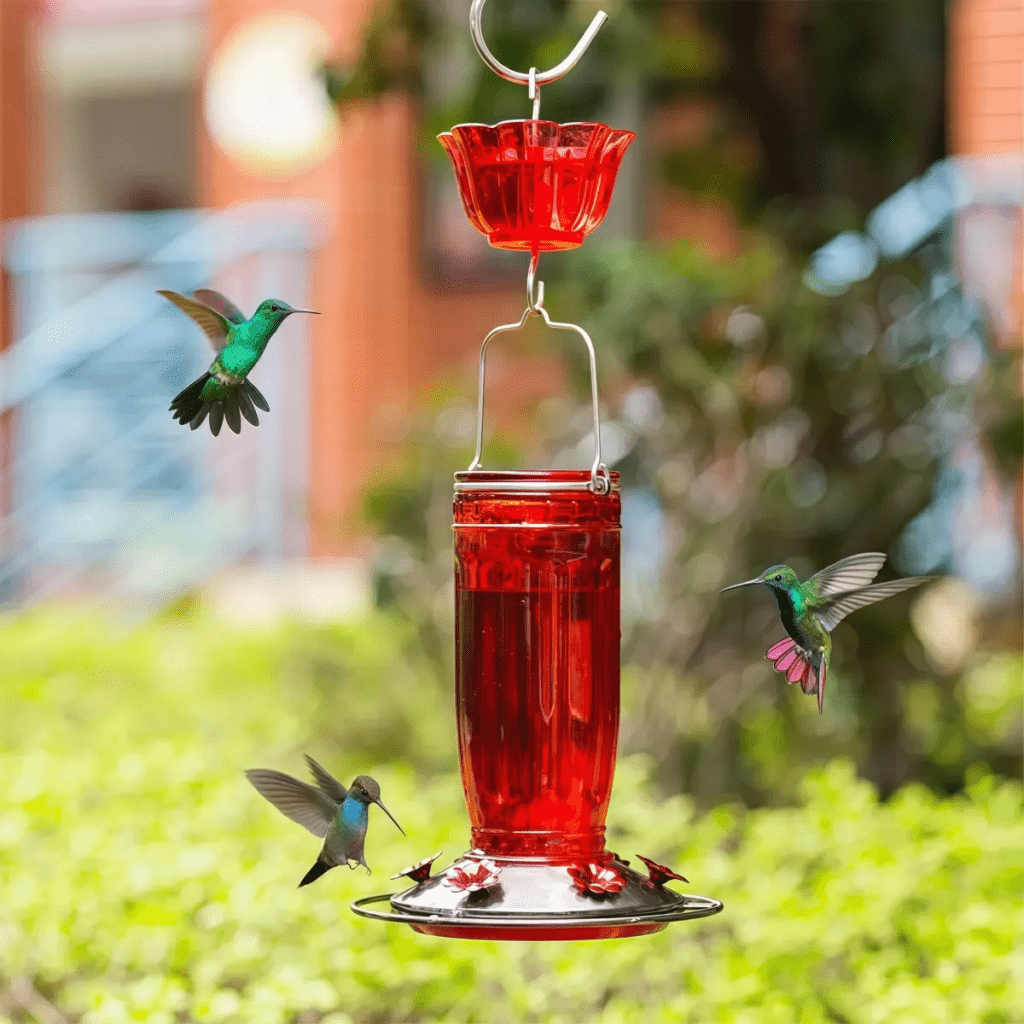
- Premium glass construction for easy cleaning
- Bright red accents that attract hummingbirds
- 16 oz capacity, perfect for small to medium gardens
- Leak-proof design
- Easy-fill wide mouth opening
- Affordable at $24.99
Avoid: Plastic feeders with small openings (hard to clean), feeders with yellow bee guards (attracts insects), and oversized feeders (nectar spoils before hummingbirds can finish it).
Tip 2: Make the Perfect Nectar Recipe
You do not need to buy expensive pre-made nectar. The best hummingbird nectar is simple, cheap, and safe:
Perfect Nectar Recipe:
- 1 part white granulated sugar
- 4 parts water
- Boil water, dissolve sugar, let cool
- That is it!
Important Safety Notes:
- NO red dye – Artificial coloring is harmful to hummingbirds
- NO honey – Promotes dangerous fungal growth
- NO artificial sweeteners – Hummingbirds need real sugar for energy
- NO brown or raw sugar – Contains iron that is toxic to hummingbirds
Pro Tip: Make a batch every 3-4 days and store extra in the refrigerator for up to 2 weeks.
Tip 3: Place Feeders at the Right Height
Hummingbird feeder placement is crucial for attracting visitors:
Ideal Height: 4-6 feet off the ground
- High enough to be safe from predators
- Low enough for easy cleaning and refilling
- At hummingbird eye level for easy discovery
Location Tips:
- Place near flowering plants (natural food sources)
- Provide nearby perching spots (small branches, wires)
- Ensure partial shade to slow nectar fermentation
- Keep 3-5 feet from windows to prevent collisions
Tip 4: Use Multiple Feeders
One feeder is good, but multiple feeders are better. Here is why:
- Reduces territorial aggression – Dominant males cannot guard multiple feeders
- Attracts more birds – More feeding opportunities
- Backup if one feeder is empty – Hummingbirds will return reliably
- Better viewing opportunities – Spread feeders around your yard
Spacing: Place feeders at least 10-15 feet apart, or on opposite sides of your yard. If you see aggressive behavior, increase the distance.
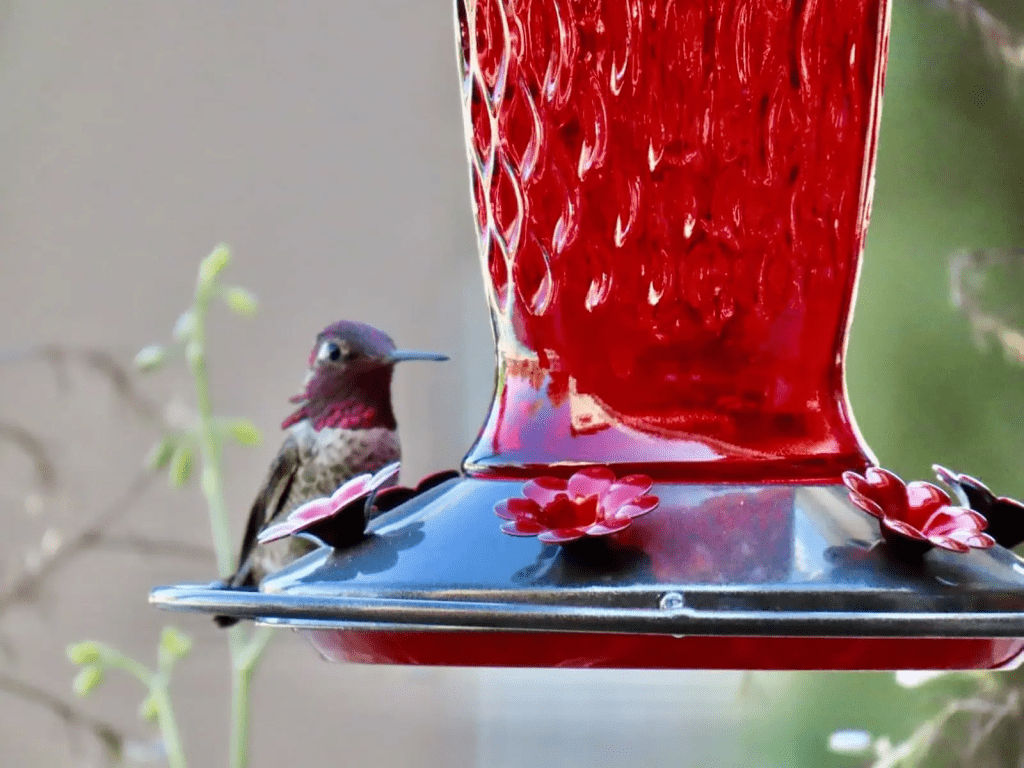
Tip 5: Keep Nectar Fresh and Clean
Fresh nectar is non-negotiable for hummingbird health:
Cleaning Schedule:
- Hot weather (80F+): Clean every 2-3 days
- Moderate weather (60-80F): Clean every 4-5 days
- Cool weather (below 60F): Clean every 6-7 days
How to Clean:
- Empty old nectar
- Rinse with hot water
- Scrub with bottle brush (no soap)
- Rinse thoroughly
- Refill with fresh nectar
Signs of Spoiled Nectar:
- Cloudy appearance
- Floating black spots (mold)
- Sour or fermented smell
- White strings (fungus)
If you see any of these signs, clean immediately and refill. Spoiled nectar can kill hummingbirds.
Tip 6: Plant Hummingbird-Friendly Flowers
While feeders are important, natural food sources make your yard a true hummingbird haven. Plant these flowers:
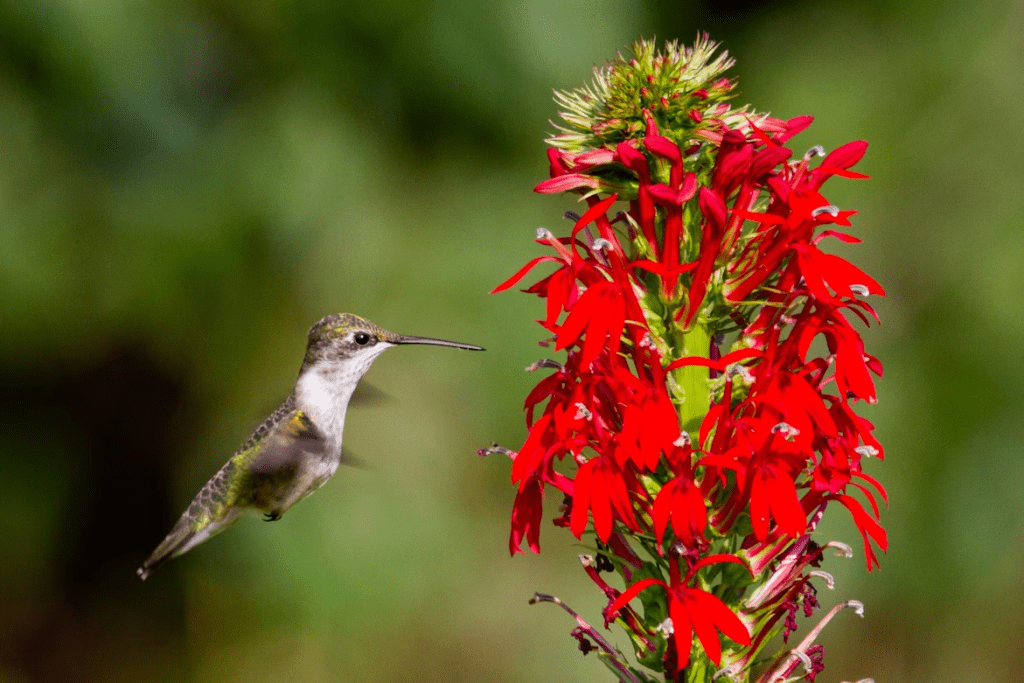
Top 10 Flowers for Hummingbirds:
- Bee Balm (Monarda) – Red, pink, or purple blooms; blooms mid-summer
- Cardinal Flower (Lobelia) – Brilliant red; late summer bloomer
- Salvia/Sage – Long blooming period; drought tolerant
- Columbine (Aquilegia) – Early spring bloomer; perfect for migration
- Trumpet Vine (Campsis) – Vigorous grower; orange trumpet flowers
- Honeysuckle (Lonicera) – Fragrant; attracts with scent and nectar
- Penstemon – Tubular flowers; early summer blooms
- Zinnia – Easy to grow; bright colors
- Impatiens – Shade tolerant; continuous blooms
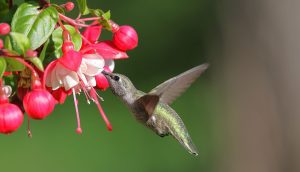
- Fuchsia – Hanging baskets; hummingbirds love the shape
Planting Strategy:
- Choose flowers with tubular shapes (hummingbird beaks fit perfectly)
- Prioritize red, orange, and bright pink colors
- Plan for continuous blooming from spring to fall
- Group same species together for visual impact
Tip 7: Provide Water Sources
Hummingbirds need water for drinking and bathing:
Best Water Sources:
- Misters and foggers – Hummingbirds prefer flying through mist
- Shallow birdbaths – With gentle drippers or fountains
- Dripping faucets – A slow drip creates movement that attracts attention
- Fountains – Small solar fountains work great
Key: Moving water attracts hummingbirds better than still water. The sound and sparkle catches their attention.
Tip 8: Create Perching Spots
Hummingbirds do not just hover; they need places to rest:
- Small branches – Leave some dead branches on trees
- Thin wires – Clotheslines or garden wires work well
- Tall, thin plants – Like ornamental grasses
- Small stakes – Place near feeders
Perching spots allow hummingbirds to rest, digest, and survey their territory. They also give you better photo opportunities!
Tip 9: Avoid Pesticides
Hummingbirds eat small insects for protein. Pesticides eliminate this food source and can poison hummingbirds directly.
Natural Pest Control:
- Encourage beneficial insects (ladybugs, praying mantis)
- Use neem oil or insecticidal soap (hummingbird safe)
- Hand-pick pests from plants
- Accept some plant damage as part of a healthy ecosystem
Tip 10: Time Your Feeder Placement
When you put up feeders matters:
Spring Migration (March-May):
- Put feeders out 1-2 weeks before expected arrival
- Check local migration maps for your area
- Early arrivals are often exhausted migrants
Summer (June-August):
- Keep feeders consistently full
- This is breeding season; females need extra nutrition
Fall Migration (September-November):
- Keep feeders up until 2 weeks after last sighting
- Late migrants need fuel for long journeys
- Some hummingbirds may winter in your area
Pro Tip: In southern states, keep feeders up year-round for overwintering hummingbirds.
Tip 11: Deal with Bees and Wasps
Bees and wasps are the biggest competitor for hummingbird feeders. Here is how to handle them:
Prevention:
- Choose feeders without yellow parts (yellow attracts bees)
- Use feeders with bee guards
- Keep feeders clean (sticky nectar attracts insects)
- Place feeders in shade (bees prefer sun)
If Bees Take Over:
- Move the feeder 3-5 feet (bees will not follow immediately)
- Reduce nectar level so it does not reach the bee guard
- Clean the feeder thoroughly
- Try an ant moat (also works for wasps)
Never: Use pesticides near feeders or coat feeders with oil/grease.
Tip 12: Handle Hummingbird Aggression
Male hummingbirds are fiercely territorial. Here is how to manage it:
Signs of Aggression:
- Chasing other hummingbirds away
- Dive-bombing intruders
- Guarding the feeder constantly
- Making chirping warning calls
Solutions:
- Add more feeders – Spread them around your yard
- Create visual barriers – Use plants or screens to block line of sight
- Place feeders in different areas – Front yard, back yard, side yard
- Use feeding stations – Hang 2-3 feeders together (too many birds to guard)
Tip 13: Make Your Yard Safe
Predators and hazards can keep hummingbirds away:
Predator Prevention:
- Keep cats indoors (or create outdoor cat enclosures)
- Provide cover near feeders (small bushes, trees)
- Avoid placing feeders near perches where hawks could ambush
Window Collision Prevention:
- Place feeders either very close (within 3 feet) or far (10+ feet) from windows
- Use window decals or screens to break up reflections
- Close blinds during peak hummingbird activity
Tip 14: Be Consistent and Patient
Hummingbirds are creatures of habit. Once they find a reliable food source, they will return.
Consistency Keys:
- Keep feeders up throughout the season
- Refill on a regular schedule
- Maintain clean, fresh nectar
- Do not move feeders frequently
Patience Required:
- It takes 3-7 days for hummingbirds to discover new feeders
- Migration timing varies year to year
- Some years are better than others
- First visitors are often scouts who tell others
Pro Tip: Once hummingbirds find your feeder, they will remember it for years. Many people report the same hummingbirds returning to the same feeder every spring.
Tip 15: Keep a Hummingbird Journal
Track your hummingbird visitors to learn their patterns:
What to Record:
- First sighting date (spring arrival)
- Last sighting date (fall departure)
- Number of daily visitors
- Peak activity times
- Behavioral notes (feeding, bathing, territorial disputes)
- Photos and videos
Benefits:
- Learn your local hummingbird patterns
- Identify which strategies work best
- Contribute to citizen science projects
- Create lasting memories
Best Hummingbird Feeders: Our Top Picks for 2026
After testing dozens of hummingbird feeders, here are our top recommendations:
Best Overall: Kingsyard 16oz Glass Hummingbird Feeder
Price: $24.99 Rating: 5 stars (1,214 reviews)
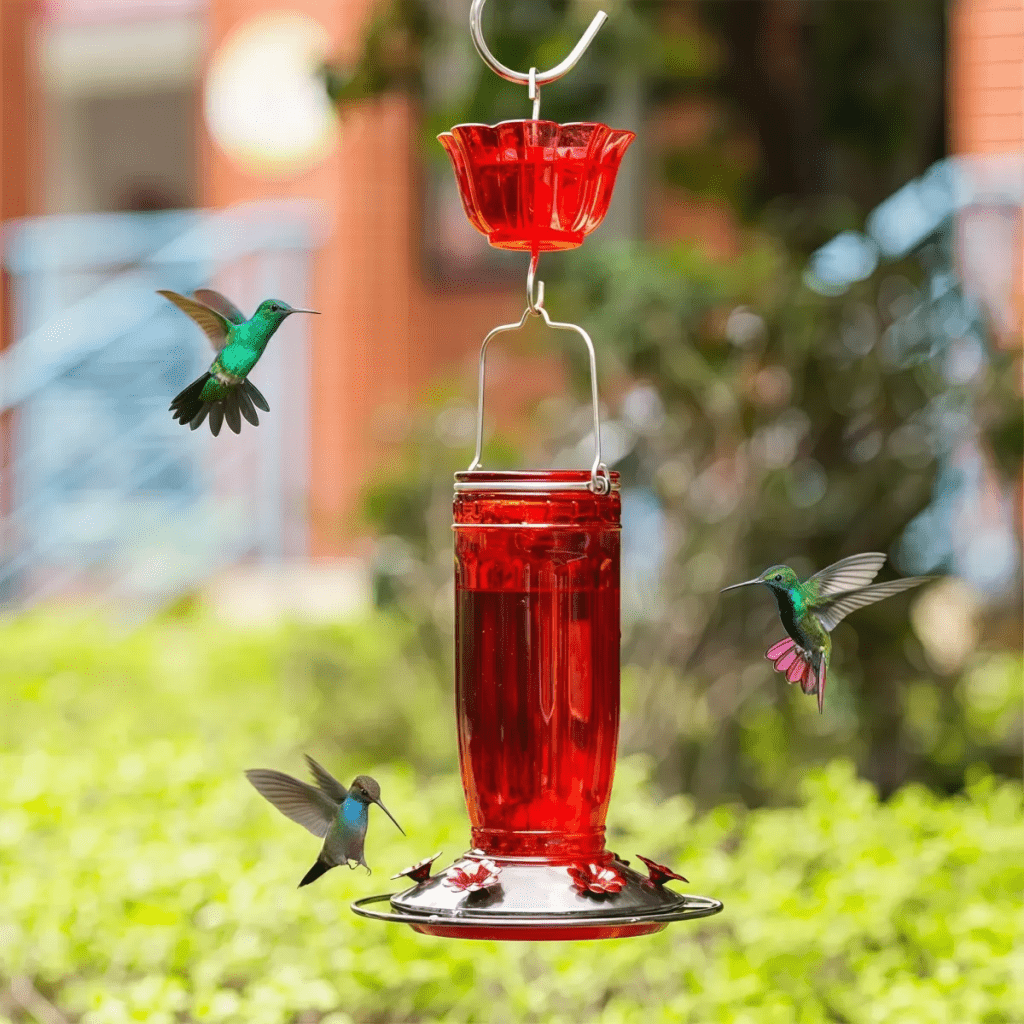
Why We Love It:
- Premium glass construction for easy cleaning
- Bright red accents attract hummingbirds quickly
- 16 oz capacity is perfect for most gardens
- Leak-proof design protects decks and patios
- Wide mouth opening for easy filling
- Durable metal hanger
Best For: Most gardeners, especially beginners
Best Value: Kingsyard 2-Pack Hummingbird Feeder Set
Price: $33.99 (16.99 each) Rating: 4.75 stars (322 reviews)
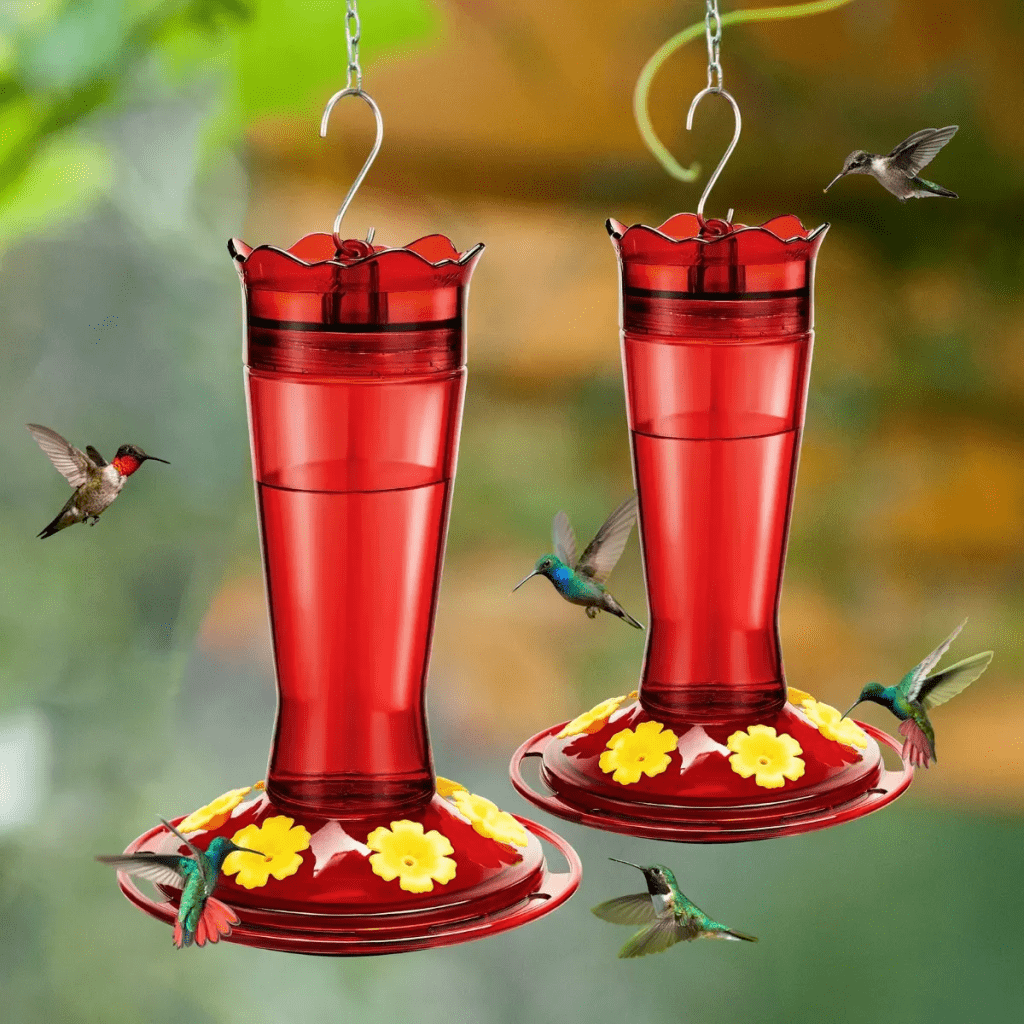
Why We Love It:
- Two feeders for the price of one
- Perfect for reducing territorial aggression
- Same quality as our top pick
- Great value for multi-feeder strategy
Best For: Gardeners who want multiple feeders on a budget
Best Design: 18oz Bee & Ant Proof Glass Hummingbird Feeders
Price: $24.99 Rating: 4.7 stars (30 reviews)
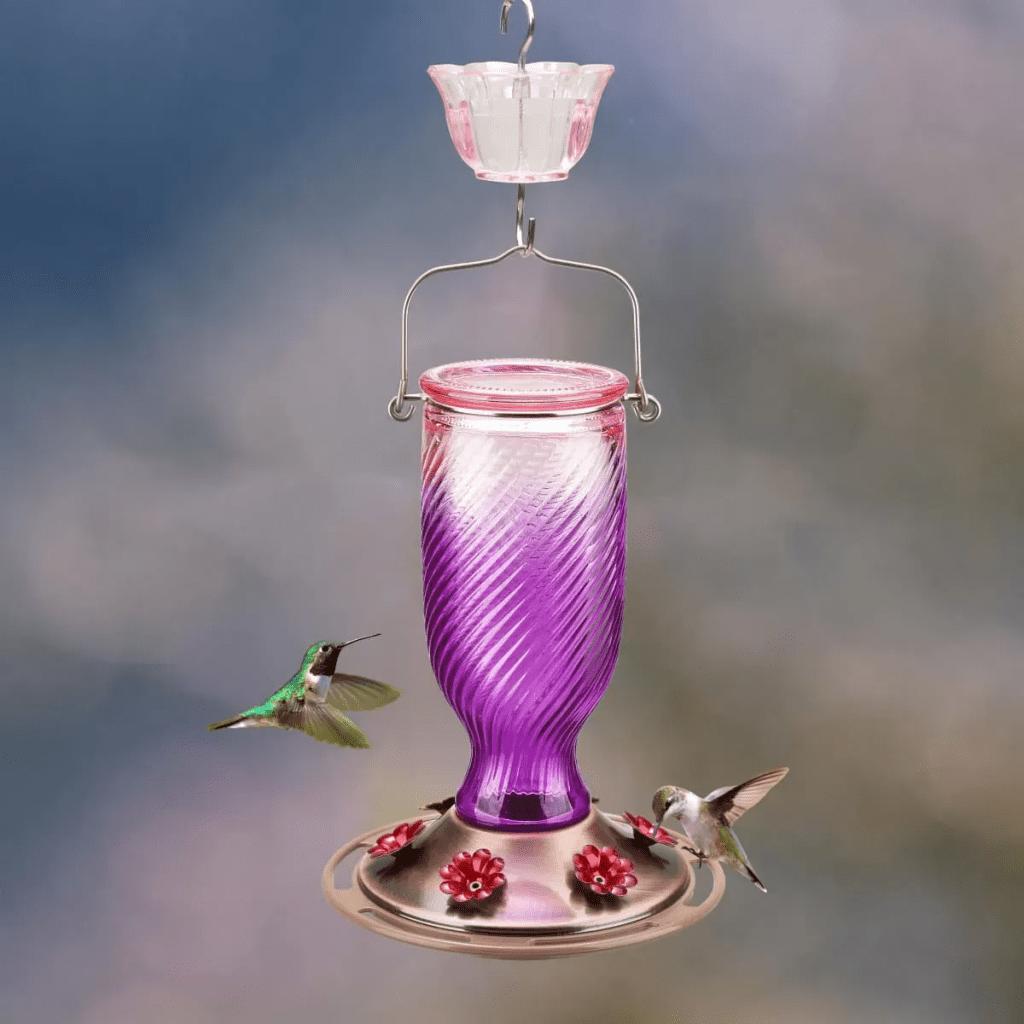
Why We Love It:
- Includes 2 glass feeders (18oz each)
- Decorative metal stand with hanger hooks
- Built-in ant moat
- Elegant garden art piece
- No drilling or mounting required
Best For: Gardeners who likes decorative design
Frequently Asked Questions About Attracting Hummingbirds
Q1: How long does it take to attract hummingbirds?
Most people see their first hummingbird within 3-7 days of hanging a feeder. However, it can take up to 2 weeks in some cases. Hummingbirds are curious and will investigate new red objects in their territory, but they need to confirm the feeder is a reliable food source before becoming regular visitors.
Q2: Where is the best place to hang a hummingbird feeder?
The best location is 4-6 feet off the ground, in partial shade, near flowering plants, away from heavy foot traffic, and 10-15 feet from other feeders if using multiple. Place near a window for viewing but not too close to prevent collisions.
Q3: How often should I change hummingbird nectar?
Change nectar every 3-5 days in moderate weather, and every 2-3 days in hot weather (above 80F). Always change nectar if it looks cloudy, has black spots, or smells fermented. In cool weather (below 60F), you can extend to 5-7 days.
Q4: Can I use honey or artificial sweeteners in hummingbird nectar?
NO! Never use honey, artificial sweeteners, or sugar substitutes. Honey promotes dangerous fungal growth that can kill hummingbirds. Artificial sweeteners provide no nutritional value. Only use white granulated sugar mixed with water in a 1:4 ratio.
Q5: Should I add red dye to the nectar?
NO! Red dye is unnecessary and potentially harmful to hummingbirds. The red color on the feeder itself is enough to attract them. All major hummingbird organizations recommend against using red dye.
Q6: Why are there no hummingbirds at my feeder?
Common reasons include: feeder is too new (give it 1-2 weeks), nectar is spoiled, feeder is in the wrong location, bees or wasps are dominating, a dominant hummingbird is guarding it, or it is outside of migration season. Try moving the feeder, cleaning it thoroughly, or adding a second feeder in a different location.
Q7: Do hummingbirds migrate?
Yes, most hummingbirds migrate thousands of miles between breeding grounds (north) and wintering grounds (south). Spring migration is March-May, fall migration is September-November. Some species stay year-round in southern states.
Q8: How many hummingbird feeders should I have?
Start with 1-2 feeders. If you see aggressive behavior, add more feeders spaced 10-15 feet apart. Some avid hummingbird enthusiasts have 5-10 feeders to attract large numbers of birds.
Q9: What do hummingbirds eat besides nectar?
Hummingbirds also eat small insects and spiders for protein. This is especially important during breeding season when they need protein for egg production and feeding babies. Avoid pesticides to ensure hummingbirds have access to natural insect food sources.
Q10: How do I keep squirrels away from hummingbird feeders?
Squirrels generally do not bother hummingbird feeders because the nectar ports are too small, the nectar is not attractive to them, and feeders are usually too light and unstable. If squirrels are bothering your feeder, try moving it to a location squirrels cannot reach, or use a squirrel baffle on the hanger pole.
Conclusion: Start Your Hummingbird Journey Today
Attracting hummingbirds is one of the most rewarding experiences in bird watching. These tiny jewels bring life, color, and wonder to any garden. With the right feeders, fresh nectar, and hummingbird-friendly plants, you can create a haven that these amazing birds will visit daily.
Remember the key points:
- Choose quality glass feeders with red accents
- Use the simple 1:4 sugar water recipe (no red dye!)
- Clean feeders regularly and keep nectar fresh
- Plant tubular flowers in red, orange, and pink
- Be patient – hummingbirds will find your feeder within 1-2 weeks
- Provide water sources and perching spots
- Keep feeders up throughout migration seasons
Once hummingbirds discover your feeder, they will remember it for years. Many people report the same hummingbirds returning to the same feeder every spring, year after year.
Ready to Start?
Browse the Kingsyard collection of hummingbird feeders and accessories. All feeders come with a lifetime warranty and thousands of five-star reviews.
Happy hummingbird watching!
Related Articles
If you enjoyed this guide, you might also like:
- Spring Bird Feeding Guide – Complete guide to spring feeding strategies
- Best Squirrel Proof Bird Feeders of 2026 – Protect your feeders from squirrels
- Mothers Day Gift Guide – Perfect gift ideas for bird-loving moms
- How to Keep Squirrels Off Bird Feeders – Comprehensive squirrel control strategies

1 comment