When Do Baby Birds Leave the Nest? A Complete Fledgling Timeline
Each spring, more than 5 billion baby birds hatch across North America. By early summer, backyards fill with the quiet drama of nests — parents shuttling food, tiny beaks reaching up, and finally, the moment everyone waits for: the fledging.

If you’ve noticed a nest in your yard and wondered “when do baby birds leave the nest?”, the answer depends on the species. But for most common backyard songbirds, the timeline falls within a predictable window: 7 to 21 days from hatching to fledging (leaving the nest).
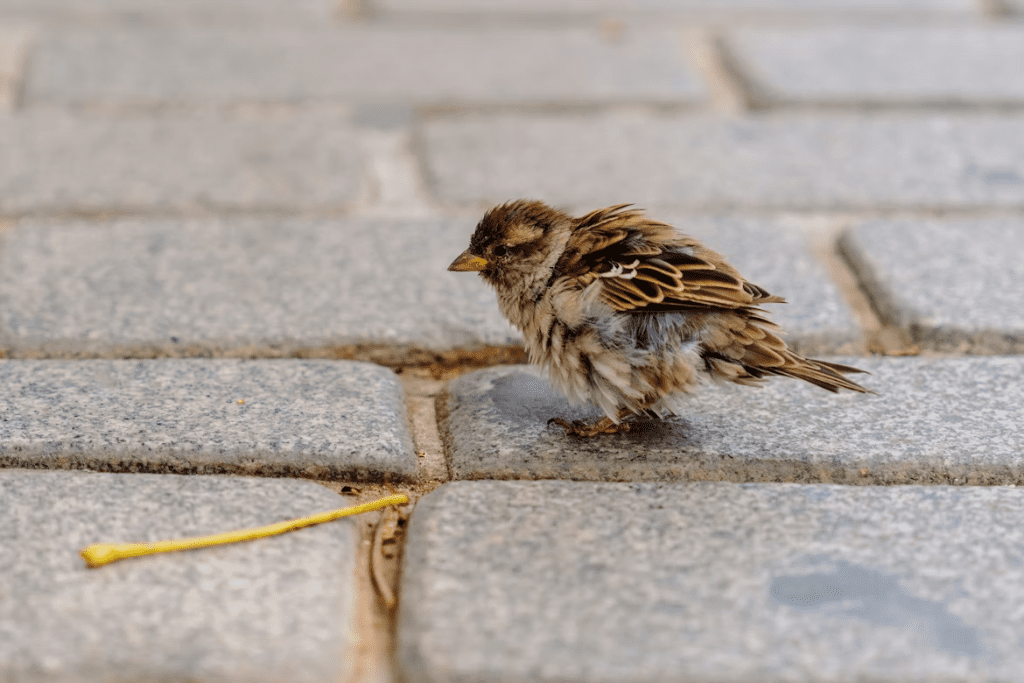
Here’s the catch most people don’t expect: when a baby bird leaves the nest for the first time, it usually cannot fly. Not really. What looks like a helpless bird on the ground is often a perfectly normal fledgling — one that’s exactly where it needs to be as it learns to survive.
This guide covers the fledgling timeline for the most common backyard species, what happens after they leave the nest, and how birdhouses can improve fledging success in your yard.
Table of Contents
The Truth About “Leaving the Nest”
Most people picture a baby bird taking its first strong flight from the nest, soaring off into independence. The reality is messier.
Birds fall into two categories when it comes to development:
- Altricial (most songbirds): Born blind, featherless, and completely dependent on parents
- Precocial (ducks, chickens, quail): Born with eyes open, covered in down, able to walk within hours
For backyard songbirds — robins, bluebirds, chickadees, cardinals, wrens — all are altricial. They develop rapidly inside the nest, then leave while they’re still learning to fly.
This stage, called the fledgling stage, is the most vulnerable period in a bird’s life. And it’s also when most people mistakenly “rescue” a healthy baby bird.
Fledgling Timeline by Species
The exact number of days a baby bird spends in the nest varies by species, nest type, weather, and food availability. Here are the ranges for the most common backyard visitors:
American Robin: 13–15 Days
Robins are one of the most recognizable nesters in North America. Their distinctive blue eggs hatch after about 12–14 days of incubation, and the nestlings grow fast.
| Stage | Timing | What Happens |
|---|---|---|
| Hatching | Day 0 | Blind, naked, completely dependent |
| Eyes open | Day 5–6 | Begins to recognize parent arrivals |
| Feather development | Day 8–10 | Pin feathers emerge, thermoregulation begins |
| Fledging | Day 13–15 | Leaves the nest, often before able to fly well |
After fledging, robin parents split up — one watches the fledglings on the ground while the other brings food. Fledglings stay hidden in shrubs for 1–2 more weeks before becoming fully independent.
Robins typically raise 2–3 broods per season, so you may see multiple fledging cycles from early spring through late summer.
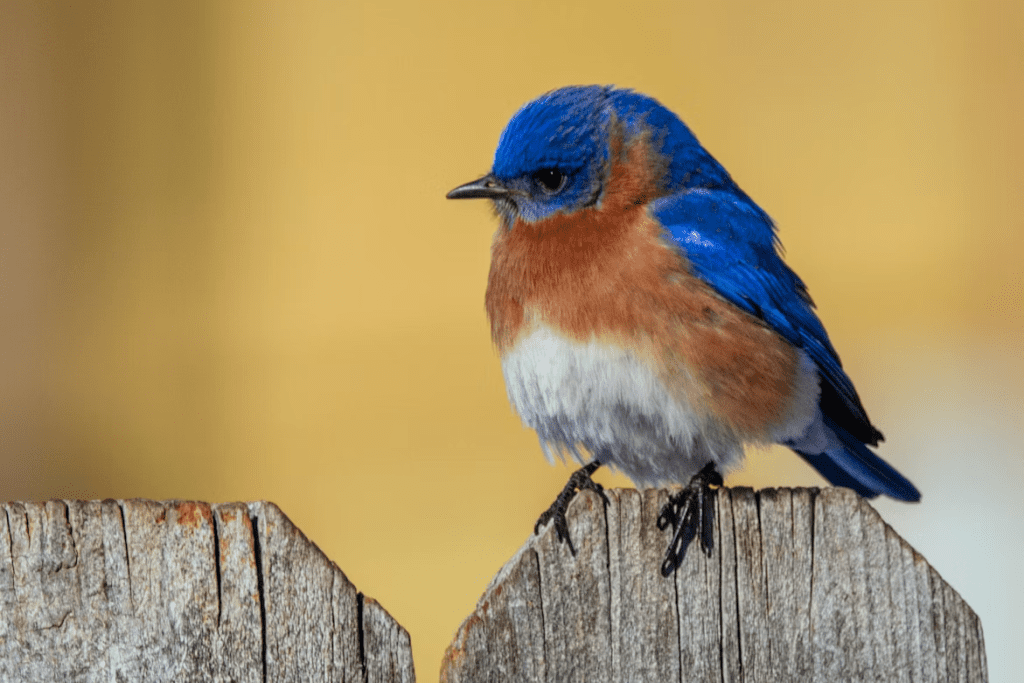
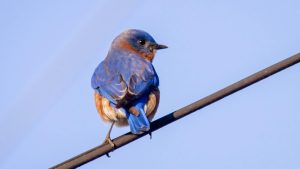
Eastern Bluebird: 16–21 Days
Bluebirds have a longer nestling period than most songbirds. From hatching to fledging, they spend about 16–21 days inside a nest box before taking the leap.
| Stage | Timing | What Happens |
|---|---|---|
| Hatching | Day 0 | Helpless, pink skin |
| Feather growth | Day 7–10 | Blue and rusty feathers become visible |
| Peak feeding | Day 10–14 | Parents bring insects every 5–10 minutes |
| Fledging | Day 16–21 | Often fledge over several hours, not all at once |
Bluebird fledglings are strong fliers by the time they leave — more so than robins or cardinals. This is partly because cavity nests (birdhouses) offer more protection, allowing longer development inside.
Eastern bluebirds commonly raise 2–3 broods per season. A well-placed bluebird house can support multiple fledging cycles in a single summer.
Black-Capped Chickadee: 14–18 Days
Chickadees are cavity nesters, like bluebirds. They build nests inside tree cavities or nest boxes lined with moss and fur.
Chickadee nestlings hatch after about 12–13 days of incubation. Both parents feed the young, bringing caterpillars, spiders, and small insects.
| Stage | Timing | What Happens |
|---|---|---|
| Hatching | Day 0 | Tiny, blind, nearly featherless |
| Feather development | Day 6–8 | Down feathers appear |
| Active begging | Day 10–14 | Loud calls audible from outside the box |
| Fledging | Day 14–18 | Usually fledge in the morning, all within hours of each other |
One characteristic of chickadee fledging: they often leave the nest in rapid succession, sometimes within minutes of each other. The parents then lead them to dense cover where they continue feeding for 2–3 more weeks.
Northern Cardinal: 7–13 Days
Cardinals have one of the shortest nestling periods among common backyard birds. Their young leave the nest after just 7–13 days — still unable to fly well.
| Stage | Timing | What Happens |
|---|---|---|
| Hatching | Day 0 | Pink, blind, sparse down |
| Feathers visible | Day 4–6 | Grayish down becoming prominent |
| Ready to leave | Day 7–10 | Often jump from nest if disturbed |
| Fledging | Day 9–13 | Leave nest, stay low in shrubs |
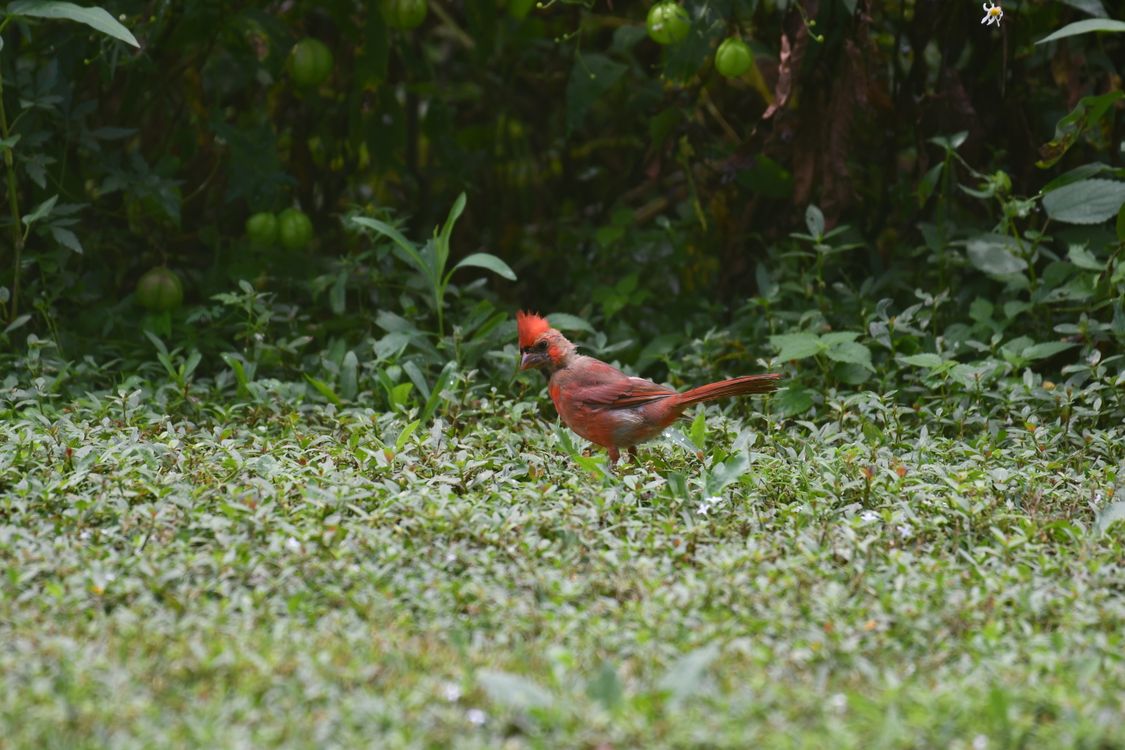
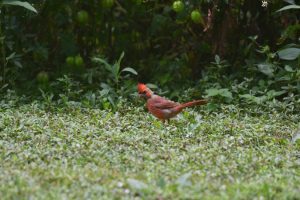
Cardinal fledglings look scruffy — gray-brown plumage with a short tail and a dark beak. Despite their early exit, they grow quickly outside the nest. The male cardinal typically takes over feeding fledglings while the female starts a second brood.
Cardinals often raise 2–3 broods per season, especially in warmer regions of North America.
House Wren: 12–14 Days
House wrens are fierce cavity nesters. They stuff nest boxes with twigs and raise their young rapidly.
House wren eggs incubate for about 9–13 days. The nestlings then develop quickly:
| Stage | Timing | What Happens |
|---|---|---|
| Hatching | Day 0 | Extremely small, naked |
| Rapid growth | Day 5–8 | Feather development accelerates |
| Fledging | Day 12–14 | Leave the nest, often to dense shrubs nearby |
House wrens are serial nesters — a single pair may raise two broods in one season, and they’ll often chase other birds out of nest boxes to claim them. If you have a small wren house, expect nonstop activity through summer.
Mourning Dove: 12–14 Days
Mourning doves build surprisingly flimsy nests — just a loose platform of twigs. Their young (called squabs) develop quickly.
Dove nestlings are fed “crop milk,” a nutrient-rich substance produced by both parents. This allows rapid growth despite the minimal nest structure.
| Stage | Timing | What Happens |
|---|---|---|
| Hatching | Day 0 | Blind, sparse yellow down |
| Eyes open | Day 4–5 | Fully alert |
| Fledging | Day 12–14 | Leave the nest, often before fully feathered |
Mourning dove squabs continue to be fed on the ground for 1–2 weeks after fledging. Doves often raise 3–4 broods per season in warmer regions.
Quick Reference: Fledgling Timetable
| Species | Days in Nest | Broods per Season | Fledgling Flying Ability |
|---|---|---|---|
| American Robin | 13–15 | 2–3 | Weak — stays on ground 1–2 weeks |
| Eastern Bluebird | 16–21 | 2–3 | Moderate — strong fliers by day 20 |
| Black-Capped Chickadee | 14–18 | 1–2 | Moderate — follows parents to cover |
| Northern Cardinal | 7–13 | 2–3 | Weak — hides in shrubs |
| House Wren | 12–14 | 2 | Weak — stays low in vegetation |
| Mourning Dove | 12–14 | 3–4 | Moderate — fed on ground by parents |
How Birdhouse Design Affects Fledging Success
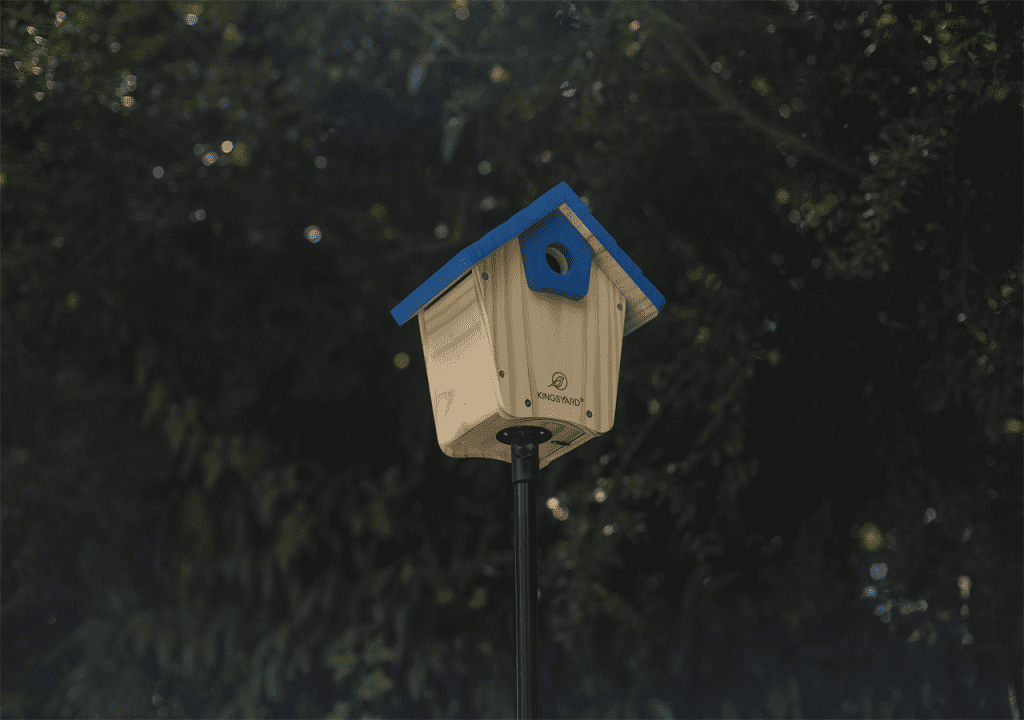
If you want more baby birds successfully leaving the nest in your yard, the right birdhouse makes a measurable difference. Cavity-nesting species like bluebirds, chickadees, and wrens depend on safe nesting sites — and in many suburban yards, natural cavities are scarce.
Here’s what affects fledging success:
Entrance hole size. A 1.5-inch entrance keeps house sparrows and starlings out while letting bluebirds and chickadees in. Wrens need a 1.125-inch hole. The wrong size can let predators in or exclude the birds you want.
Predator guards. A mounted birdhouse without a predator guard is vulnerable to raccoons, snakes, and squirrels. Cone guards and extended roofs reduce predation rates significantly.
Ventilation and drainage. Nestlings generate heat. Without ventilation, a birdhouse can exceed 100°F in direct summer sun — which causes nestlings to leave prematurely or die. Drainage holes prevent water buildup during rain.
Placement height. Bluebird houses should be 4–6 feet off the ground on an open pole. Chickadee and wren houses work best at 5–10 feet, mounted on a tree or post near shrubs.
Our complete guide to birdhouse placement and care tips covers entrance hole sizing, predator guards, and seasonal maintenance in detail.
What Happens After Baby Birds Leave the Nest
The moment a bird fledges is not the end of parental care — it’s the beginning of a new phase.
For the first 3–7 days after fledging, baby birds stay close to the ground in dense cover. They cannot fly well. Their wings flap but don’t generate enough lift for sustained flight. Parents locate them by call and bring food every 10–20 minutes.
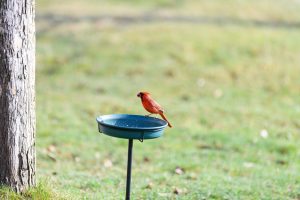
Week 2–3 after fledging, the young birds begin making short flights of 10–50 feet. They learn to identify food sources, avoid predators, and follow their parents to water sources. This is the period when a well-placed bird bath in your yard can provide critical water for fledglings learning to survive on their own. (If you’re curious how water attracts birds during this critical period, see our guide on how to attract birds with water in summer.)
By week 3–4, most fledglings are self-sufficient. They disperse from the natal territory and begin their independent lives.
Should You Help a Baby Bird That Fell Out of the Nest?
This is the most common question from backyard birders in June, and the answer is almost always: no, you should not intervene.
Here’s how to tell what you’re looking at:
If the bird has feathers (even if it looks scruffy and can’t fly well): It’s a fledgling. This is normal. Leave it alone. The parents are nearby watching and will continue feeding it.
If the bird has no feathers (pink skin, eyes may be closed): It’s a nestling that fell or was pushed out. Check the nest above. If you can reach it, gently place the bird back. Parent birds do NOT abandon young touched by humans — that’s a myth.
If the bird is injured (bleeding, wing drooping, cat attack): Contact a licensed wildlife rehabilitator immediately. Do not try to keep and raise it yourself — baby birds have specialized dietary needs that are difficult to meet.
For a deeper look at nest building behaviors and how different species prepare for their young, read our article on the art of nest building from hummingbirds to cardinals.
FAQ
How long do baby birds stay in the nest?
For most backyard songbirds, baby birds stay in the nest for 7 to 21 days after hatching, depending on the species. Cardinals leave earliest (7–13 days), while bluebirds stay the longest (16–21 days).
Do birds sleep in the nest after they leave?
No. Once a bird fledges, it does not return to the nest to sleep. Fledglings roost in dense shrubs, trees, or on the ground under cover. The nest is abandoned after the last chick leaves.
What do baby birds eat after leaving the nest?
Fledglings eat the same food their parents ate during nesting — primarily insects, spiders, berries, and seeds depending on the species. Parents continue bringing food for 1–4 weeks after fledging.
How can I tell if a baby bird is orphaned?
A baby bird is likely not orphaned if you see any adult birds of the same species nearby. Parent birds are often foraging nearby and return within minutes. If no adult appears for more than 2 hours during daylight, or if the adult is found dead nearby, the bird may be orphaned.
Do both parents feed the babies?
For most backyard songbirds, yes. Both parents share feeding duties. In species like cardinals, the male may take over fledgling care while the female starts a second brood. In mourning doves, both parents produce crop milk to feed the young.
When do birds have their second brood?
Many backyard species raise 2–3 broods per season. Robins, bluebirds, and cardinals often start a second brood immediately after the first fledges — while the male continues feeding the first brood’s fledglings. The timing varies by region and food availability.
Will birds reuse the same nest?
Most songbirds do not reuse the same nest for a second brood. They build a new nest on top of or near the old one. Exceptions include mourning doves (which may repair and reuse) and some cavity nesters.
Know the Season, Watch the Nest, Let Them Be
Here’s what to remember:
- Most backyard songbirds fledge within 7–21 days of hatching — the exact timeline depends on the species
- Fledglings on the ground are normal — they’re not abandoned, they’re learning to survive
- A well-designed birdhouse improves fledging success dramatically for cavity-nesting species like bluebirds, chickadees, and wrens
- Water sources become critical for fledglings learning to find food and stay hydrated independently
If you’re looking to support more nesting birds in your backyard this season, the single most effective step is providing safe, predator-protected birdhouses in the right locations.
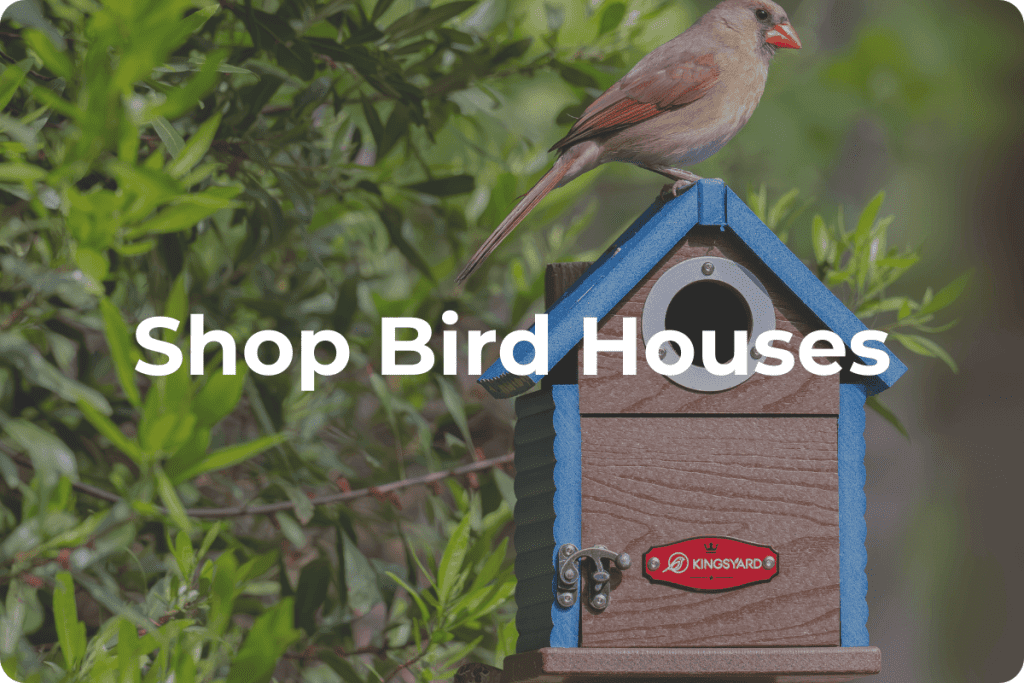
Browse Kingsyard’s selection of bird houses — including wren houses, bluebird houses, chickadee houses, and multi-chamber designs that support multiple broods through the summer nesting season.



1 comment