Can You Feed Suet in Summer? No-Melt Suet & Summer Bird Feeding Tips
“Is it safe to feed suet in summer?” It’s one of the most common questions birders ask when temperatures climb past 80°F. And it makes sense — suet is rendered beef fat mixed with seeds, nuts, and fruit. The idea of fat melting in the summer sun feels wrong.
Here’s the good news: Yes, you can feed suet in summer. Not only is it safe, but summer is actually a critical time for suet-loving birds. Woodpeckers, nuthatches, chickadees, and bluebirds all benefit from the high-energy protein found in suet, especially during the demanding nesting season. The key is choosing the right product and the right feeder setup.
In this guide, we cover everything you need to know about feeding suet during hot weather — from no-melt suet formulations to feeder placement tips that keep your suet fresh and bird-safe all summer long.
The Difference Between Regular Suet and No-Melt Suet
Understanding the two types of suet is essential before you stock up for summer.
Regular Suet (Rendered Beef Fat)
Traditional suet is made from rendered beef kidney fat mixed with grains, seeds, or insects. It has a melting point of approximately 113-120°F (45-49°C). In direct sunlight on a 90°F day, suet cakes can soften significantly, drip, and even melt entirely — creating a mess on your deck or patio and potentially coating birds’ feathers in greasy residue.
Regular suet is best suited for:
- Fall and winter feeding (October through March)
- Heavily shaded feeders in cooler climates
- Cold-weather bird feeding stations
No-Melt Suet
No-melt suet (sometimes labeled “summer suet” or “no-drip suet”) is manufactured with a higher melting point by adding grains like oat flour or cornmeal and using a different rendering process. These cakes hold their shape in temperatures up to 110-120°F and won’t drip or spoil as quickly.
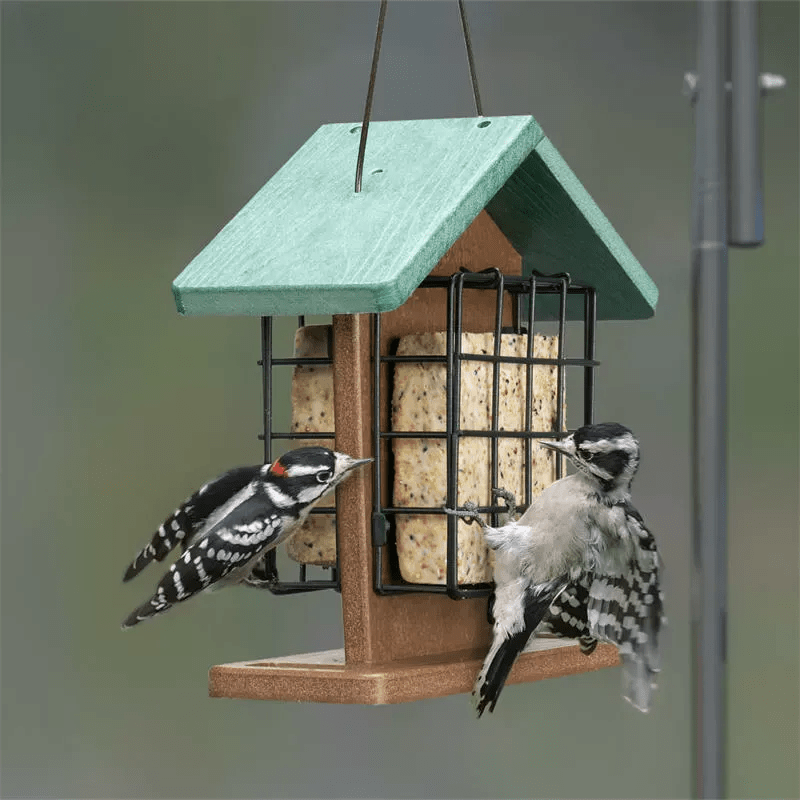
No-melt suet is essential for:
- Summer feeding (May through September)
- Feeders in partial or direct sun
- Warm and humid climates (southeastern US, Gulf Coast)
- Extended feeding sessions where you can’t check daily
Our recommendation: Always use no-melt or “summer blend” suet cakes from late spring through early fall. Pair it with a suet feeder that offers good ventilation and shade for hot-weather performance.
What Birds Visit Suet Feeders in Summer?
Summer suet feeding attracts a surprising range of birds, many of which are actively nesting and need high-protein food.
Woodpeckers
Woodpeckers are the most common suet visitors year-round. In summer, they bring their fledglings to feeders, creating wonderful family-viewing opportunities. Species you can expect:
- Downy Woodpecker: The smallest and most common. They visit suet feeders multiple times daily during nesting season.
- Hairy Woodpecker: Larger than Downy, with a longer bill. Less common but regular visitors where they range.
- Red-bellied Woodpecker: Common in eastern and central North America. They prefer suet with peanuts or sunflower.
- Northern Flicker: Ground-feeding woodpeckers that visit suet feeders, especially those with fruit blends.
- Red-headed Woodpecker: Less common but striking visitors where they are found.
- Yellow-bellied Sapsucker: Will visit suet feeders during migration and summer breeding.
Kingsyard offers a range of woodpecker feeders designed specifically for these birds, including suet cages and tail-prop feeders that woodpeckers prefer.
Nuthatches
Both White-breasted and Red-breasted Nuthatches love suet. They’re acrobatic feeders, often seen hanging upside down from suet cages. In summer, they cache suet pieces in tree bark crevices for later consumption.
Chickadees
Black-capped and Carolina Chickadees will take small suet pieces from a feeder. They’re frequent visitors, especially early morning and late afternoon.
Titmice
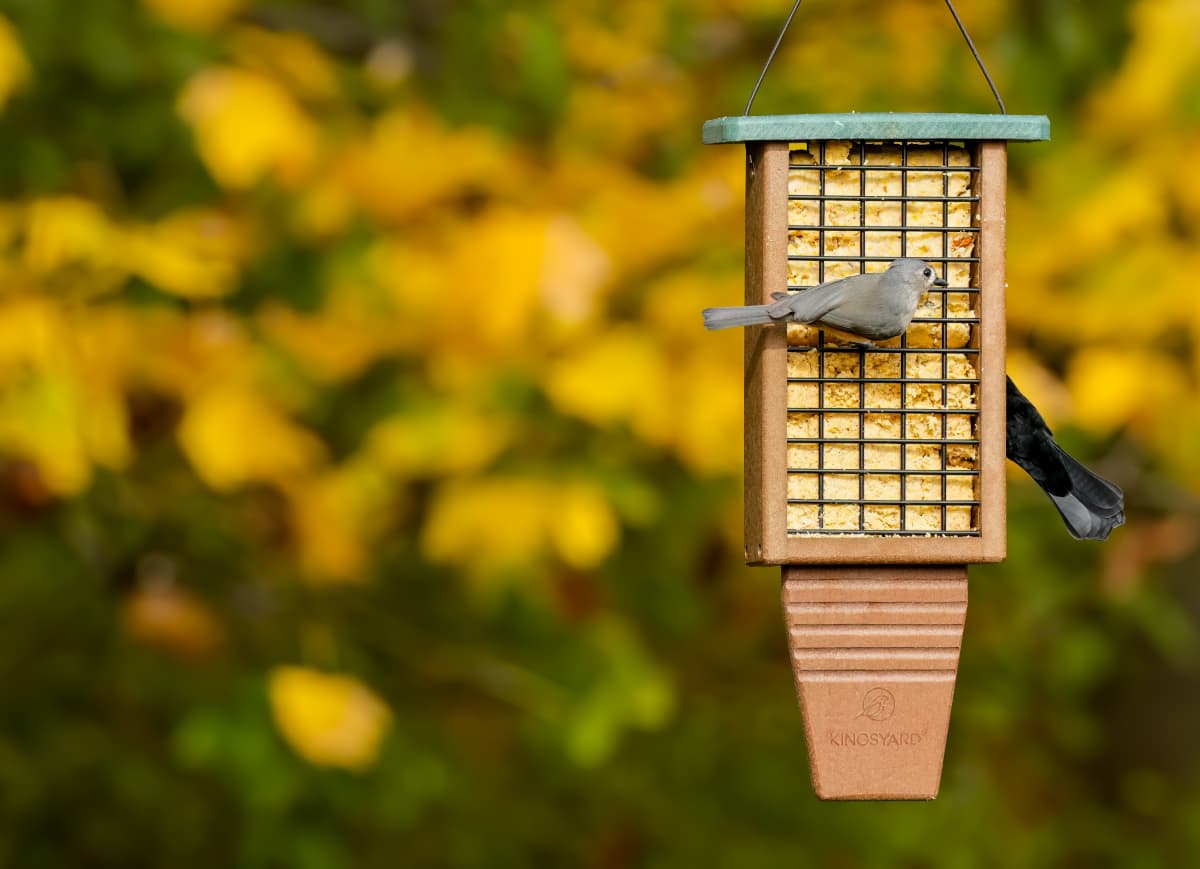
Tufted Titmice are bold suet feeders. They typically grab a piece and fly to a nearby branch to eat, returning repeatedly throughout the day.
Bluebirds and Wrens
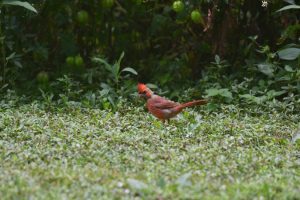
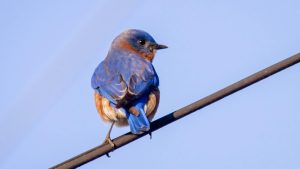
Eastern Bluebirds and Carolina Wrens will visit suet feeders, especially those offering insect-blend suet (with dried mealworms). Summer is peak bluebird nesting season, and insect-rich suet provides essential protein for growing chicks. If you want to attract more of these insect-loving birds, check out our guide on how to attract cardinals to your backyard — cardinal feeding tips overlap significantly with strategies for bluebirds and wrens.
Starlings and Grackles (the challenge)
European Starlings and Common Grackles will dominate suet feeders if given the opportunity. Using upside-down suet feeders or caged designs can help exclude these larger, aggressive birds while allowing woodpeckers and smaller species to feed. See our summer feeder problem guide for strategies to manage nuisance birds.
How to Choose the Right Suet Feeder for Summer
The feeder design matters as much as the suet itself, especially in hot weather.
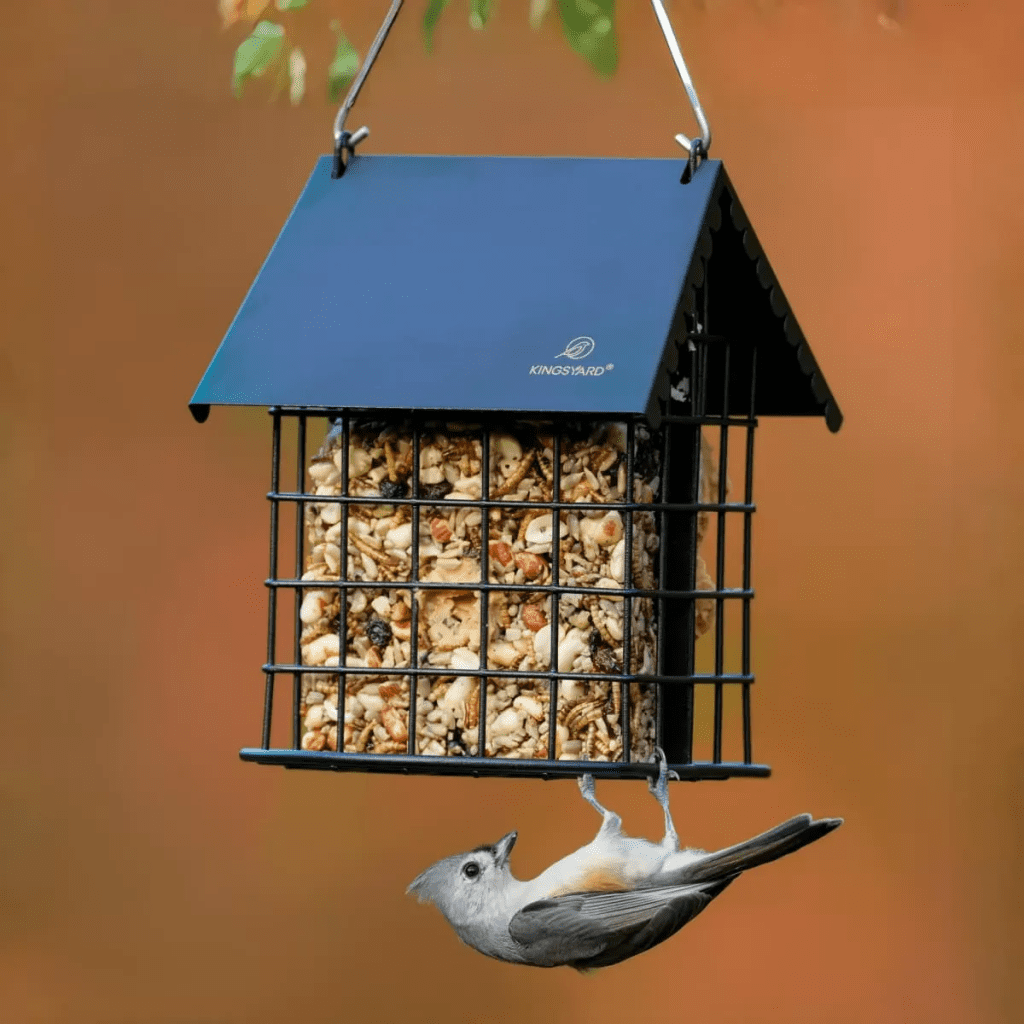
Standard Suet Cage Feeders
The most common suet feeder is the wire cage design, typically holding one or two suet cakes. These are fine for summer but should have:
- Good ventilation to prevent heat buildup
- A rain guard or roof to keep suet dry (wet suet spoils faster)
- Easy-open design for regular cleaning
Upside-Down Suet Feeders
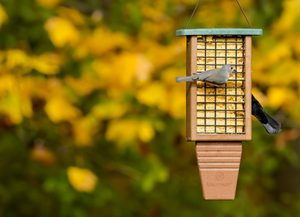
For summer feeding, upside-down suet feeders are a smart choice. These feeders position the suet cage underneath a roof, requiring birds to hang upside down to feed. This design:
- Excludes starlings and grackles (they rarely feed upside down)
- Provides shade from direct sun
- Keeps suet cooler than top-access feeders
- Attracts woodpeckers, nuthatches, and chickadees that naturally feed upside down
Caged Suet Feeders
Large caged suet feeders surround the suet with a wire mesh barrier. The spacing allows small birds like chickadees and nuthatches to enter while keeping larger birds out. These are particularly useful in summer when aggressive flocking birds are most active.
Hopper-Style Suet Feeders
Some hopper-style feeders have suet compartments built into the design. These offer maximum protection from sun and rain but can be more expensive. They’re worth considering for permanent summer feeding stations.
Tail-Prop Feeders
Woodpeckers have stiff tail feathers that they use as a prop when feeding on vertical surfaces. Tail-prop feeders include a wooden block or extended surface below the suet cage, giving woodpeckers the support they need to feed comfortably. This design is especially attractive to larger woodpeckers like Pileated and Hairy Woodpeckers.
Browse Kingsyard’s full selection of suet bird feeders to find the right design for your summer setup.
How to Keep Suet Fresh in Hot Weather
The biggest risk with summer suet isn’t melting — it’s spoilage. Heat accelerates bacterial growth, and rancid suet can make birds sick. Follow these rules to keep your suet safe.
Rule 1: Use No-Melt Suet Cakes
This is non-negotiable for summer feeding. Standard suet below 90°F might hold its shape, but no-melt formulations are specifically designed to withstand summer heat. Look for “no melt,” “summer blend,” or “no drip” on the label.
Rule 2: Feed in Small Quantities
Instead of filling a dual-cage feeder with two full cakes, offer half a cake at a time. This ensures it gets consumed before it has time to spoil. Refill only when the previous cake is fully eaten.
Rule 3: Store Suet Properly
Keep unopened suet cakes in a cool, dark place (below 75°F). Refrigeration is ideal for summer storage. Once opened, suet cakes should be used within 1-2 weeks.
Rule 4: Place Feeders in Shade
Choose a location that gets morning sun but afternoon shade. The cooler the feeder stays, the longer the suet lasts. North or east-facing positions are ideal.
Rule 5: Clean Feeders Frequently
In summer, suet residue can build up on feeder wires and breed bacteria. Clean your suet feeder every 2-3 weeks with hot, soapy water and a stiff brush. Rinse thoroughly and dry before refilling. Our bird feeder cleaning guide covers the best cleaning methods.
Signs Your Suet Has Gone Bad
- Smell: Rancid or sour odor instead of neutral/fatty smell
- Texture: Oily liquid pooling at the bottom of the feeder
- Mold: White, green, or black spots on the surface
- Insects: Ants, beetles, or larvae in the suet
- Birds avoiding it: If woodpeckers stop visiting, the suet has likely spoiled
If you notice any of these signs, discard the suet immediately and clean the feeder before refilling.
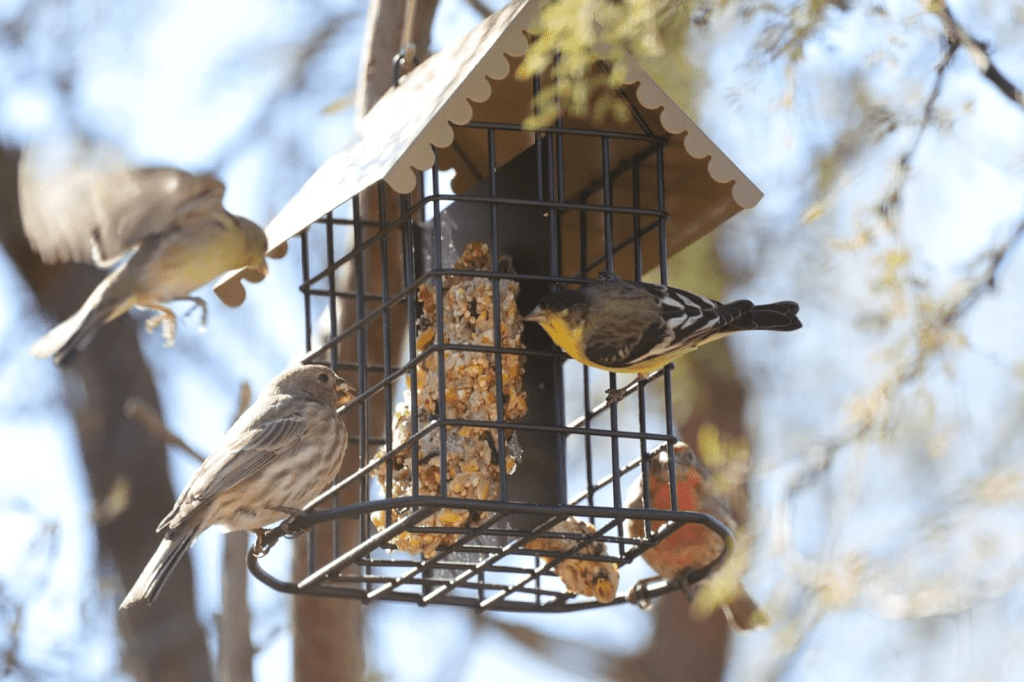
Suet Placement Tips for Summer
Where you place your suet feeder matters even more in summer than in winter.
Height and Positioning
Mount suet feeders 5-7 feet above ground — high enough to deter ground predators but low enough for comfortable woodpecker access. Woodpeckers prefer feeders mounted on tree trunks or posts rather than hanging from shepherds hooks, as this mimics their natural feeding posture.
Proximity to Cover
Position the feeder within 10-15 feet of trees or shrubs. Summer birds want a quick escape route from predators, especially when fledglings are learning to feed. However, avoid placing the feeder directly under overhanging branches where squirrels can drop onto it.
Keep Water Nearby
Birds need water in summer, especially when eating dry suet. A nearby bird bath with fresh, clean water will increase feeder traffic significantly. Birds that stop for a drink between suet visits become regular visitors.
Protection from Ants
Summer suet is an ant magnet. If ants discover your feeder, they can cover it within hours. Use an ant moat or apply a thin layer of petroleum jelly to the hanging wire. Some suet feeders come with built-in ant guards.
Do You Need Different Suet Blends for Summer?
Yes, choosing the right suet flavor can attract specific birds in summer.
Insect Blend Suet (Best for Bluebirds and Wrens)
Insect suet contains dried mealworms or fly larvae. This is the highest-protein option and is especially attractive during nesting season when parent birds need protein-rich food. Eastern Bluebirds, Carolina Wrens, and chickadees prefer insect blends over plain seed suet.
Fruit Blend Suet (Best for Orioles, Tanagers, and Flickers)
Fruit suet contains dried berries, cherries, or apples mixed into the fat base. Northern Flickers, Baltimore Orioles, and Scarlet Tanagers are drawn to fruit blends. In summer, when natural fruits are available, this blend can compete effectively with natural food sources.
Peanut Butter Suet (Best for Woodpeckers and Nuthatches)
Peanut butter suet is a favorite of woodpeckers and nuthatches. The peanut flavor and high oil content make it irresistible. Downy and Hairy Woodpeckers will choose peanut suet over plain seed suet every time.
Hot Pepper Suet (Deters Squirrels)
Spicy suet blends use hot pepper to deter squirrels while birds (which cannot taste capsaicin) feed freely. If squirrels are raiding your suet feeder, hot pepper suet is an effective non-chemical deterrent. You can also pair it with a caged bird feeder for maximum squirrel resistance.
Common Summer Suet Mistakes
Avoid these common errors that reduce suet feeding success in summer.
Mistake 1: Leaving Regular Suet in the Sun
This is the most common mistake. Regular suet left in direct sunlight on a 90°F day will melt within hours. The melted fat can drip onto birds’ feathers, compromising their insulation and waterproofing. Always use no-melt suet in summer.
Mistake 2: Overfilling the Feeder
In winter, you can load a dual suet feeder and it will get eaten in a few days. In summer, birds have more natural food options and may eat suet more slowly. Offer smaller amounts to prevent spoilage.
Mistake 3: Neglecting to Clean
Suet feeders get greasy and can harbor bacteria. Many birders clean suet feeders only in the spring and fall, forgetting that summer heat accelerates bacterial growth. Clean every 2-3 weeks during peak summer.
Mistake 4: Using the Wrong Feeder Design
Standard open suet cages expose suet to full sun and rain. In summer, choose feeders with roofs, covered tops, or upside-down designs. The small investment in a summer-specific feeder pays off in reduced waste and healthier birds.
Mistake 5: Assuming Birds Don’t Need Suet in Summer
Some birders stop feeding suet entirely from May to September, assuming birds don’t need it when natural food is abundant. But suet provides concentrated protein that is scarce in natural summer diets. Woodpeckers raise their young on high-protein food, and suet is one of the best sources available. Continuing to offer suet through summer supports breeding birds during their most energy-intensive period.
If you want to attract a diverse range of birds to your backyard, offer a variety of food types. Kingsyard’s bird feeders collection includes options for suet, seed, nectar, and fruit — creating a complete summer feeding station.
Frequently Asked Questions About Suet in Summer
What temperature is too hot for suet?
Standard suet begins softening above 80°F and can melt at 90°F+. No-melt suet holds its shape up to approximately 110-120°F. If temperatures exceed 110°F, consider switching to seed-only feeding until cooler weather returns.
Does suet go bad if it doesn’t melt?
Yes, even if it doesn’t melt, suet can spoil. Heat accelerates the oxidation of fats (rancidity) and promotes bacterial growth. If suet has been in a feeder for more than 2 weeks in hot weather, replace it regardless of whether it looks intact.
Do hummingbirds eat suet?
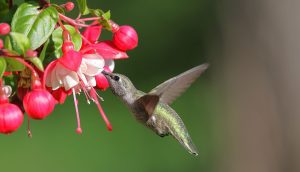
No, hummingbirds do not eat suet. They feed on nectar, tiny insects, and tree sap. However, a suet feeder and a hummingbird feeder can coexist in the same yard — they attract completely different species.
Can you make your own no-melt suet?
Yes, you can make no-melt suet at home by combining rendered fat with cornmeal, oat flour, and seeds in specific ratios. However, commercial no-melt suet is formulated with precise melting points that are difficult to replicate at home. For consistent results, commercial products are recommended.
Are woodpeckers around in summer?
Yes, woodpeckers are active year-round. In summer, they are nesting and feeding young, making suet feeders especially valuable. Downy, Hairy, Red-bellied, and Northern Flicker woodpeckers all visit summer suet feeders regularly.
Should I stop suet feeding during a heatwave?
If temperatures exceed 100°F, consider removing suet feeders temporarily. The risk of spoilage increases dramatically above this threshold, and birds have other food options during extreme heat. Resume feeding when temperatures drop below 95°F.
How do I keep ants out of suet feeders?
Use an ant moat (a small cup of water suspended above the feeder) or apply a food-safe barrier. Place the feeder on a pole with an ant guard rather than hanging from a tree, which ants can easily access.
Can suet feeders attract bears?
In areas with bear populations, yes, suet can attract bears because of its high fat content. If you live in bear country, remove suet feeders from April through November and only offer seed feeders in bear-resistant designs.
Conclusion: Feed Suet Confidently This Summer
Summer suet feeding is safe, beneficial, and easy when you follow the right practices. The key takeaways:
- Use no-melt suet cakes labeled for summer use — this eliminates the melting problem entirely.
- Choose the right feeder — upside-down, caged, or shaded designs keep suet cooler and exclude nuisance birds.
- Clean regularly and feed small amounts to prevent spoilage and keep birds healthy.
- Keep feeding through summer — woodpeckers and other suet-loving birds need the protein during nesting season.
Whether you’re a seasoned birder or new to summer feeding, the right suet setup can transform your backyard into a hub of activity. Kingsyard’s suet bird feeders are built for year-round use and designed to keep your suet fresh, accessible, and attractive to the widest range of species.