How to Attract Orioles to Your Backyard: Fruit, Nectar & Feeder Setup Guide
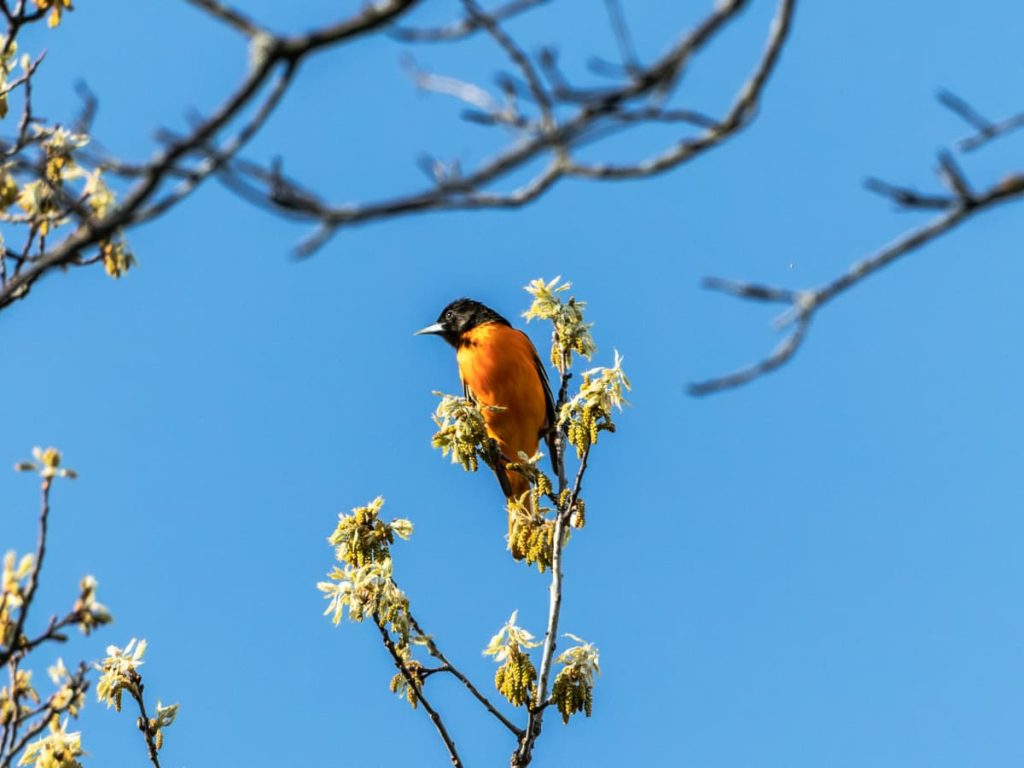
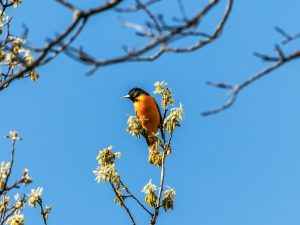
Baltimore orioles are among the most striking backyard birds in North America. Their flame-orange and black plumage is so vivid that early naturalists named them after the colors of the Baltimore coat of arms. Yet despite their brilliant appearance, orioles are surprisingly easy to attract — if you know what they want.
Orioles follow a very different playbook from seed-eating backyard birds. They don’t visit nyjer feeders or eat black-oil sunflower seeds. Instead, they crave sweet, sugary foods — ripe fruit, flower nectar, and jelly. Once you offer the right foods in the right setup, orioles will become regular visitors throughout the spring and summer.
This guide covers everything you need to know about how to attract orioles, including what foods they prefer, which feeders work best, when they arrive in your area, and how to keep them coming back.
Table of Contents
When Do Orioles Arrive in Spring?
Before you can attract orioles, you need to know when they show up. Orioles are migratory birds that winter in Central and South America and arrive in North America from late April through mid-May.
Migration Timeline by Region
| Region | Typical Arrival | Peak Activity | Departure |
|---|---|---|---|
| Southern US (Texas, Gulf) | Late March – Early April | April – May | September |
| Mid-Atlantic / Midwest | Late April – Early May | May – July | Late August |
| Northeast / Great Lakes | Early – Mid May | May – July | Late August |
| Pacific Northwest | Mid – Late May | June – July | September |
| Canada | Mid – Late May | June – July | August |
Pro tip: Set your oriole feeders out 1-2 weeks before the expected arrival date in your area. Early migrants are hungry after their long journey and will remember a reliable food source. If you wait until you spot the first oriole, you may miss the early wave.
How to Know Orioles Are Coming
Listen for their distinctive song — a series of rich, whistled notes that sound like “Here-here-come-right-here-where-where.” Males sing from high perches to establish territories. Once you hear that call, put out fresh oranges and jelly immediately.
What Do Orioles Eat? The Three Foods They Love Most
Orioles have a sweet tooth. Their diet consists primarily of three foods, each of which plays a role at different points in the season.
1. Oranges — The Gold Standard
Halved oranges are the single most effective food for attracting orioles. The bright orange color and sweet citrus scent draw them from a distance. Here’s how to offer them:
- Cut oranges in half crosswise (not pole to pole) to expose the largest surface area.
- Place the halves on a platform feeder, spike feeder, or nail them to a fence post.
- Replace every 1-2 days in hot weather — oranges dry out and mold quickly.
- Remove any fruit that shows signs of mold immediately.
Orioles prefer navel oranges for their sweetness, but they will eat any variety. If you have citrus trees, orioles will visit them directly.
2. Grape Jelly — The Secret Weapon
Grape jelly is the most famous oriole attractant, and for good reason. It’s high in sugar, easy to offer, and orioles cannot resist it. Use these guidelines:
- Use concord grape jelly (Welch’s or store brand). Avoid sugar-free, low-sugar, or artificial-sweetener jellies — birds need the natural sugar for energy.
- Offer jelly in a small dish or a dedicated oriole jelly feeder with a shallow well.
- Change jelly every 2-3 days in hot weather to prevent fermentation and spoilage.
- In early spring, jelly consumption is highest as migrants refuel after travel.
Important: Do not offer jelly in deep containers where birds can become coated in sticky residue. Shallow dishes with drainage are best.
3. Nectar — The Energy Drink
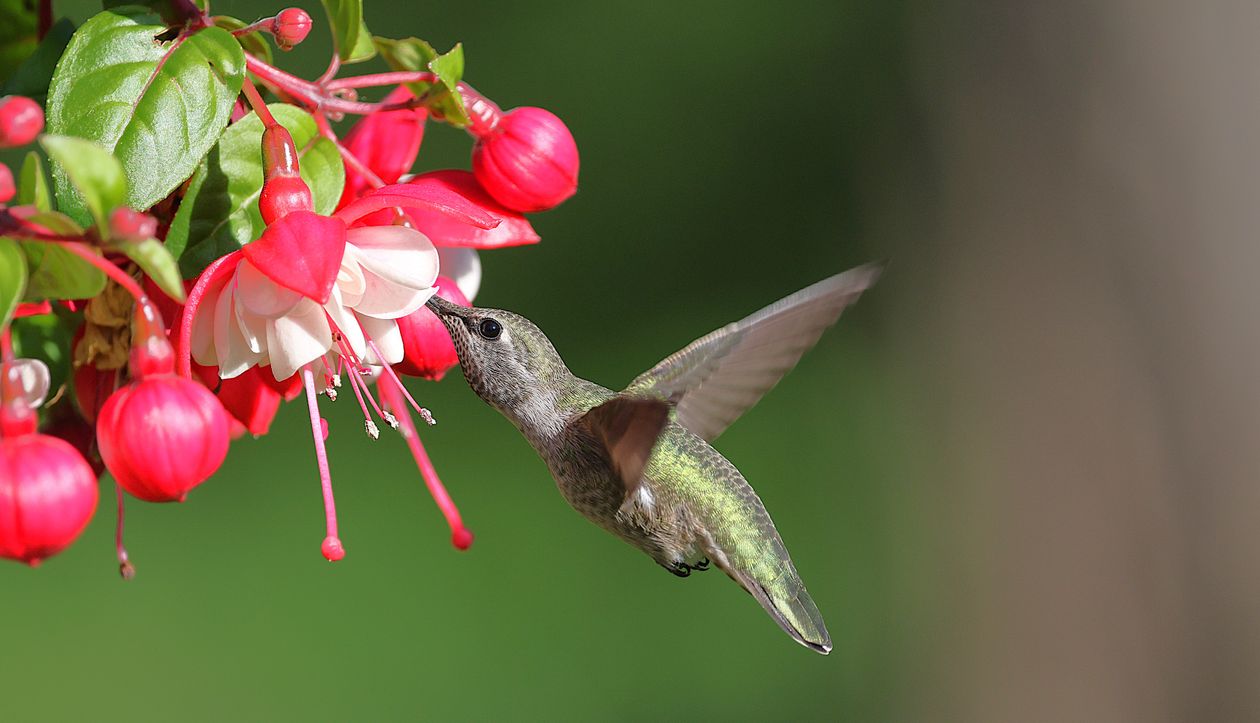
Orioles drink nectar from flowers just like hummingbirds, but they prefer slightly different formulations. Use this simple recipe:
- Mix 1 part white granulated sugar to 4 parts water.
- Boil, cool, and fill a clean feeder.
- Do not add red dye — white sugar water is sufficient.
- Change nectar every 2-3 days in hot weather.
While hummingbird nectar uses the same 4:1 ratio, orioles will drink from both dedicated oriole nectar feeders and hummingbird feeders with perches. Kingsyard’s nectar bird feeders include options suitable for orioles, with larger ports and sturdy perches that accommodate their bigger bodies.
What Kind of Feeder Attracts Orioles?
Orioles need different feeder designs from seed-eating birds. Here are the most effective options.
Oriole-Specific Feeders
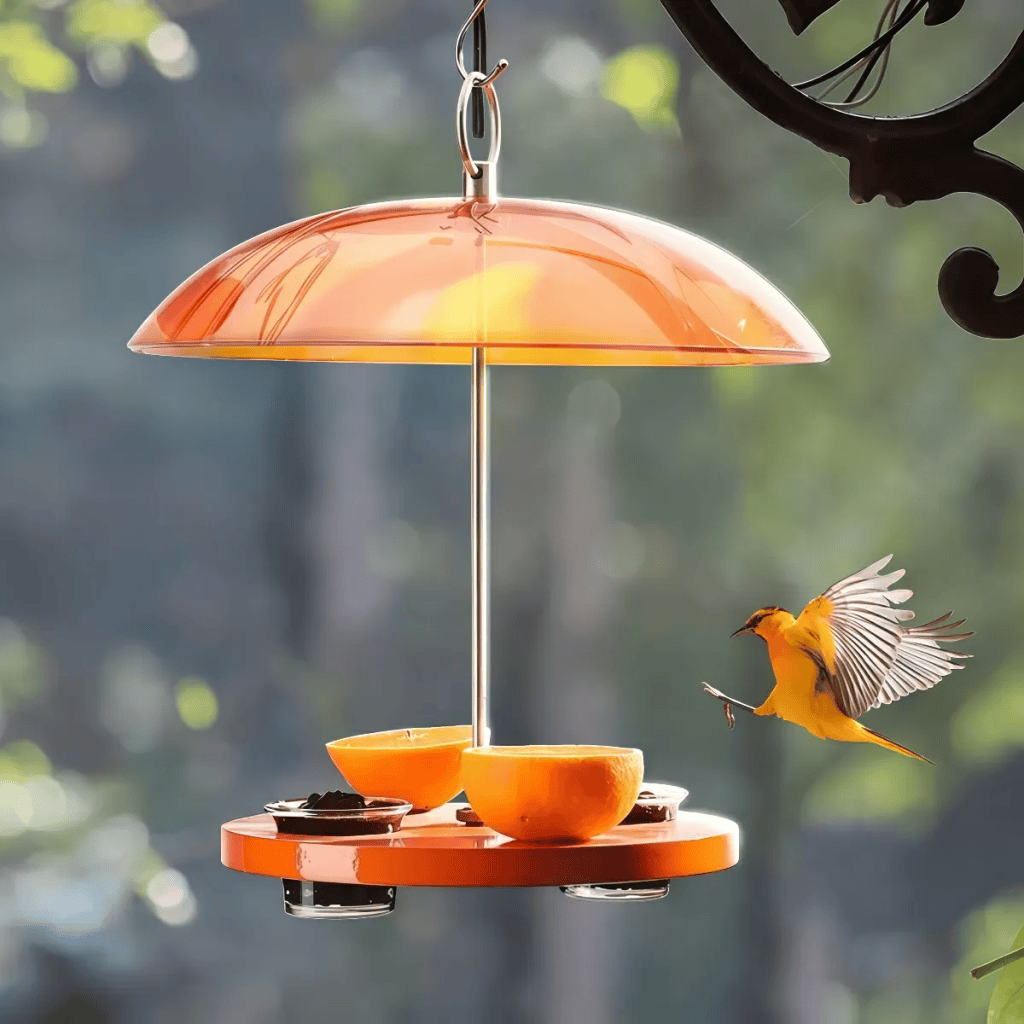
Dedicated oriole feeders are designed with orioles in mind. They typically include:
- Jelly wells — Shallow dishes for grape jelly
- Orange spikes — Prongs that hold halved oranges
- Nectar ports — Larger than hummingbird ports, with sturdy perches
- Bright orange color — Orioles are attracted to orange, their natural feeding cue
These combination feeders let you offer all three oriole foods in one unit, making them the most efficient choice.
Platform Feeders
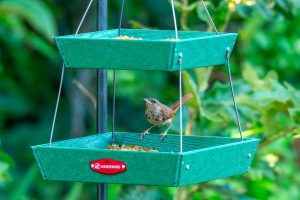
Open platform feeders work well for offering cut fruit and jelly. Choose a platform with drainage holes and a roof to keep food dry. Orioles are not aggressive feeders and will share platform space with other fruit-eating birds like tanagers and catbirds.
Fruit & Nut Feeders
Kingsyard’s fruit & nut bird feeders include mesh baskets and tray designs perfect for offering orange halves, apple slices, and dried fruit. These feeders are also attractive to bluebirds, woodpeckers, and jays.
What About Hummingbird Feeders?
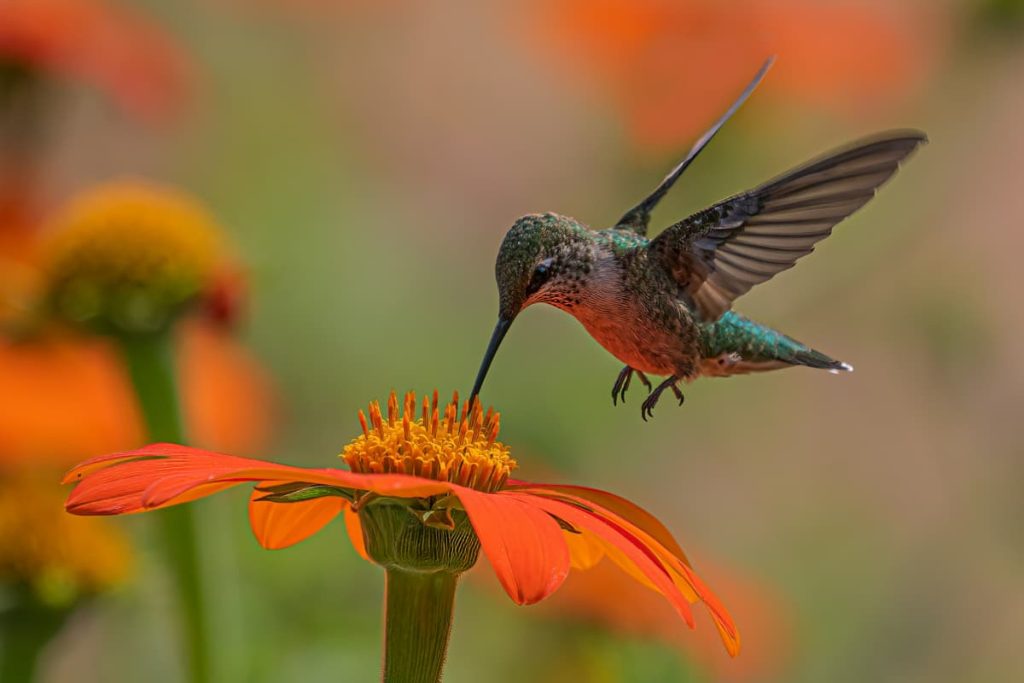
Orioles will drink from hummingbird feeders, but standard hummingbird feeders have small perches and tiny ports that orioles struggle with. If you want to attract orioles with nectar, use a feeder with wider ports and a larger perch, or better yet, a dedicated oriole combination feeder.
Pro tip: Position your oriole feeder near but not right next to your hummingbird feeder. Orioles are larger and can intimidate hummingbirds. A separation of 10-15 feet gives both species space to feed comfortably.
How to Set Up the Perfect Oriole Feeding Station
Getting the setup right is as important as choosing the right food. Follow these recommendations.
Location
- Place feeders in partial shade to keep food from spoiling quickly.
- Position near deciduous trees — orioles prefer open woodlands and will feel safer with nearby cover.
- Keep feeders 5-7 feet above ground to deter cats and other predators.
- Ensure the feeder is visible from a window or patio for the best viewing experience.
Timing Your Setup
- In spring (April-May), emphasize oranges and jelly to attract arriving migrants.
- In summer (June-July), orioles switch to insects and nectar as they feed their young. Keep offering oranges but expect lower consumption.
- In late summer (August), orioles preparing for migration will increase their fruit and jelly consumption again as they build fat reserves.
Water Source
Orioles need water for drinking and bathing. A bird bath with moving water (dripper or mister) placed near your oriole feeder will significantly increase visits. Orioles are attracted to the sound of splashing water and will visit baths regularly throughout the day.
When Do Orioles Nest and Raise Young?
Understanding the oriole nesting cycle helps you support them during their most demanding season.
Nesting Timeline
| Stage | Timing | Details |
|---|---|---|
| Territory establishment | Late April – May | Males sing to claim territory and attract mates |
| Nest building | May | Females weave hanging pouch nests from plant fibers, hair, and string |
| Egg laying | Late May – June | 3-7 pale blue eggs with dark markings |
| Incubation | 12-14 days | Female incubates; male brings food |
| Nestling period | 11-14 days | Both parents feed young |
| Fledging | Early – Mid July | Young leave the nest but stay nearby |
| Second brood (southern areas) | Late June – July | Some pairs raise a second brood |
The Hanging Nest
Oriole nests are engineering marvels. The female weaves a deep, sock-like pouch from plant fibers, grass, vines, and even fishing line or yarn. The nest hangs from the fork of a thin branch, often 20-30 feet above ground, making it difficult for predators to reach.
During nesting season, oriole parents increase their insect consumption to provide protein for their chicks. This is normal — don’t be concerned if feeder activity drops in June. They still need fruit and nectar for their own energy.
Learn more about the fascinating process of nest building across different bird species in our detailed guide.
How to Keep Orioles Coming All Season
Once orioles discover your feeders, keeping them requires consistency.
Rule 1: Keep Food Fresh
Spoiled food is the fastest way to lose oriole visitors. In summer heat:
- Replace oranges every 1-2 days.
- Change jelly every 2-3 days.
- Refresh nectar every 2-3 days.
- Clean feeders thoroughly between refills.
Rule 2: Clean Feeders Weekly
Oriole feeders get sticky. Jelly and nectar residue attract ants, bees, and can grow mold. Clean your feeders weekly with hot water and a mild vinegar solution (1 part white vinegar to 4 parts water). Rinse thoroughly and dry before refilling.
Rule 3: Offer Natural Food Sources Too
Plant native fruit-bearing trees and shrubs to supplement your feeders. For detailed tips on preparing fruit for your backyard birds, see our guide on how to prepare fruits for birds. Orioles love:
- Serviceberry (Amelanchier) — Early summer berries
- Mulberries — A favorite oriole food
- Cherries — Both sweet and tart varieties
- Grapes (wild or cultivated)
- Flowering dogwood — Provides nectar and berries
Rule 4: Leave Out Nesting Material
Orioles use plant fibers, grass, and even short pieces of string or yarn for nest building. In spring, you can offer nesting material in a mesh bag near your feeder. Use natural fibers only — avoid synthetic materials that can entangle birds.
Common Oriole Attracting Mistakes
Avoid these common errors.
Mistake 1: Using Sugar-Free Jelly
Sugar-free jelly contains artificial sweeteners that provide no caloric value for birds. Orioles need the high sugar content of real grape jelly for energy during migration and nesting. Always use regular concord grape jelly.
Mistake 2: Offering Jelly in Deep Containers
Deep jelly dishes can coat a bird’s feathers in sticky residue, impairing flight and insulation. Use shallow wells specifically designed for oriole feeding. If you improvise, use a jar lid or shallow saucer.
Mistake 3: Putting Feeders Out Too Late
If you wait until you see the first oriole to set up your feeder, you may miss the early migrants. Put feeders out 1-2 weeks before the expected arrival date. The first orioles to arrive are hungry scouts — impress them, and they will bring others.
Mistake 4: Ignoring Ant Control
Sugary oriole foods attract ants faster than any other bird food. Use an ant moat or apply a food-safe barrier to your feeder pole. Without ant control, you can wake up to a feeder completely covered in ants within hours.
Mistake 5: Removing Feeders in Summer
Many birders put out oriole feeders only during spring migration and take them down in June, assuming orioles have moved on. But orioles are raising young through July in most areas. Keep feeders up through at least August to support nesting parents and late-season migrants.
Kingsyard offers a complete range of bird feeders designed for different bird species and food types, making it easy to create a diverse feeding station for all your backyard visitors.
Frequently Asked Questions About Attracting Orioles
What is the best time of year to attract orioles?
The best time is during spring migration (late April through May), when orioles are arriving from their wintering grounds and are most actively seeking food sources. A secondary peak occurs in late summer (August) as they build fat reserves for fall migration.
Do orioles eat from hummingbird feeders?
Yes, orioles will drink from hummingbird feeders, especially if the feeder has wide ports and a sturdy perch. However, dedicated oriole feeders with jelly wells and orange spikes are far more effective. Our article on how to attract hummingbirds explains how to set up separate feeding stations for both species.
How do I keep bees and wasps off my oriole feeder?
Use feeders with built-in bee guards or ant moats. Avoid yellow decorations — bees are attracted to the color. Place your feeder in partial shade, and keep the area around it clean of spilled jelly or nectar.
Do orioles eat mealworms?
Yes, orioles will eat dried or live mealworms, especially during nesting season when they need extra protein for their chicks. Offering mealworms in a separate tray feeder can help attract orioles during the summer months.
What colors attract orioles?
Orange is the most attractive color for orioles. Their feeders are often orange for this reason. They are also attracted to bright yellows and reds. Avoid blue and purple, which are less visible to birds.
Should I feed orioles in winter?
No. Most orioles migrate to Central and South America for winter. Only a few stray individuals may linger in southern coastal areas. In general, take down oriole feeders in October and put them back up in late March or early April.
How can I tell the difference between a Baltimore oriole and a Bullock’s oriole?
Baltimore Orioles (Eastern US) have a completely black head and hood with orange body. Bullock’s Orioles (Western US) have an orange face with a black crown and eye line. In the central US where their ranges overlap, they can hybridize.
Conclusion: Start Attracting Orioles Today
Orioles are some of the most visually rewarding backyard birds you can attract. Their brilliant colors, beautiful songs, and unique feeding habits make them a standout species in any yard.
Here are your three key takeaways:
- Offer oranges, grape jelly, and nectar in dedicated oriole feeders for best results. These three foods cover all their dietary needs.
- Set up feeders before migration peaks in your area. Early migrants will remember your station and return.
- Keep food fresh and feeders clean through the entire season. Spoiled food is the fastest way to lose oriole visits.
With the right setup, you can enjoy these stunning birds from their spring arrival through late summer. Browse Kingsyard’s oriole feeder collection to find the perfect starting point for your oriole feeding station.


Post Comment