Best Heated Bird Baths for Winter: Keep Water Flowing in Freezing Weather
By January, every puddle in your yard is frozen solid. The creek down the road is a sheet of ice. The only open water within a mile is the river, and for a chickadee weighing half an ounce, that’s a dangerous flight in subzero wind.
Water is the most overlooked need in winter bird care. Birders obsess over seed blends, suet recipes, and feeder placement, but forget that birds need water to drink and maintain their feathers just as much in January as they do in July. In freezing temperatures, natural water sources disappear. A heated bird bath becomes the single most valuable addition to your winter backyard setup.
The problem: choosing the right heated bird bath is confusing. Wattage, mounting style, thermostat vs. constant-on, de-icer vs. integrated heater, the options are overwhelming, and the wrong choice wastes electricity or fails when you need it most.
This guide breaks down the best heated bird baths for winter by type, use case, and budget. You’ll learn what to look for, how much they cost to run, and where to place them for maximum bird traffic.
Why Birds Need Water in Winter More Than You Think
In summer, water is everywhere — puddles, dew, rain, streams. Birds drink and bathe without effort. In winter, the equation flips. Natural water sources freeze. Snow is available, but eating snow costs birds precious body heat — they must warm it to body temperature before hydrating, which burns calories they can’t spare.
According to the Cornell Lab of Ornithology, birds need water for two critical functions in winter:
- Hydration. Dehydrated birds cannot maintain body temperature. A bird that can’t drink overnight may not survive the next morning.
- Feather maintenance. Birds preen their feathers to maintain insulation. Dirty or matted feathers lose up to 30% of their insulating value, the difference between surviving a 0°F night and not.
A heated bird bath solves both problems. It provides open water for drinking and bathing, even when temperatures drop well below freezing. For many backyard birds, it becomes the only reliable water source within foraging distance.
For a complete guide to using water to attract birds year-round, see our summer bird bath tips.
Heated Bird Bath vs. Bird Bath Heater: What’s the Difference?
Before you shop, understand the two main categories:
Heated Bird Bath (All-in-One)
A heated bird bath is a complete unit with a built-in heating element embedded in the basin. You plug it in, fill it with water, and it maintains water temperature just above freezing. These are the most convenient option — no separate components, no compatibility concerns.
- Pros: All-in-one design, thermostat-controlled, easy setup, consistent performance
- Cons: More expensive ($40–$100+), entire unit must be replaced if the heater fails
- Best for: Birders who want a set-it-and-forget-it winter water solution
Bird Bath Heater / De-Icer (Add-On)
A bird bath heater is a standalone heating element you place inside an existing bird bath. De-icers are similar but designed primarily to prevent ice formation rather than warm the water. These are cheaper and let you keep using your current bath.
- Pros: Cheaper ($15–$40), works with your existing bath, easy to replace
- Cons: Must fit your bath, may not heat evenly, some models lack thermostats
- Best for: Birders who already have a bird bath they like and just need to prevent freezing
What to Look for in a Heated Bird Bath
Not all heated bird baths are created equal. Here are the five features that matter most:
1. Wattage
Wattage determines how cold the bath can operate in. Most heated bird baths range from 50W to 200W.
| Wattage | Effective Temperature Range | Monthly Energy Cost* |
|---|---|---|
| 50W | Down to 20°F (-7°C) | ~$3–5 |
| 75–100W | Down to 0°F (-18°C) | ~$5–8 |
| 150–200W | Down to -20°F (-29°C) | ~$8–15 |
*Based on average US electricity rate of $0.16/kWh, running 24/7 during winter months.
For most of the continental US (zones 5–7), a 75–100W bath is sufficient. In northern states or Canada (zones 3–4), choose 150W or higher.
2. Thermostat Control
A thermostat turns the heater on only when temperatures approach freezing and off when they rise above it. This saves electricity and prevents the water from overheating (which can stress birds). Always choose a thermostat-controlled model over a constant-on heater.
3. Basin Material
- Plastic/resin: Lightweight, affordable, durable. Most heated baths use this. Easy to clean.
- Metal: Conducts heat well but can get too hot in direct sun. Heavier, more stable in wind.
- Ceramic/stone: Beautiful but fragile in freeze-thaw cycles. Not recommended for heated baths.
4. Mounting Style
Where you mount the bath affects which birds visit and how easy it is to maintain:
- Deck-mounted: Clamps to a railing. Easy to fill and clean. Great for close-up viewing.
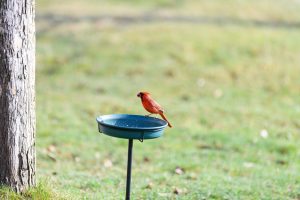
- Ground-level: Sits on the ground or a low stand. Attracts the widest range of species, including ground-feeding sparrows and juncos.
- Pedestal: Elevated on a stand. Classic look, deters cats, but harder to clean in ice.
- Hanging: Suspended from a hook or branch. Good for small spaces but swings in wind.
5. Cord Length and Safety
Heated bird baths need an outdoor electrical outlet. Check the cord length (most are 6–12 feet) and ensure you have a GFCI-protected outlet nearby. Use an outdoor-rated extension cord if needed — never an indoor cord. Some models include built-in cord channels to keep the wire tidy and away from chewing squirrels.
Best Heated Bird Baths by Use Case
There’s no single “best” heated bird bath — the right one depends on your space, climate, and the birds you want to attract.
Best for Deck or Patio: Deck-Mounted Heated Bath
A deck-mounted heated bird bath clamps directly to a railing, keeping it at eye level for easy viewing and refilling. These are typically 20-inch diameter plastic basins with a 75–150W heating element and thermostat. The mounting bracket keeps the bath stable in wind, and the elevated position deters ground predators.
Best for: Apartment balconies, small patios, close-up birding and photography.
Attracts: Cardinals, chickadees, titmice, nuthatches, woodpeckers — any species comfortable at elevated feeders.
Best for Large Yards: Ground-Level Heated Bath with Stand
A ground-level heated bath on a low metal stand provides the most natural drinking experience for birds. Ground-feeding species — juncos, sparrows, towhees, doves — prefer water at ground level or close to it. A 20–25 inch basin with 150W heating and a textured, non-slip surface gives birds secure footing even when the rim is icy.
Best for: Suburban yards, rural properties, birders who want to attract ground-feeding species.
Attracts: All of the above plus juncos, white-throated sparrows, mourning doves, and robins.
If you already have a bird bath you like, a standalone de-icer is the cheapest way to keep it ice-free. De-icers are thermostatically controlled heating elements that sit in the water and turn on when temperatures approach freezing. They range from 50W to 250W and cost $15–$40.
Best for: Birders on a budget, mild winter climates (zone 6+), anyone who already owns a sturdy bird bath.
Important: Don’t use a de-icer in a plastic bath that isn’t rated for heating — the concentrated heat can crack thin plastic. Use only in stone, metal, or heavy-duty resin baths.
Best for Extreme Cold: High-Wattage Heated Bath (150W+)
In zones 3–4, where temperatures regularly drop below -10°F, you need a heated bath rated for extreme cold. Look for 150–200W models with fully enclosed heating elements and insulated basins. These baths cost more to run but are the only reliable option when temperatures plunge.
Best for: Northern states, Canada, high-altitude properties, anyone who experiences extended subzero periods.
How to Install and Maintain a Heated Bird Bath in Winter
Setup takes 10 minutes. Maintenance takes 5 minutes every 2–3 days.
Installation
- Choose a location near an outdoor GFCI outlet (see placement tips below).
- Mount or place the bath. Deck-mounted: clamp to railing. Ground: place on level surface. Pedestal: assemble and position.
- Fill with water to 1–2 inches deep. Shallow water heats faster and is safer for small birds.
- Plug in. The thermostat will activate the heater when temperatures approach freezing.
- Add a few stones to the basin for perching. Birds prefer shallow water with secure footing.
Winter Maintenance
- Refill every 2–3 days. Birds drink more than you’d expect, and evaporation occurs even in cold weather.
- Clean weekly. Scrub the basin with a stiff brush and a 9:1 water-to-bleach solution. Rinse thoroughly.
- Remove ice buildup on the rim. A thin layer of ice at the edges is normal — crack it with your hand or a spoon.
- Check the cord. Inspect for chew damage from squirrels or wear from ice. Replace frayed cords immediately.
For a complete late-summer cleaning and maintenance reset, see our late-summer feeder maintenance checklist.
Energy Cost: How Much Does a Heated Bird Bath Add to Your Electric Bill?
Less than you’d think. A heated bird bath with a thermostat doesn’t run 24/7 — it cycles on when temperatures approach freezing and off when they rise above it. In a typical winter (November–March), here’s what to expect:
| Wattage | Hours/Day (avg) | Monthly Cost | Season Cost (5 months) |
|---|---|---|---|
| 75W | 12–16 | $4–7 | $20–35 |
| 150W | 12–16 | $8–12 | $40–60 |
| 200W | 16–20 | $12–19 | $60–95 |
Based on average US electricity rate of $0.16/kWh. Actual costs vary by region and climate.
A thermostat-controlled 75W bath — the most popular choice for zones 5–7 — costs roughly the same as running a light bulb. The birds it supports through winter are worth far more than $5 a month.
Where to Place a Heated Bird Bath for Maximum Bird Traffic
Placement determines how quickly birds discover your heated bath and how safe they feel using it.
- Near cover, not in it. Place the bath 5–10 feet from a bush, tree, or brush pile. Birds need a quick escape route from hawks, but dense cover right next to the bath hides predators like cats.
- Visible from your window. You’ll enjoy the bath more if you can watch birds using it. Position it within view of your favorite birding window.
- Close to feeders. Birds visiting your feeders will discover the bath faster if it’s within 10–15 feet. They already trust the area.
- Sheltered from wind. A bath exposed to strong wind cools faster and uses more electricity. Place it on the leeward side of your house or a fence.
- Away from predator ambush points. Don’t place the bath directly under a low branch where a hawk can swoop from above, or next to a fence where cats can hide.
For more on creating a bird-friendly backyard layout, see our small garden changes birds notice immediately.
Heated Bird Bath FAQ
When should I set up my heated bird bath?
Set it up before the first hard freeze — typically October or November depending on your zone. Birds learn where water sources are and return to them daily. If you wait until January to set up a heated bath, it may take birds a week or more to discover it.
Can I use a heated bird bath in summer?
Most heated bird baths work fine as regular baths in summer — the heater only activates when temperatures approach freezing. Unplug the cord in summer if you want to save energy, or leave it plugged in as a safety net for unexpected cold snaps.
Will a heated bird bath attract more birds than a regular bath?
In winter, absolutely. When natural water sources freeze, a heated bath becomes the only open water within foraging range. Birds that ignore your feeders may visit solely for water. Species like robins, bluebirds, and cedar waxwings — which don’t typically eat seed — are especially attracted to winter water sources.
How deep should the water be?
1–2 inches maximum. Small songbirds can drown in water deeper than 3 inches. Add flat stones or pebbles to create shallow areas where birds can stand comfortably while drinking. The stones also absorb heat from the heater and help keep water warm.
Is it safe to leave a heated bird bath plugged in overnight?
Yes — that’s exactly when you need it most. Overnight temperatures are the coldest, and birds need access to water at dawn when they wake up dehydrated. Thermostat-controlled models are designed for continuous outdoor use. Ensure the outlet is GFCI-protected and the cord is in good condition.
Do heated bird baths use a lot of electricity?
No. A thermostat-controlled 75W bath costs roughly $4–7 per month in winter — about the same as a standard light bulb. Even a high-wattage 200W model costs under $20 per month. The thermostat ensures the heater only runs when needed, not continuously.
Can I make my own heated bird bath?
Some birders place a submersible aquarium heater in a regular bird bath. This works but requires careful attention to safety — the heater must be rated for outdoor use, fully submerged, and connected to a GFCI outlet. Commercial heated baths are safer and more reliable for most people.
Give Your Backyard Birds the Gift of Water This Winter
Three things to do this weekend:
- Check your climate zone. Zones 5–7: a 75–100W heated bath is enough. Zones 3–4: go 150W or higher.
- Choose your mounting style. Deck for close-up viewing, ground for maximum species variety, pedestal for classic looks.
- Set it up before the first freeze. Birds need time to discover the water source. The earlier you set it up, the more birds will find it.
A heated bird bath is the simplest, most impactful winter upgrade for your backyard. It costs less than a bag of premium seed per month — and it supports every bird in your yard, not just the ones that eat from feeders.
Browse Kingsyard bird baths and bird feeders — designed for year-round backyard birding, built to handle the toughest winter weather.