How to Winterize Your Bird Feeders: A Step-by-Step Cold-Weather Checklist
The first hard freeze is coming. You can feel it in the air, that sharp edge to the morning wind, the way the sun sits lower in the sky. Your birds feel it too. They’re eating more, storing fat, scouting for reliable food sources before the real cold hits.
This is the moment to prepare. A bird feeder that worked fine in October can become a problem in January, moldy seed, frozen ports, squirrel damage, wet suet. Winterizing your feeders isn’t just about keeping them full. It’s about keeping them safe, clean, and functional when birds need them most.
This checklist covers everything you need to do before the first freeze, and what to maintain throughout winter. Bookmark it. You’ll use it every year.
Why Winterizing Matters More Than You Think
In summer, birds have options. If your feeder is empty or dirty, they’ll find natural food elsewhere, insects, berries, seeds from wild plants. In winter, those options disappear. A feeder that goes moldy or runs dry in January can be a genuine survival threat to the birds that depend on it.
Cornell Lab’s Project Feeder Watch data shows that birds establish feeder territories in late fall and return to the same sources daily through winter. Once a bird commits to your yard as a food source, it’s counting on you. Winterizing ensures you don’t let them down.
For a complete guide to fall feeder prep, see our late-summer maintenance checklist.
Step 1: Deep Clean Every Feeder
Before winter, give every feeder a thorough cleaning. Summer and fall feeding leaves behind seed dust, hulls, droppings, and mold spores. In cold weather, moisture trapped inside feeders accelerates mold growth — and moldy seed can sicken or kill birds.
How to Clean
- Disassemble the feeder. Remove all parts, perches, ports, lids, trays.
- Soak in a 9:1 water-to-bleach solution for 10 minutes. This kills mold spores and bacteria.
- Scrub with a stiff brush. Pay special attention to seed ports, crevices, and any area where hulls accumulate.
- Rinse thoroughly. No bleach residue should remain. Rinse at least twice.
- Dry completely. Let the feeder air-dry in the sun for several hours before refilling. Moisture trapped inside promotes mold.
Clean tube feeders, hopper feeders, platform feeders, and suet feeders. Don’t skip the suet cage — old suet goes rancid and attracts rodents.
Step 2: Inspect and Repair
Winter is hard on feeders. Wind, ice, squirrels, and daily use take a toll. Check each feeder for:
- Cracks in plastic or acrylic. Small cracks let moisture in, which freezes and expands, making the crack worse. Patch with outdoor-rated sealant or replace the feeder.
- Loose screws and bolts. Tighten everything. A feeder that wobbles in wind spills seed and scares birds.
- Rusted metal parts. Light surface rust is cosmetic. Deep rust on perches, ports, or hooks means replacement time.
- Damaged perches. Birds need secure footing in cold weather, their feet are already stressed by cold surfaces. Replace broken or slippery perches.
- Squirrel damage. Chewed ports, cracked lids, bent wire. If squirrels got to it in fall, they’ll destroy it in winter when food is scarce.
If a feeder is beyond repair, consider upgrading to a squirrel-proof model before winter. Squirrel pressure increases dramatically in cold weather when natural food sources disappear.
For a detailed comparison of squirrel-proof designs, see our top squirrel-proof feeder picks.
Step 3: Switch to Winter Seed Blends
Birds’ nutritional needs change in winter. They need high-fat, high-calorie foods to maintain body temperature through long, cold nights. Switch your seed blend to match:
| Seed Type | Why It Works in Winter | Best For |
|---|---|---|
| Black oil sunflower | High fat (40%+), thin shells, easy to crack | Cardinals, chickadees, titmice, finches |
| Suet | Maximum calories per gram, quick energy | Woodpeckers, nuthatches, wrens, chickadees |
| Nyjer (thistle) | High oil content, small size for finches | Goldfinches, pine siskins, redpolls |
| Peanuts | High fat and protein, cached by jays | Blue jays, woodpeckers, nuthatches |
| Safflower | High fat, squirrels and grackles avoid it | Cardinals, chickadees, titmice |
Avoid mixes heavy in milo, wheat, or oats — these are filler seeds that most songbirds ignore. They rot in the feeder and attract rodents.
For a complete guide to seed types and which birds prefer them, see our seed type guide.
Step 4: Add Suet Feeders
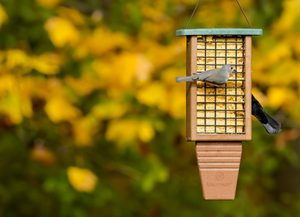
Suet is the single best winter food for insect-eating birds. In summer, woodpeckers, nuthatches, and wrens find insects under bark and in crevices. In winter, those insects are gone. Suet provides the fat and calories these birds need to survive.
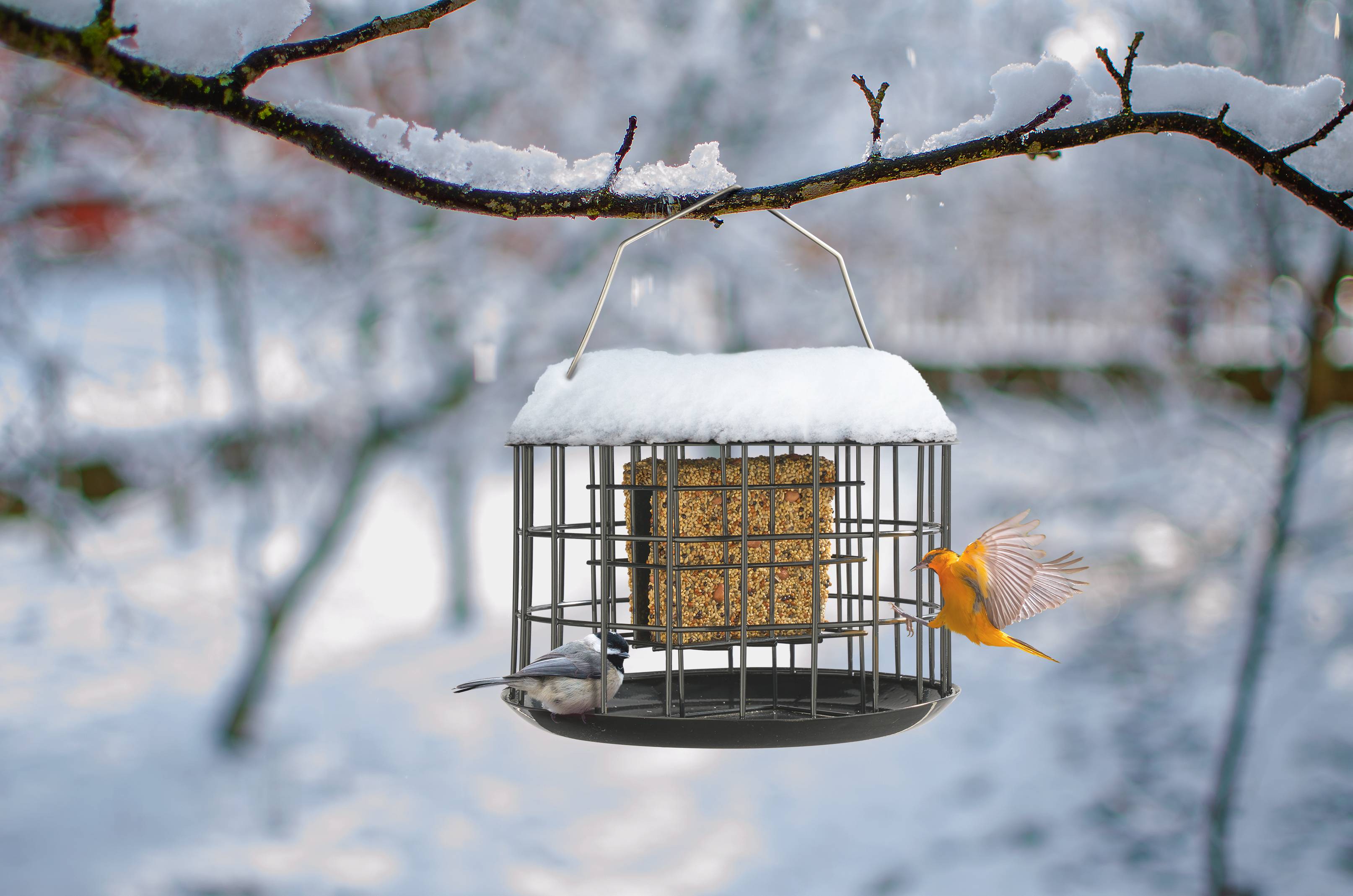
- Hang suet feeders in shaded spots. Direct sun melts suet, making it messy and less effective. North-facing locations are ideal.
- Use no-melt suet in mild winters. Rendered suet with added cornmeal or peanut butter holds its shape in temperatures up to 70°F.
- Offer multiple suet feeders. Woodpeckers are territorial at suet. A second feeder 15+ feet away reduces conflict and attracts more birds.
- Replace every 2–3 weeks. Suet goes rancid faster than seed. If it smells off or turns gray, replace it.
For more on suet feeding, see our Suet 101 guide.
Step 5: Protect Feeders from Snow and Ice
Snow and ice are the biggest physical challenges for winter feeders. A feeder buried in snow or caked in ice is useless to birds.
- Position feeders under an overhang. A porch roof, deck overhang, or dedicated feeder roof keeps snow and ice out of the seed. Birds also prefer feeding in sheltered spots during storms.
- Clear snow from platform feeders daily. Snow accumulation soaks seed and creates a mold risk. Brush off platforms after every snowfall.
- Check seed ports for ice buildup. Tube feeder ports freeze shut in wet, cold weather. Tap the feeder gently to break ice, or bring it inside briefly to thaw.
- Use baffles. A baffle above the feeder blocks falling snow and ice. It also deters squirrels — a bonus in winter when they’re most aggressive.
Step 6: Set Up a Feeding Schedule
In winter, consistency matters. Birds adjust their foraging patterns to your feeding schedule. If you fill feeders at dawn, they’ll show up at dawn. If you skip a day, they waste precious calories searching for food that isn’t there.
- Fill feeders in the late afternoon. Birds eat heavily before roosting to fuel overnight survival. A full feeder at 4 PM is more valuable than a full feeder at noon.
- Top off in the morning. Birds need energy at dawn after a long, cold night. A quick top-off before breakfast keeps them going.
- Increase portion sizes. Winter birds eat 25–50% more than summer birds. A feeder that lasted 3 days in July may empty in 1.5 days in January.
- Don’t stop during storms. The worst weather is when birds need feeders most. Fill extra before a storm hits.
Step 7: Add Water Sources
This is the step most birders forget. Water is just as critical as food in winter — and much harder for birds to find when everything freezes.
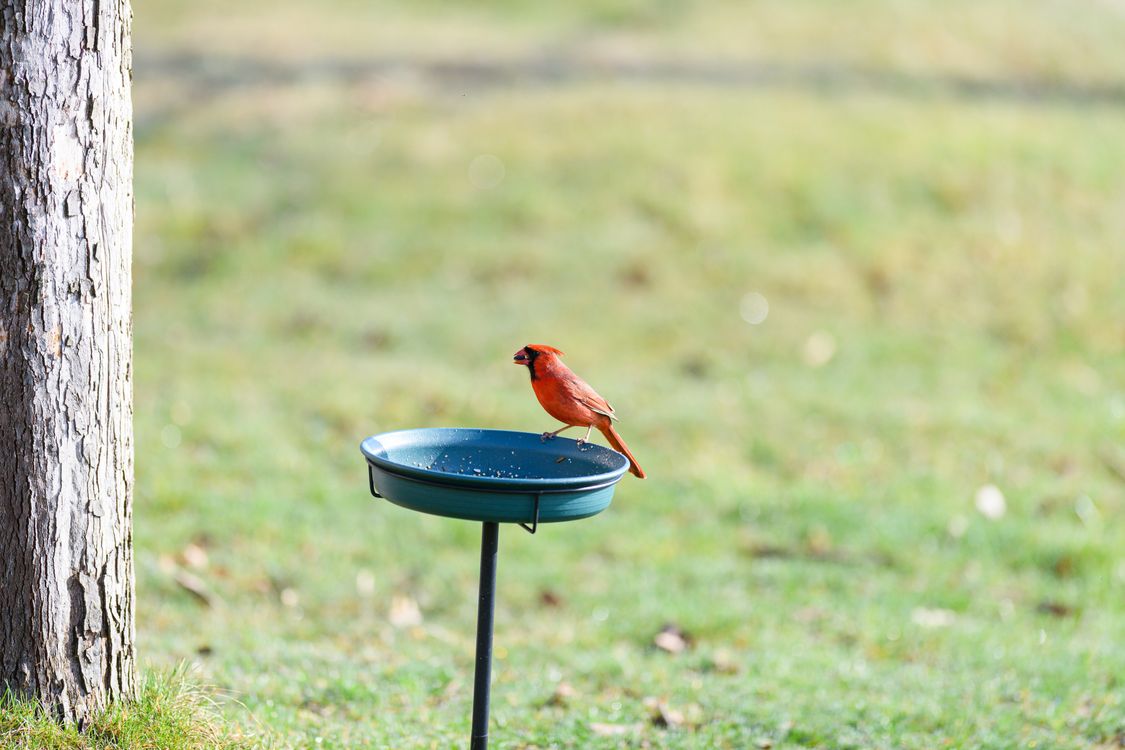
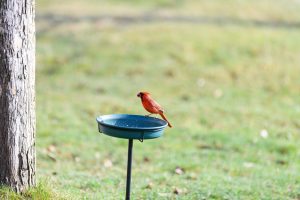
A heated bird bath keeps water available even in subzero temperatures. Place it near your feeders so birds can drink and eat in the same visit. The combination of food and water in one location makes your yard a one-stop survival station.
Squirrel pressure peaks in winter. Natural food sources are buried under snow, and squirrels become desperate. A feeder that survived fall untouched may be destroyed by January.
- Install baffles. A cone or cylinder baffle on the pole below the feeder is the most effective squirrel deterrent. Place it 4–5 feet off the ground.
- Use weight-activated feeders. These close ports when a squirrel’s weight lands on the perch. Birds are light enough to feed freely.
- Offer a squirrel feeding station. Controversial, but effective. A separate platform with corn or peanuts 20+ feet from your bird feeders gives squirrels their own food source and reduces pressure on bird feeders.
- Trim branches. Squirrels jump 8–10 feet horizontally. Trim branches within 10 feet of your feeder pole to eliminate launch points.
For a deep dive into squirrel-proof strategies, see our squirrel-proof feeder investment guide.
Winter Feeder Maintenance Checklist
Print this. Stick it on your fridge. Check it weekly:
- ☐ Seed ports clear of ice and debris
- ☐ Seed levels adequate (top off before storms)
- ☐ Suet fresh and firm (replace every 2–3 weeks)
- ☐ Platform feeders brushed clear of snow
- ☐ Heated bird bath plugged in and water level adequate
- ☐ Baffles secure and squirrel damage-free
- ☐ No mold or rancid smell from any feeder
- ☐ Ground under feeders raked (prevents rodent attraction)
Common Winter Feeding Mistakes
- Stopping during warm spells. A January thaw doesn’t mean winter is over. Birds still need supplemental food. Don’t reduce feeding until natural food sources return in spring.
- Using salt to melt ice on feeders. Salt is toxic to birds. Never use de-icing chemicals on or near bird feeders. Use warm water or manual scraping instead.
- Ignoring mold. Cold weather slows mold but doesn’t stop it. Wet seed in a cold feeder is a mold factory. Clean at the first sign of clumping, discoloration, or musty smell.
- Feeding bread. Bread has zero nutritional value for birds. In winter, it fills their stomachs without providing the fat and protein they need. It’s worse than feeding nothing.
- Forgetting ground cleanup. Seed hulls and droppings accumulate under feeders. In spring, this becomes a disease risk. Rake weekly in winter to prevent buildup.
Get Your Feeders Ready This Weekend
Three things to do right now:
- Clean and inspect every feeder. The bleach soak takes 10 minutes. The inspection takes 5. Do it this weekend.
- Stock up on winter seed. Buy black oil sunflower, suet cakes, and nyjer in bulk. You’ll go through it faster than you think.
- Add a heated bird bath. Water is the most overlooked winter need. A heated bath costs $5/month to run and supports every bird in your yard.
Winter birding is the most rewarding season. The birds that visit your feeders in January are the ones that survive the year — and they’ll remember your yard come spring. Give them a reason to come back.
Browse Kingsyard bird feeders and bird baths — built for year-round backyard birding, designed to handle the toughest winter weather.