DIY Fall Bird Treats: Homemade Suet, Seed Cakes & Peanut Butter Feeders
A bag of commercial suet cakes costs $3–5 and lasts about a week. A bag of rendered beef fat from the grocery store costs the same and makes 10–15 cakes.
The math is simple. The process is easier than you think.
Making your own fall bird treats isn’t just about saving money. It’s about controlling what goes into the food you offer — no preservatives, no filler, no mystery ingredients. It’s about customizing recipes for the species in your yard. And it’s about involving kids in a hands-on nature activity that teaches real biology.
This guide covers four easy DIY fall bird treat recipes: classic melt-and-pour suet, no-melt suet for warm weather, gelatin seed cakes, and peanut butter feeders. Each one uses ingredients from a regular grocery store and takes less than 30 minutes to prepare.
Why Make Your Own Fall Bird Treats?
Homemade bird treats offer three advantages over store-bought options:
1. Cost savings. Commercial suet cakes cost $0.30–0.50 each. Homemade versions cost $0.05–0.15 each — a 70–80% savings that adds up fast when you’re filling multiple feeders through a long winter.
2. Ingredient control. Many commercial suet products contain rendered fat of unknown quality, added sugar, and artificial colors. When you make your own, you choose the fat source, the seed mix, and nothing else.
3. Species customization. Want to attract more woodpeckers? Add extra peanut pieces. Trying to draw goldfinches? Mix in nyjer and sunflower chips. You can tailor each recipe to the birds in your yard — something no commercial product offers.
For a complete overview of what to feed birds as summer transitions to fall, see our August bird feeding guide.
Classic Melt-and-Pour Suet Cakes
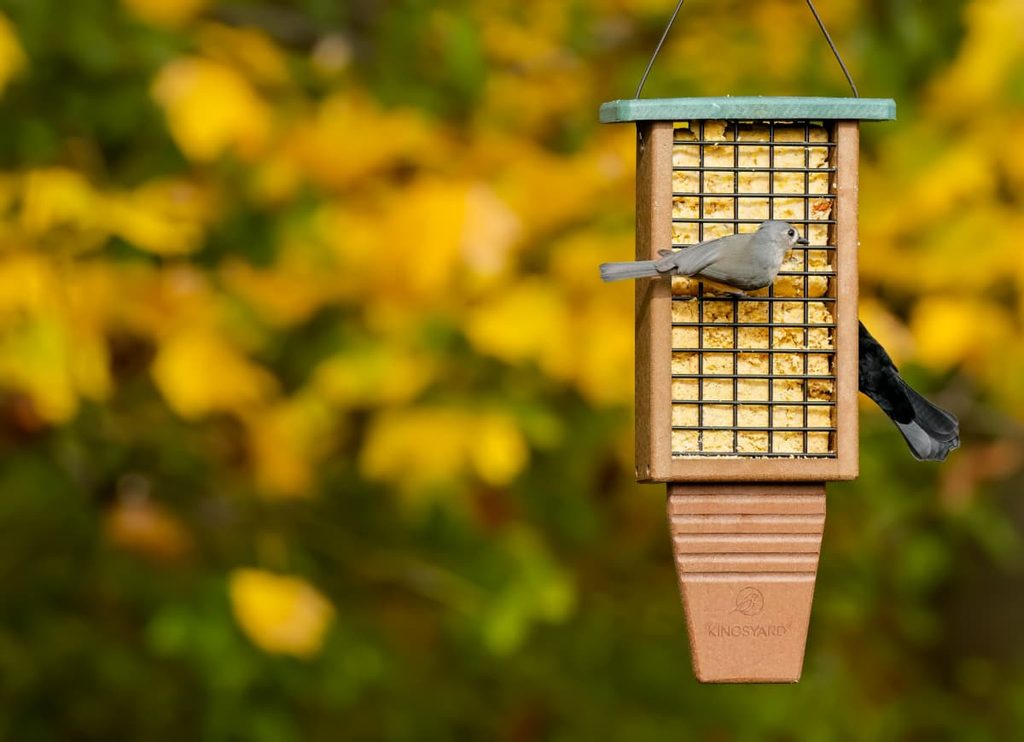
This is the base recipe — simple, cheap, and effective. It produces firm suet cakes that work in standard suet cage feeders.
Yield: 4–6 suet cakes
Time: 20 minutes
Cost: ~$0.10 per cake
Ingredients
- 1 cup rendered beef fat (suet) — available at grocery stores or butcher shops
- 1 cup crunchy peanut butter (unsalted, no xylitol)
- 2 cups quick oats or cornmeal
- 1 cup black oil sunflower seed
- ½ cup millet or dried cranberries (optional)
Instructions
- Melt the fat. In a saucepan over low heat, melt the rendered beef fat until liquid. Do not boil — high heat destroys the fat’s nutritional value.
- Add peanut butter. Stir in the peanut butter until fully combined and smooth.
- Mix dry ingredients. Remove from heat. Stir in oats, sunflower seed, and any optional ingredients. The mixture should be thick and pourable — like wet concrete.
- Pour into molds. Pour into silicone molds, muffin tins, or a lined loaf pan. Each cavity should be roughly the size of a standard suet cake (about 4.5″ × 4.5″ if using a square mold).
- Cool and set. Let the mixture cool at room temperature for 1 hour, then refrigerate for 2 hours until firm.
- Unmold and store. Pop the cakes out of the molds. Use immediately or wrap individually and freeze for up to 3 months.
Feeding tips
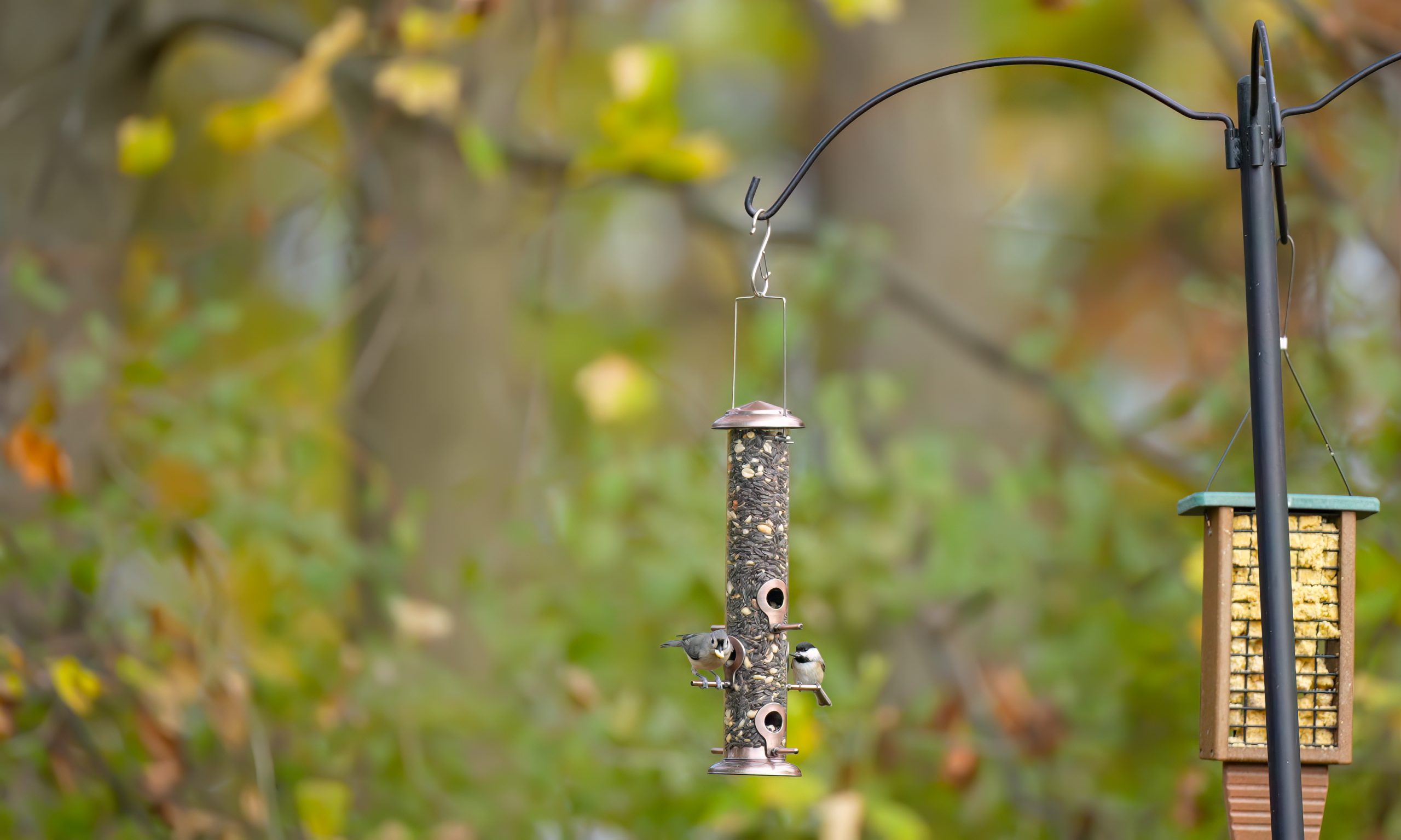
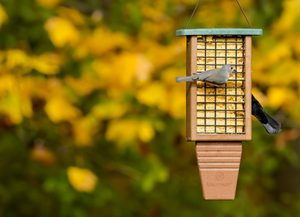
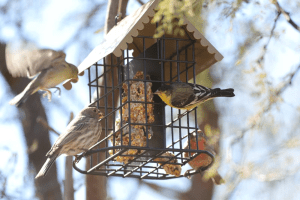
- Place in a standard suet cage feeder hung from a tree branch or shepherd’s hook
- In fall (above 50°F), use the no-melt recipe below instead — classic suet liquefies in warm temperatures
- One cake typically lasts 3–7 days depending on bird traffic and weather
No-Melt Suet for Warm Fall Days
Standard suet melts above 50°F — a problem during warm fall days in September and early October. This recipe uses coconut oil (which has a higher melting point) and cornmeal to create a cake that stays firm in temperatures up to 80°F.
Yield: 4–6 cakes
Time: 25 minutes
Cost: ~$0.15 per cake
Ingredients
- 1 cup coconut oil (refined, not virgin — virgin has a strong smell)
- 1 cup crunchy peanut butter (unsalted)
- 2½ cups cornmeal
- 1 cup black oil sunflower seed
- ½ cup raisins or dried cranberries (optional)
Instructions
- Melt coconut oil. In a saucepan over low heat, melt the coconut oil until liquid.
- Add peanut butter. Stir until smooth and combined.
- Mix dry ingredients. Remove from heat. Add cornmeal and stir until thick. Fold in sunflower seed and optional dried fruit.
- Press into molds. This mixture is thicker than classic suet — press it firmly into molds or a lined pan to eliminate air pockets.
- Cool and set. Room temperature for 1 hour, then refrigerate for 4 hours. No-melt suet takes longer to firm up than classic suet.
- Store. Wrap individually. Keeps at room temperature for 2 weeks, in the refrigerator for 2 months, or frozen for 6 months.
When to switch to classic suet
Once nighttime temperatures consistently drop below 45°F, switch to the classic melt-and-pour recipe. It’s cheaper, higher in fat, and birds prefer the texture. Store your no-melt suet in the freezer and bring it back out during any warm spells.
For a complete list of bird species that eat suet, see our birds that eat suet guide.
DIY Seed Cakes with Gelatin
Gelatin seed cakes are the easiest DIY bird treat — no cooking, no melting, just mixing and pressing. They work in platform feeders, on windowsills, or hung from branches with a string.
Yield: 6–8 cakes
Time: 15 minutes + 24 hours drying
Cost: ~$0.08 per cake
Ingredients
- 2 packets unflavored gelatin (about ¼ oz total)
- ⅓ cup warm water
- 3 cups mixed birdseed (sunflower, millet, safflower)
- ½ cup cornmeal
- Cooking spray or parchment paper
Instructions
- Dissolve gelatin. In a large bowl, dissolve the gelatin in warm water. Stir until completely clear — no lumps.
- Add dry ingredients. Stir in the birdseed and cornmeal. Mix until every seed is coated in gelatin. The mixture should hold together when squeezed.
- Press into molds. Spray silicone molds or lined muffin tins with cooking spray. Press the mixture firmly into each cavity — pack it tight to prevent crumbling.
- Add hanging holes (optional). If you want to hang the cakes, poke a hole through the center with a chopstick or straw while the mixture is still wet.
- Dry for 24 hours. Leave at room temperature for 24 hours until completely firm. Do not refrigerate — gelatin cakes need air-drying, not cold-setting.
- Unmold. Pop the cakes out. Thread string or twine through the hole for hanging, or place directly on a platform feeder.
Customization ideas
- Finch blend: Replace half the mix with nyjer and sunflower chips
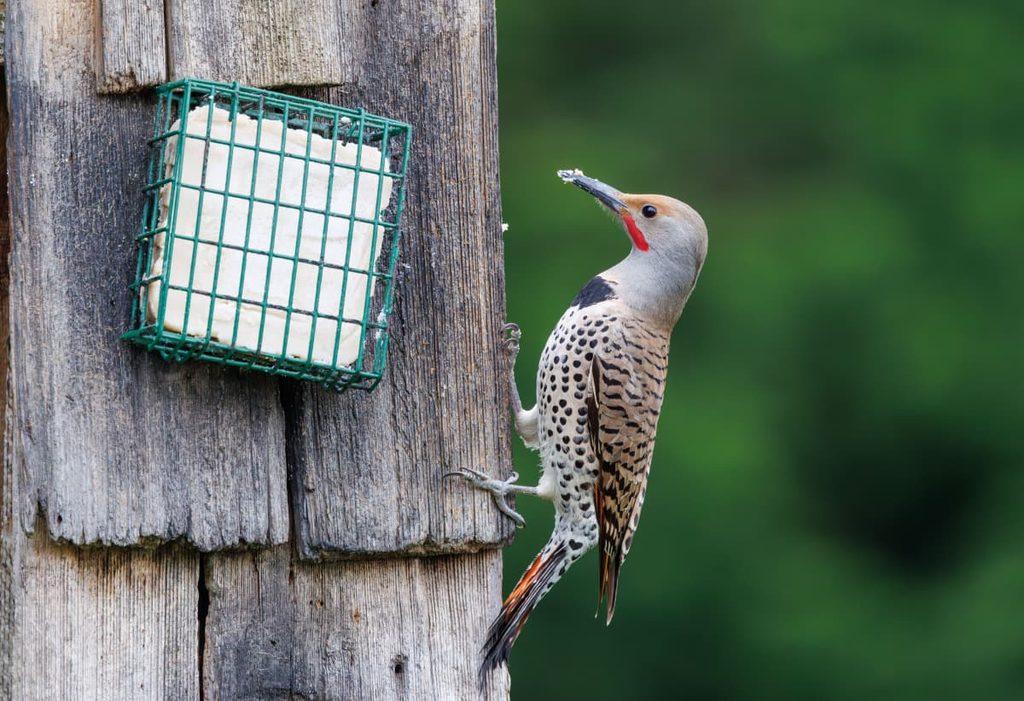
- Woodpecker blend: Add ½ cup peanut pieces and ¼ cup dried mealworms
- Sparrow blend: Use 2 cups white millet + 1 cup sunflower + ½ cup safflower
Peanut Butter Pine Cone Feeders
This is the classic kids’ nature craft, and it actually works. Pine cone feeders attract chickadees, titmice, nuthatches, and woodpeckers, and they’re the easiest bird feeder project you can do in 10 minutes.
Yield: 4–6 feeders
Time: 10 minutes
Cost: ~$0.05 per feeder
Materials
- 4–6 large pine cones (dry, open)
- 1 cup peanut butter (unsalted, no xylitol)
- 2 cups birdseed or cornmeal
- Twine or string
- Shallow dish or plate
Instructions
- Prepare the pine cones. Make sure the cones are dry and open. If they’re closed, bake them at 200°F for 20 minutes to open the scales.
- Tie twine. Tie a 12-inch piece of twine around the top of each pine cone, leaving a loop for hanging.
- Coat with peanut butter. Using a butter knife or spatula, pack peanut butter into every crevice of the pine cone. Work it in deep, birds pull peanut butter from between the scales.
- Roll in seed. Roll the peanut butter-coated pine cone in a shallow dish of birdseed, pressing seeds into the peanut butter. Cover completely.
- Hang outdoors. Hang from tree branches, porch railings, or shepherd’s hooks. Place 5–6 feet off the ground, near cover (within 10 feet of a bush or tree).
Best placement
Hang pine cone feeders near your main feeding station so birds discover them while visiting your regular feeders. Once they find them, chickadees and nuthatches will visit repeatedly — they cache peanut butter in bark crevices for later.
For tips on where to place feeders for maximum bird traffic, see our bird feeder placement guide.
Cranberry and Orange Bird Garland
A decorative garland that doubles as bird food — perfect for fall porch décor that actually feeds wildlife.
Yield: 1 garland (about 4 feet)
Time: 20 minutes
Cost: ~$2.00
Materials
- 3 oranges, sliced into ¼-inch rounds
- 1 cup fresh cranberries
- 1 cup unsalted peanut pieces
- Heavy needle and twine or cotton string
Instructions
- Dry the orange slices. Bake orange rounds at 200°F for 2–3 hours until dry and leathery. Let cool completely.
- String the garland. Thread the needle with twine. Alternate orange slices, cranberries, and peanut pieces. Leave 2 inches between items.
- Hang. Drape across a porch railing, hang from a tree branch, or wrap around a fence post.
What eats it
Cedar waxwings and robins eat the cranberries and orange slices. Woodpeckers and chickadees pull out the peanuts. The garland typically lasts 1–2 weeks depending on bird traffic and weather.
What to Avoid: Ingredients That Harm Birds
Some common kitchen ingredients are dangerous for birds — even in small amounts.
| Ingredient | Why It’s Harmful |
|---|---|
| Salt | Birds cannot process sodium. Even small amounts cause dehydration and kidney failure. |
| Xylitol | Artificial sweetener in some peanut butters. Toxic to birds and mammals. |
| Honey | Can harbor botulism spores that kill birds. Use corn syrup if a sweetener is needed. |
| Bread/crackers | Zero nutritional value. Fills birds up without providing calories. |
| Margarine/spread | Contains water and additives that cause suet to spoil rapidly. |
| Rancid fat | Old cooking oil or spoiled fat causes digestive distress. Use fresh ingredients only. |
Ingredient checklist
Every DIY bird treat recipe should contain only:
- Fat source: Rendered beef suet, coconut oil, or lard
- Binder: Peanut butter (unsalted, no xylitol), gelatin, or cornmeal
- Birdseed: Black oil sunflower, millet, safflower, nyjer, peanut pieces
- Optional: Dried cranberries, raisins, dried mealworms
Nothing else. If you can’t identify an ingredient, don’t use it.
Storage and Shelf Life Tips
DIY bird treats don’t contain preservatives — proper storage is essential.
| Treat Type | Room Temp | Refrigerator | Freezer |
|---|---|---|---|
| Classic suet | 3–5 days (below 50°F) | 2 months | 6 months |
| No-melt suet | 2 weeks | 3 months | 6 months |
| Gelatin seed cakes | 1 week | 1 month | 3 months |
| Pine cone feeders | Use immediately | 1 week | Not recommended |
| Fruit garland | Use immediately | 3 days | Not recommended |
Storage rules:
- Wrap individual suet cakes in plastic wrap before freezing
- Label each package with the recipe name and date
- Thaw frozen suet in the refrigerator, not at room temperature (prevents condensation and mold)
- If suet smells off, turns dark, or develops mold, discard it immediately
- Never refreeze thawed suet
For a complete late-summer cleaning and storage reset, see our late-summer feeder maintenance checklist.
Fall Bird Treat FAQs
Is peanut butter safe for birds?
Yes — unsalted, unsweetened peanut butter without xylitol is safe and nutritious for birds. Avoid peanut butter with added sugar, salt, or artificial sweeteners. “Natural” peanut butter (just peanuts and oil) is ideal.
Can I use bacon grease for suet cakes?
No. Bacon grease contains salt, preservatives, and nitrates that are harmful to birds. Use rendered beef fat (suet) from a butcher or grocery store — it’s pure fat without additives.
How long do homemade suet cakes last?
In the refrigerator, homemade suet cakes last 2–3 months. Frozen, they last up to 6 months. At room temperature, classic suet spoils within 3–5 days in warm weather. No-melt suet lasts about 2 weeks at room temperature.
What’s the best DIY bird treat for beginners?
Peanut butter pine cone feeders. They take 10 minutes, require no cooking, and attract chickadees, nuthatches, and woodpeckers immediately. Kids can make them — it’s the easiest bird feeder project that actually works.
Can I make suet without beef fat?
Yes. Coconut oil is a popular alternative with a higher melting point (making it better for warm fall days). Lard (rendered pig fat) also works but melts at a lower temperature than beef suet. Pure coconut oil suet stays firm up to 80°F.
Should I put out homemade suet in September or wait for colder weather?
Use no-melt suet (coconut oil-based) from September through October. Switch to classic suet (beef fat-based) once nighttime temperatures consistently drop below 45°F. This prevents melting and spoilage during warm fall days.
How many suet feeders should I put out?
Start with one suet feeder per 10–15 birds you observe. If you see woodpeckers waiting in line or fighting over a single feeder, add a second one — ideally in a different location. Spacing reduces aggression and gives shy species (like downy woodpeckers) a chance to feed.
Make Your First Batch This Weekend
Three things to grab at the grocery store:
- Unsalted peanut butter (check the label — no xylitol, no added salt)
- A bag of black oil sunflower seed (or a quality birdseed mix)
- Unflavored gelatin packets (for the easiest recipe)
In 20 minutes, you’ll have a week’s worth of bird treats that cost a fraction of store-bought versions — and you’ll know exactly what’s in them.
Browse Kingsyard suet feeders and platform feeders — designed to hold homemade suet cakes and seed blocks, built to last through the toughest winter weather.