Winter Bird Identification at Your Feeder: 12 Species You’ll See in Cold Months
One December morning, you look out the window and see a dozen small brown birds blanketing your platform feeder. They all look the same — until they don’t. One has a rusty cap. Another flashes white outer tail feathers. A third has a sharply pointed bill unlike the others.
Winter is when backyard bird identification actually gets interesting. The flashy summer migrants are gone, and what remains are the hardy resident species — plus a wave of winter visitors you won’t see any other time of year. According to the Cornell Lab of Ornithology, the species mix at your feeder can shift by 40–60% between October and December as fall migrants pass through and winter residents settle in.
This guide covers 12 species you’re most likely to encounter at your feeder from November through February, organized by where you’ll spot them and what to look for. If you’re still setting up your feeding station, our complete bird feeder setup guide will help you attract the widest variety.
Why Winter Is the Best Season for Backyard Bird ID
Summer birding can feel overwhelming — 30+ species passing through, warblers flitting in the canopy, everything in breeding plumage. Winter simplifies things. Your feeder visitors typically fall into a handful of predictable species, and they visit repeatedly, giving you time to study them.
Winter also brings species you won’t see in June. Dark-eyed juncos, white-throated sparrows, and pine siskins migrate south from Canada to spend the cold months at American feeders. Learning to tell them apart from your year-round residents is one of the most satisfying skills in backyard birding.
For a broader look at which species dominate feeders in the coldest months, check out our guide to 9 common winter birds you can spot in your yard.
The 12 Most Common Winter Feeder Birds
Below are the species you’re most likely to identify at your feeder between November and February, based on data from Project FeederWatch, Cornell Lab’s citizen science program that tracks backyard bird populations across North America.
1. Black-Capped Chickadee
Field marks: Black cap and bib, white cheeks, gray back, buffy flanks. About 5 inches — one of the smallest birds at your feeder.
Feeding behavior: Grab-and-go specialists. A chickadee lands on a feeder, snatches a single seed, and flies off to crack it in a nearby tree. You’ll see this repeated dozens of times per hour. They prefer sunflower seeds and suet.
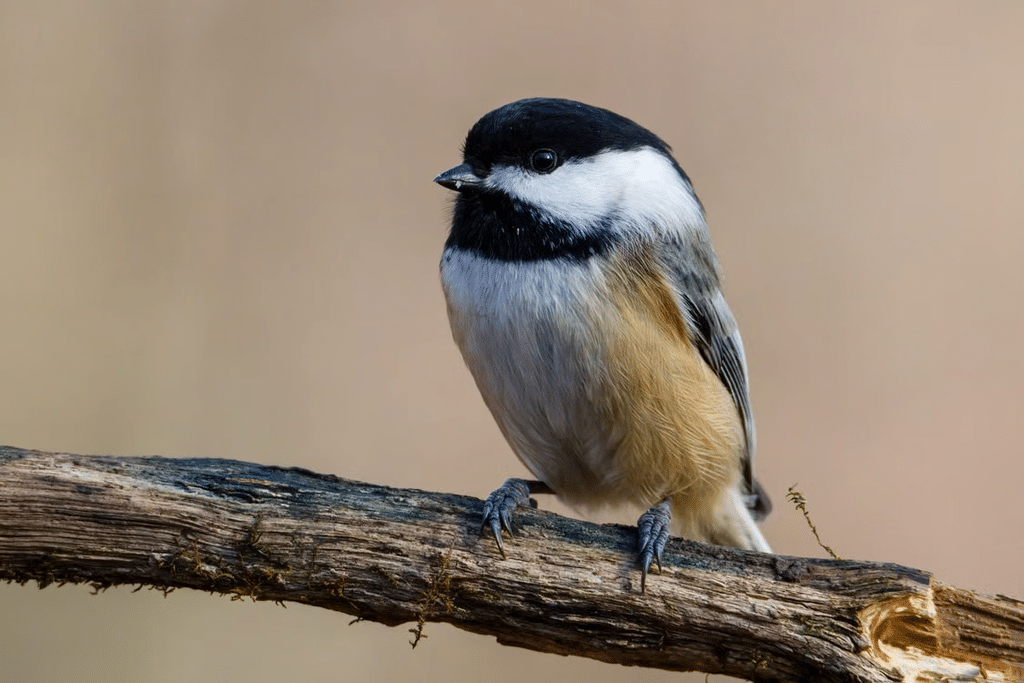
Winter note: Chickadees are one of the few birds that use torpor to survive cold nights — dropping their body temperature by up to 18°F to conserve energy. They cache hundreds of seeds daily and remember where they put them.
Range: Year-round across the northern US and southern Canada. Carolina chickadees replace them in the Southeast — the two species look nearly identical, but Carolina has a slightly higher-pitched call.
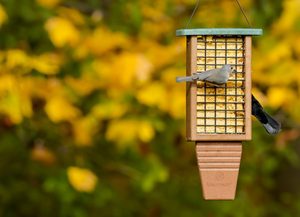
2. Tufted Titmouse
Field marks: Gray crest, large black eyes, rusty flanks, white face. About 6.5 inches — noticeably larger than chickadees.
Feeding behavior: Similar grab-and-go style to chickadees, but they crack larger seeds and are more aggressive at feeders. They’ll chase off birds twice their size. Sunflower seeds are their favorite.
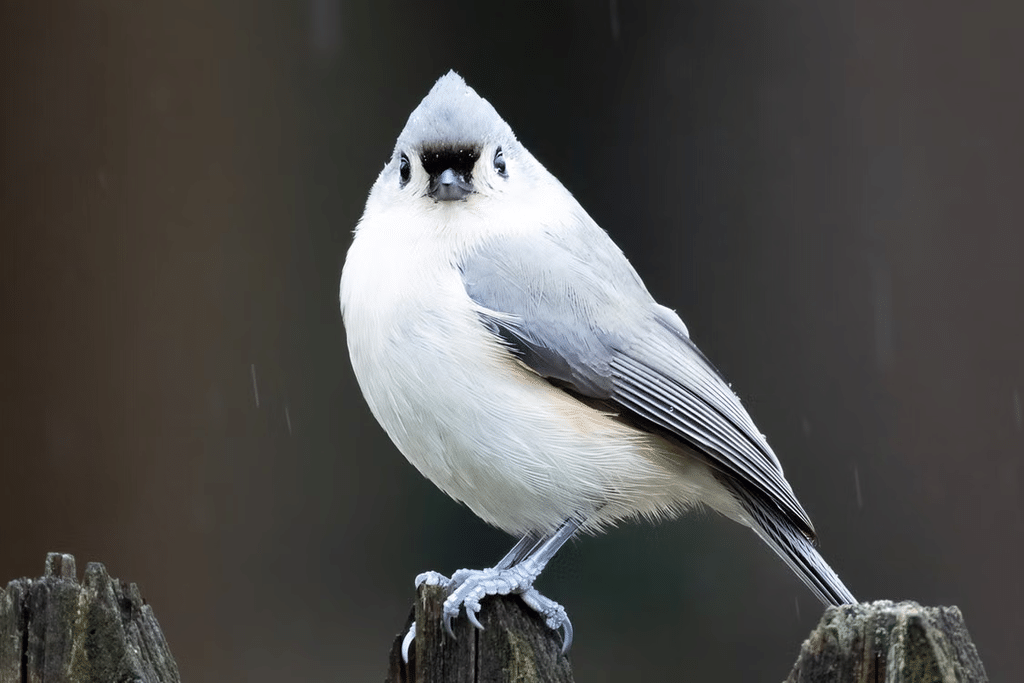
Winter note: Titmice often roost in tree cavities or nest boxes during winter, sometimes sharing space with chickadees. Their range has been expanding northward over the past 50 years — you’re more likely to see them now than your parents were.
Range: Year-round in the eastern US, roughly east of the Great Plains.
3. Dark-Eyed Junco
Field marks: Slate-gray hood (males) or brownish-gray (females), white belly, pink bill, and distinctive white outer tail feathers that flash in flight. About 6.3 inches.
Feeding behavior: Ground feeders by preference. Juncos hop beneath your platform feeder or tube feeder, picking up spilled seeds. They also visit low platform feeders. Prefer white millet and cracked corn.
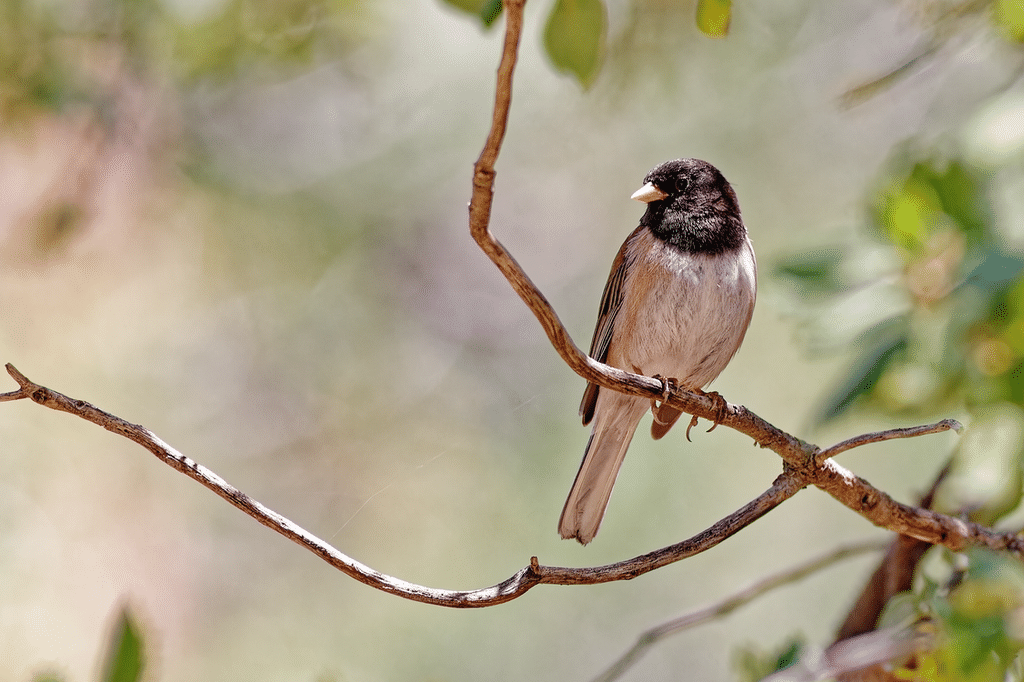
Winter note: Juncos are the quintessential “snowbird” — their arrival at feeders in October signals winter’s approach. Project FeederWatch data shows juncos appear at more feeders than almost any other winter species in the eastern US. If you’re seeing juncos alongside fall sparrows, our fall sparrows and juncos ID guide covers how to tell them apart.
Range: Winter visitor across most of the US; breeds in Canada and mountainous western states.
4. White-Throated Sparrow
Field marks: Bold white throat patch, yellow lores (spot between eye and bill), black-and-white striped head. The tan-striped morph has buff-and-brown head stripes instead. About 6.7 inches.
Feeding behavior: Ground feeders like juncos. They scratch at leaf litter with a distinctive two-footed hop, then pick through the debris for seeds. Visit low feeders and platform feeders.
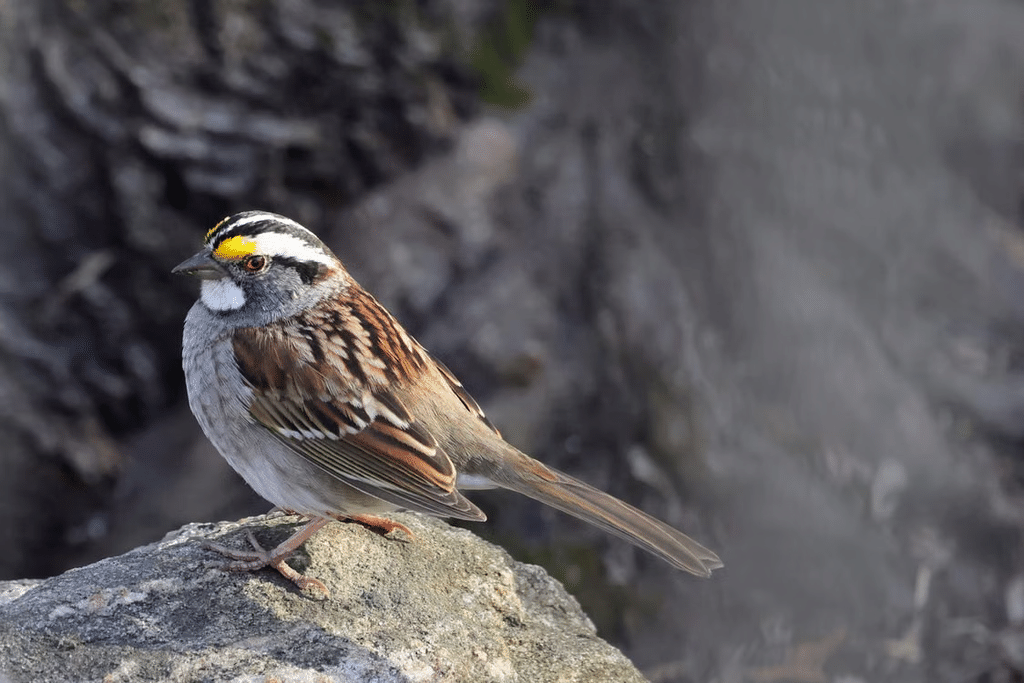
Winter note: Their “Oh-sweet-Canada-Canada” song is one of the most recognizable sounds of eastern woodlands — but in winter, they’re mostly silent. Look for them in brushy areas near your feeder.
Range: Winters across the eastern US; breeds in southern Canada and the northern US.
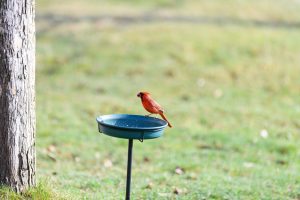
5. Northern Cardinal
Field marks: Males are unmistakable — brilliant red with a black face mask and prominent crest. Females are warm brown with reddish tinges on wings, tail, and crest. Both have thick orange-red bills. About 8.5 inches.
Feeding behavior: Versatile feeders. Cardinals visit tube feeders, platform feeders, and hopper feeders with equal enthusiasm. They crack sunflower seeds with their powerful bills and also eat safflower seeds — which squirrels and grackles tend to avoid.
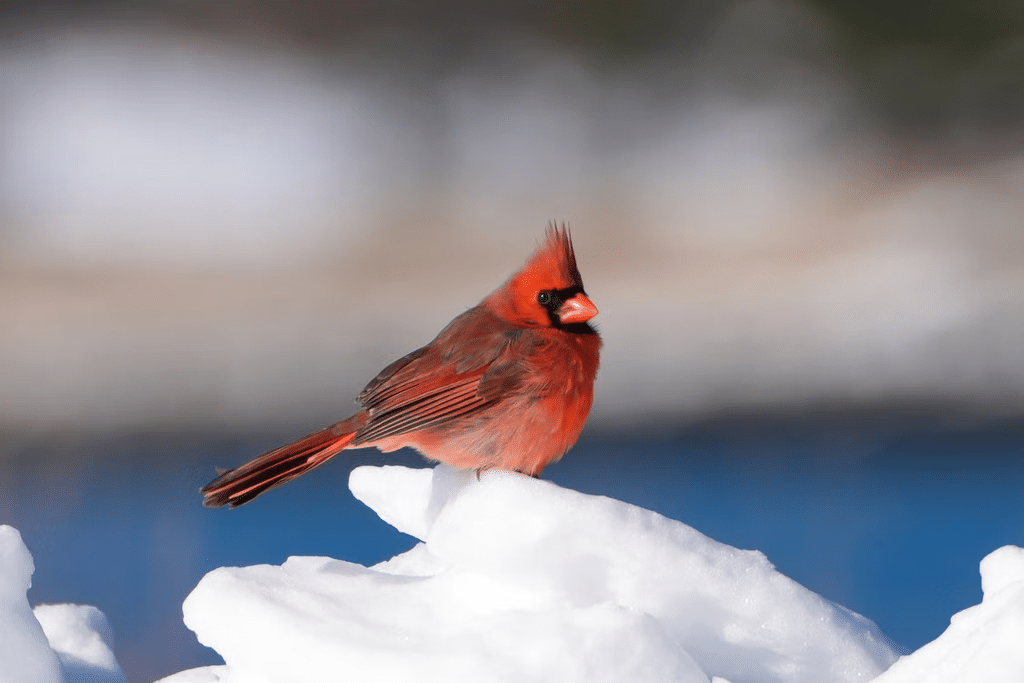
Winter note: Cardinals are year-round residents, but they become more visible in winter when deciduous trees drop their leaves. Males sometimes feed their mates as part of pair bonding — look for the “beak-to-beak” seed transfer.
Range: Year-round across the eastern and central US, expanding northward.
6. Blue Jay
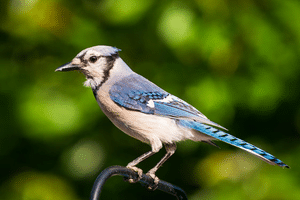
Field marks: Blue crest, blue back with black barring, white face and underparts, black necklace-shaped collar. About 11 inches — one of the larger feeder visitors.
Feeding behavior: Aggressive and dominant at feeders. Blue jays prefer peanuts (in-shell or shelled), sunflower seeds, and acorns. They often grab a mouthful and fly off to cache food — a single jay can carry 5+ acorns at once.
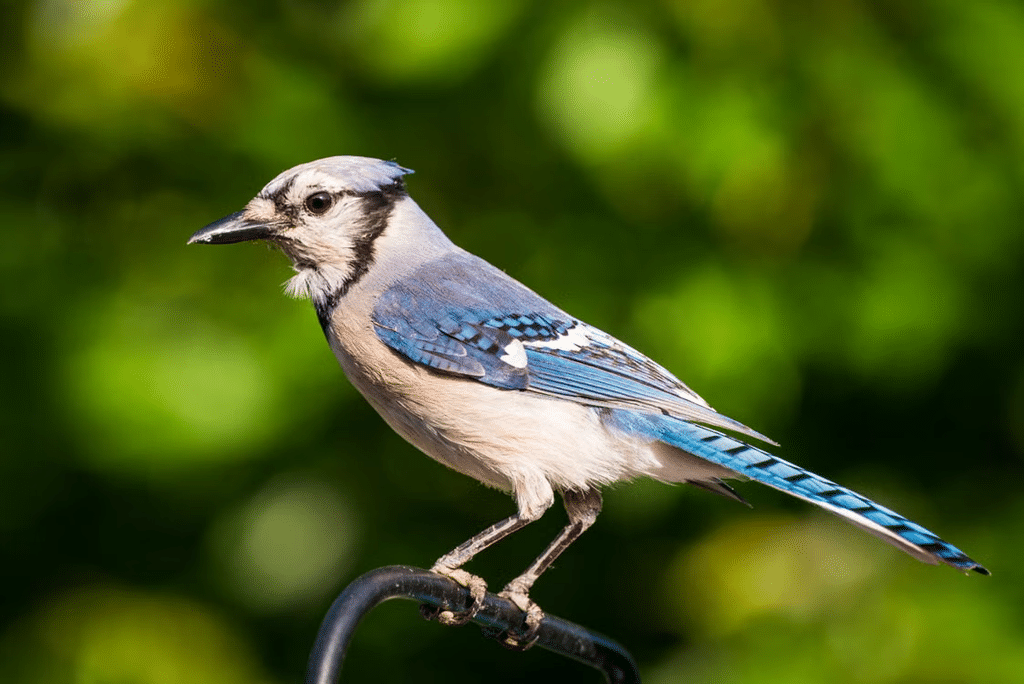
Winter note: Blue jays are major seed dispersers. The acorns they cache in fall often spruce into oak seedlings — scientists credit jays with helping oak forests expand after the last ice age. Their loud “jay! jay!” calls are a reliable winter alarm system when hawks appear.
Range: Year-round across the eastern and central US.
7. Downy Woodpecker
Field marks: Black-and-white with a small red patch on the back of the head (males). Short bill relative to head size. About 6.5 inches — the smallest woodpecker in North America.
Feeding behavior: Suet specialists. Downy woodpeckers cling to suet feeders and spend minutes at a time pecking away. They also visit tube feeders for sunflower seeds, often hanging upside down to access them.
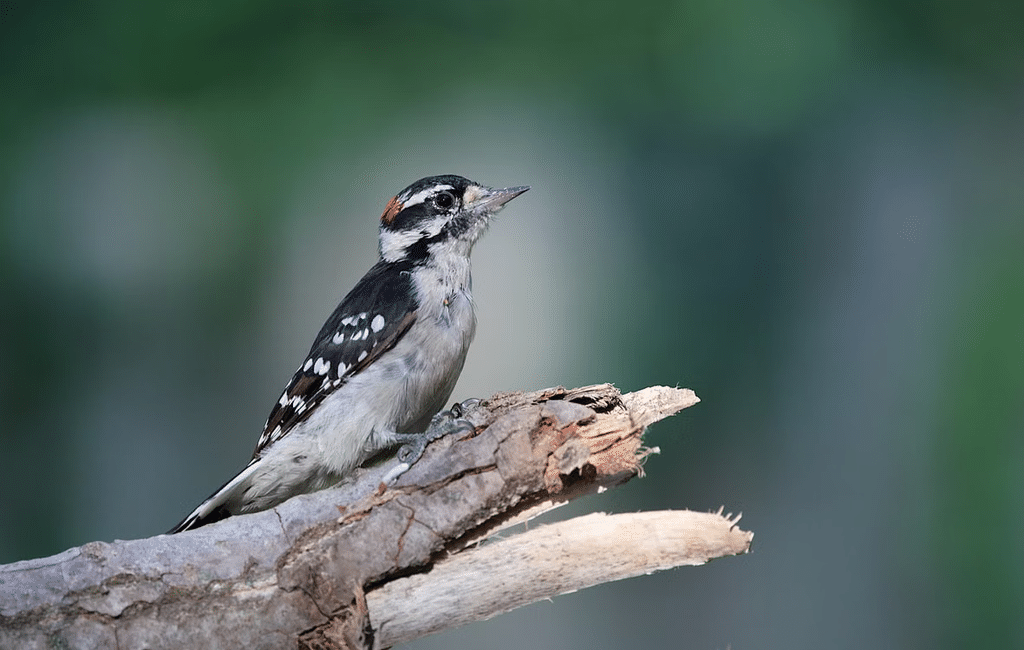
Winter note: Downy woodpeckers don’t migrate — they’re the same birds you see year-round. In winter, they join mixed-species flocks with chickadees and titmice, which helps them find food and watch for predators more efficiently.
Range: Year-round across most of the US and southern Canada.
8. Red-Bellied Woodpecker
Field marks: Don’t let the name fool you — the red “belly” is just a faint blush that’s hard to see. The real giveaway is the red cap: males have red from forehead to nape; females have red only on the back of the head. Black-and-white barred back. About 9.5 inches.
Feeding behavior: Suet and peanuts. Red-bellied woodpeckers are bolder than downys and will dominate a suet feeder. They also wedge seeds into bark crevices to hammer them open — a behavior called “anviling.”
Winter note: Their range has expanded dramatically northward over the past 40 years. If you’re in the Mid-Atlantic or Midwest and didn’t see them as a kid, you probably do now. Climate change and backyard feeders are credited with this expansion.
Range: Year-round in the eastern US, expanding northward into New England and southern Canada.
9. White-Breasted Nuthatch
Field marks: Blue-gray back, white face and underparts, black cap (males have a solid black cap; females have a narrower gray cap). About 5.5 inches. The key field mark: they walk headfirst DOWN tree trunks.
Feeding behavior: Sunflower seed and suet lovers. Nuthatches grab a seed and fly to a nearby tree, where they wedge it into bark and hammer it open with their bill. Their “yank-yank” call is one of the most familiar winter feeder sounds.
Winter note: Nuthatches are cavity nesters but also use roosting boxes in winter. Their unique head-down foraging style lets them find food that woodpeckers miss — they’re filling a different ecological niche on the same tree.
Range: Year-round across most of the US and southern Canada.
10. American Goldfinch
Field marks: Winter plumage is drab olive-yellow (males) or dull brown (females) — a far cry from the electric yellow of summer. Look for the notched tail, wing bars, and small, conical bill. About 5 inches.
Feeding behavior: Nyjer (thistle) seed fanatics. Goldfinches are one of the few birds that can eat nyjer without shelling it first, thanks to their specialized bills. They also eat sunflower chips. They feed in flocks, often hanging acrobatically from mesh feeders.
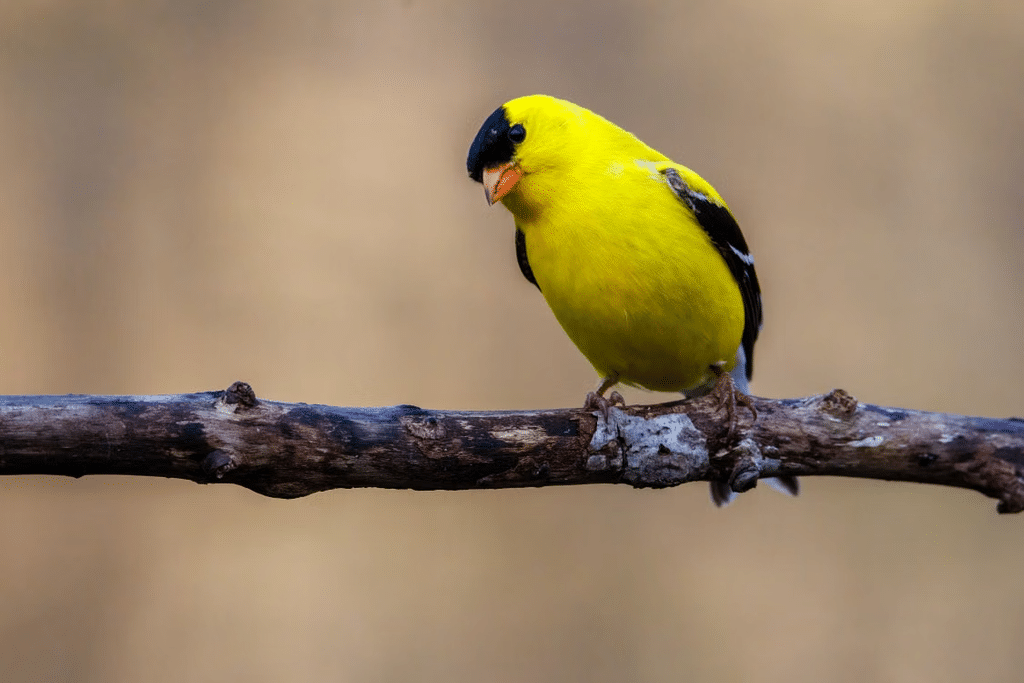
Winter note: Goldfinches are late breeders (July–September) and molt into winter plumage in fall. Their undulating, roller-coaster flight pattern is the easiest way to ID them in flight, even when their plumage is dull.
Range: Year-round across most of the US; some northern populations move south in winter.
11. House Finch
Field marks: Males have a red forehead, eyebrow, and upper breast that can range from deep crimson to orange or even yellow (diet-dependent). Females are streaky brown with a plain face. About 5.5 inches.
Feeding behavior: Seed generalists. House finches eat sunflower seeds, nyjer, and millet. They feed in flocks and are comfortable on tube feeders, platform feeders, and even window feeders.
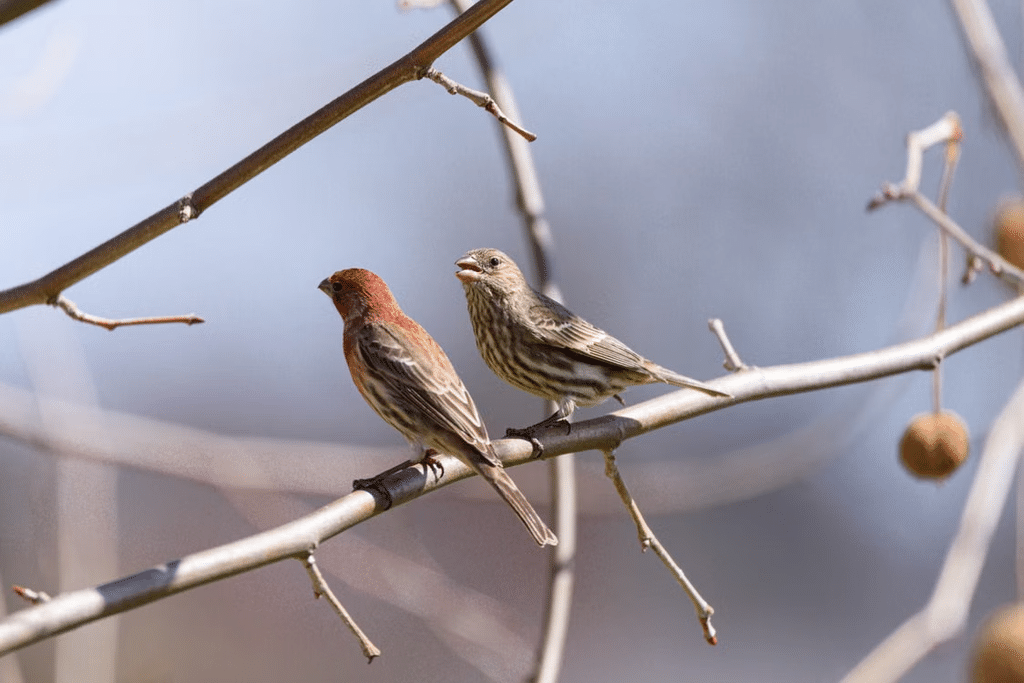
Winter note: House finches are year-round residents in most of their range. Watch for mycoplasmal conjunctivitis — a common eye disease that causes swelling and crusty eyes. If you see affected birds, clean your feeders immediately with a 10% bleach solution.
Range: Year-round across the US, originally western but now established in the East.
12. Mourning Dove
Field marks: Plump, soft gray-brown body with a small head, long pointed tail, and black spots on the wings. About 12 inches — much larger than the songbirds above.
Feeding behavior: Ground feeders almost exclusively. Mourning doves eat spilled seed beneath feeders — they’re the cleanup crew of your bird feeding station. They prefer millet, cracked corn, and sunflower seeds.
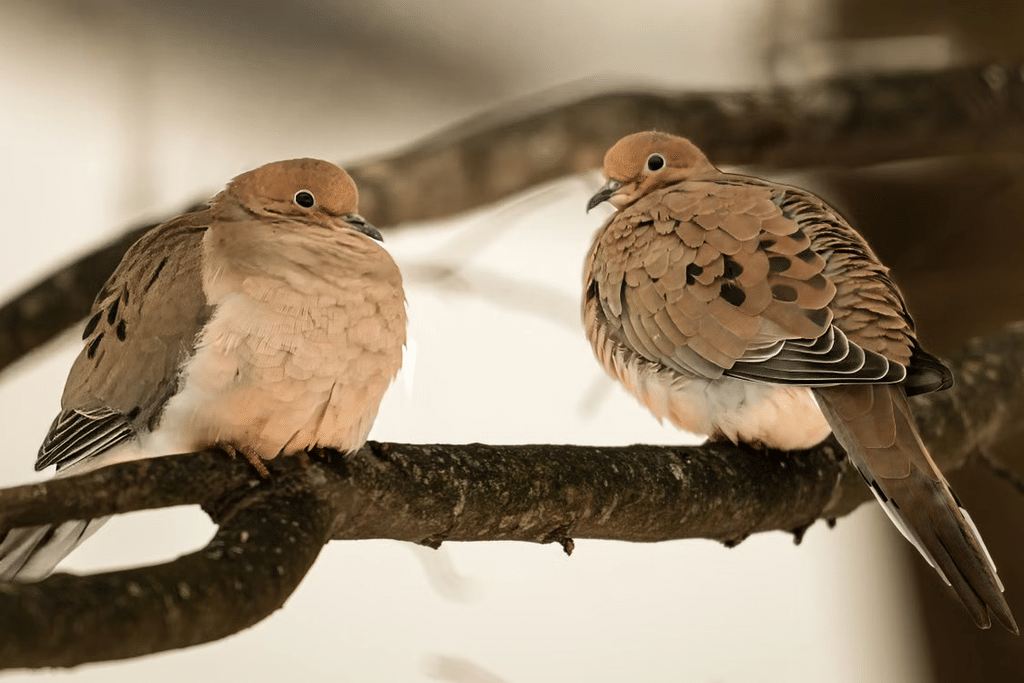
Winter note: Most mourning doves are year-round residents, but northern populations may move south in harsh winters. They roost communally in conifer trees, and their soft, mournful “coo-OO-oo” call is one of the most recognized bird sounds in America.
Range: Year-round across most of the US; some northern birds migrate short distances.
Quick ID Reference: Winter Birds at a Glance
| Species | Size | Key Field Mark | Feeder Type | Preferred Food |
|---|---|---|---|---|
| Black-Capped Chickadee | 5″ | Black cap & bib | Tube, suet | Sunflower, suet |
| Tufted Titmouse | 6.5″ | Gray crest | Tube, suet | Sunflower |
| Dark-Eyed Junco | 6.3″ | White tail flash | Ground, platform | Millet, cracked corn |
| White-Throated Sparrow | 6.7″ | Yellow lores | Ground, platform | Millet, sunflower |
| Northern Cardinal | 8.5″ | Red (male) / warm brown (female) | Tube, platform, hopper | Sunflower, safflower |
| Blue Jay | 11″ | Blue crest, black necklace | Platform, tray | Peanuts, sunflower |
| Downy Woodpecker | 6.5″ | Small red patch (male) | Suet, tube | Suet, sunflower |
| Red-Bellied Woodpecker | 9.5″ | Red cap | Suet, platform | Suet, peanuts |
| White-Breasted Nuthatch | 5.5″ | Walks headfirst down trees | Suet, tube | Sunflower, suet |
| American Goldfinch | 5″ | Notched tail, wing bars | Tube, mesh | Nyjer, sunflower chips |
| House Finch | 5.5″ | Red forehead (male) | Tube, platform | Sunflower, nyjer |
| Mourning Dove | 12″ | Long pointed tail | Ground | Millet, cracked corn |
How to Set Up Your Feeder for Maximum Winter Variety
Attracting all 12 species above requires offering the right foods in the right feeder types. Here’s a simple three-feeder setup that covers nearly every winter bird:
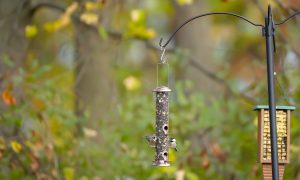
- Tube feeder with sunflower seeds — Attracts chickadees, titmice, nuthatches, cardinals, house finches, and goldfinch (with sunflower chips). Mount 5 feet high, near cover but not too close to give birds escape routes from hawks.
- Suet feeder — Essential for woodpeckers (downy and red-bellied), nuthatches, and chickadees. Use no-melt suet in temperatures above freezing, or rendered suet cakes for colder conditions.
- Platform or ground feeder with millet — The only way to attract juncos, white-throated sparrows, and mourning doves. Place on or near the ground, ideally near brushy cover.
Choosing the right seed blend makes a huge difference. Our guide to the best bird seed for fall and winter breaks down which seeds attract which species — and which ones are mostly filler that birds ignore.
Tips for Identifying Unknown Winter Birds
Even with this guide, you’ll encounter birds that don’t quite match. Here’s a systematic approach to ID any mystery visitor:
- Size first. Compare to a familiar bird. Is it sparrow-sized (5–7″), robin-sized (8–10″), or crow-sized (12″+)?
- Bill shape. Conical (seed-eater), pointed (insect-eater), chisel-shaped (woodpecker), or hooked (predator)?
- Feeding position. Ground, feeder, tree trunk, or hovering?
- Behavior. Flock or solitary? Grab-and-go or sit-and-eat? Aggressive or skittish?
- Range check. Use the eBird range maps from Cornell Lab to see what’s expected in your area this month.
The Merlin Bird ID app from Cornell Lab is free and can identify birds from photos or sound recordings — it’s especially useful for confirming tricky IDs.
Frequently Asked Questions
What is the most common bird at feeders in winter?
According to Project FeederWatch data, the black-capped chickadee (in the North) and the northern cardinal (across the East) are the two most frequently reported species at winter feeders. Dark-eyed juncos rank near the top as well, especially from November through March.
Why do some birds only appear at my feeder in winter?
Many species — like dark-eyed juncos, white-throated sparrows, and pine siskins — breed in Canada and the northern US, then migrate south to spend winter at lower latitudes. They’re “winter visitors” that you’ll only see from October through April in most of the continental US.
How can I tell apart house finches and purple finches in winter?
Purple finches look like they were “dipped in raspberry juice” — the red extends across the back and sides. House finches have red concentrated on the forehead and upper breast, with brown streaking on the flanks. Purple finches also have a more notched tail and a bolder face pattern.
Do birds eat different foods in winter than in summer?
Yes. Insects are scarce in winter, so insectivorous birds switch to seeds, suet, and berries. Woodpeckers that normally eat beetle larvae in bark will spend more time at suet feeders. Swallows and flycatchers — pure insect eaters — migrate south entirely rather than adapt.
Should I feed birds in winter, or will they become dependent?
Research from the Cornell Lab of Ornithology confirms that backyard feeding does not create harmful dependency. Birds use feeders as a supplement — typically getting 10–25% of their daily calories from feeders while foraging naturally for the rest. In winter, when natural food is scarce, feeders can be a genuine lifeline.
What’s the best way to attract more species to my winter feeder?
Offer variety. A single tube feeder with one type of seed limits your visitors to species that can use that feeder and eat that seed. Adding a platform feeder (for ground-feeding species), a suet feeder (for woodpeckers), and a nyjer feeder (for goldfinches) can double the number of species you see. Water is equally important — a heated bird bath in winter is one of the most effective bird attractants.
How do I identify birds that aren’t in this guide?
Use the free Merlin Bird ID app — it identifies birds from photos or songs and covers all of North America. For visual confirmation, compare your mystery bird against the range maps on eBird to see what’s expected in your area this month.
Start Your Winter Bird List Today
Winter birding doesn’t require binoculars, hiking boots, or a 5 AM alarm. It requires a feeder, a window, and a few minutes of attention. The 12 species in this guide represent the core of what most American backyards host from November through February — and once you can identify them by sight, you’ll start noticing the subtle visitors too: pine siskins, red-breasted nuthatches, and maybe even a rare winter warbler.
Set up your feeding station, keep this guide handy, and start a winter bird list. You might be surprised how many species show up once you know what to look for.
Ready to attract more winter birds? Browse Kingsyard’s full collection of bird feeders — from tube feeders to platform feeders to suet cages — designed to bring the widest variety of species to your backyard.